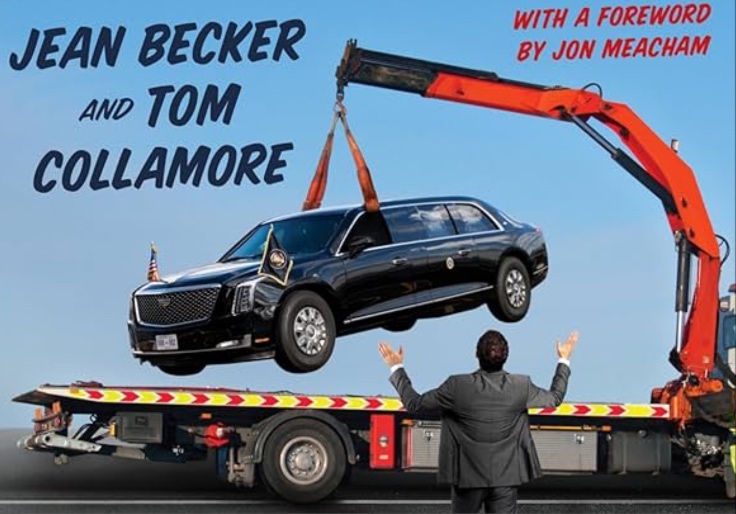
When a president travels, the public sees only the polished stage and the carefully timed speech. Behind that façade lies a specialised crew whose job is to make the whole operation disappear. A new volume, Don’t Tell the President: The Best, Worst, and Mostly Untold Stories from Presidential Advance, pulls together the recollections of dozens of advance veterans to illustrate how the success of a campaign can hinge on the quiet work of these teams.
The high‑stakes of advance work
Advance staff are typically young, work under tight deadlines and receive little supervision. Their remit ranges from converting empty arenas into rally‑ready venues to arranging secure sites for presidential visits in remote locations. A president’s timetable tolerates no delay, and any slip‑up instantly becomes fodder for critics and late‑night comedy.
One of the earliest and most cited failures involved 23‑year‑old Matt Bennett during the 1988 campaign of Massachusetts Governor Michael Dukakis. Bennett warned senior aides that a defence‑themed photo‑op featuring Dukakis in a tank helmet would look absurd. His concerns were dismissed, and the resulting image – the governor peering out from beneath an oversized helmet – entered the public lexicon as a symbol of weakness. A Dukakis staffer later recalled, "Nice event, Matt," and added, "It might have cost us the election. But beside that, it was great." The episode is still cited by campaign operatives as a turning point.
Clashes, compromises and character
Brad Blakeman, a young New York lawyer, recounts a tense encounter with a Texas mayor during George H.W. Bush’s 1988 run. The mayor demanded a series of impractical logistical concessions, prompting Blakeman to threaten to cancel the event. The mayor eventually relented, though the exchange left a lasting impression.
Technological constraints of the era added another layer of difficulty. Communications lawyer Tom Scully set up a pioneering satellite link for Bush’s 1988 campaign – a task that would be routine today but was then cutting‑edge. After the election, Scully joined the White House staff, where President Bush greeted him with a chuckle, "Hey, you work here? I thought you were a TV guy!"
When orders collide
Brian Jones, an advance aide under George W. Bush, describes a moment when he was torn between two contradictory directives: Interior Secretary Dirk Kempthorne asked that an elevator be held for him, while the president demanded immediate departure. Jones chose the president’s instruction; Kempthorne later turned up missing, a mystery that was only resolved after the secretary’s death.
Leadership attitudes are also reflected in small but telling interactions. Advance worker Bruce Zanca left a Newsweek reporter waiting after a Bush event; the vice‑president admonished him, "We are not vindictive, Bruce. That is not how we roll." Barbara Bush, however, whispered approval: "Good job Bruce; I would have left her, too."
Personal costs and quiet rules
The book notes that the demanding travel schedule can conceal personal indiscretions. The only explicit example concerns an unnamed Army major whose romantic involvement with a Russian woman during a Soviet‑era advance trip ended his career. As one veteran summed up, "What happens on the road, stays on the road."
Author Tevi Troy, a senior fellow at the Ronald Reagan Institute and former White House aide, observes that the volume largely omits the rumored excesses of life on the campaign trail, focusing instead on operational detail and the human stories of those who keep the machinery of power moving.
Publication details
Don’t Tell the President is published by Harper, runs 320 pages and retails for $32. It offers both a chronicle of logistical rigour and a character study of the people who thrive in the shadows of presidential power.