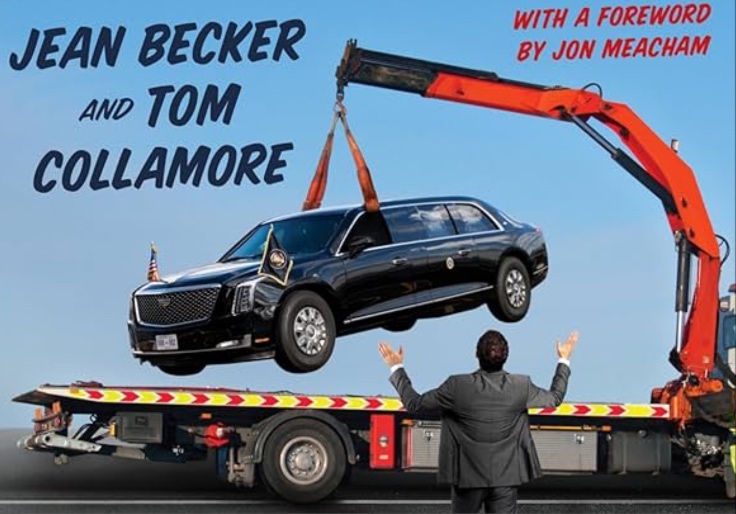
Presidential advance work is a profession of meticulous planning and controlled chaos, where success is measured in invisibility and failure in headlines. In Jean Becker and Tom Collamore's Don't Tell the President, dozens of advance veterans share stories from the trenches of political logistics, offering a rare glimpse into a realm where one misstep can upend a campaign.
The High Stakes of Advance Work
Advance teams, often young and operating with minimal oversight, are tasked with transforming empty arenas into rally-ready stages or securing remote locations for presidential visits. Their work is governed by unforgiving deadlines: a president's schedule waits for no one. As one aide notes, flawless execution ensures anonymity, while errors become fodder for critics and late-night comedians.
The risks are not merely reputational. During the 1988 campaign, a 23-year-old advance worker named Matt Bennett warned superiors about the potential mockery of Massachusetts Gov. Michael Dukakis donning a tank helmet for a defense-themed photo op. His concerns were ignored. The resulting images, of Dukakis peering out from beneath an oversized helmet, became a symbol of perceived weakness, a moment many aides still cite as a turning point in the campaign. "Nice event, Matt," a Dukakis staffer reportedly said afterward. "It might have cost us the election. But beside that, it was great."
Lessons from the Road
The book catalogs both the absurd and the revealing. Brad Blakeman, a young Jewish lawyer from New York, recounts clashing with a Texas mayor during George H.W. Bush's 1988 run. The mayor, described as a "Boss Hogg" type, demanded impossible logistics until Blakeman threatened to cancel the event. "You can have your damn FDA inspection and all the other nonsense," the mayor relented, "but you are never welcome in Texas again!" The tension eased later when Bush appointed Blakeman to a White House role, a fact the mayor apparently didn't know when criticizing him.
Technological evolution has eased some burdens but not the core pressures. Tom Scully, a communications lawyer, recalls setting up a groundbreaking satellite link for Bush's 1988 campaign, a feat now routine but then revolutionary. After the victory, Scully joined the White House staff, where Bush once greeted him with a chuckle: "Hey, you work here? I thought you were a TV guy!"
Not all stories are lighthearted. Brian Jones, an advance aide under George W. Bush, describes being caught between competing orders: holding an elevator for Interior Secretary Dirk Kempthorne while the president demanded immediate departure. Jones eventually sided with the president, later learning Kempthorne was never found, a mystery resolved only after the secretary's recent death.
The book also reveals subtle leadership traits. When advance worker Bruce Zanca left behind a tardy Newsweek reporter critical of Bush, the vice president scolded him: "We are not vindictive, Bruce. That is not how we roll." Yet Bush's wife, Barbara Bush, whispered her approval: "Good job Bruce; I would have left her, too."
Author Tevi Troy, a Ronald Reagan Institute senior fellow and former White House aide, notes the book's near-silence on the rumored personal excesses of life on the road. The sole exception involves an unnamed Army major whose ill-advised romance with a Russian woman during a Soviet advance trip ended his career. As one veteran tells Troy, "What happens on the road, stays on the road."
Don't Tell the President: The Best, Worst, and Mostly Untold Stories from Presidential Advance (Harper, 320 pp., $32) is both a chronicle of operational rigor and a character study of those who thrive in its shadow. For those who've inhabited this world, as Troy writes, the stories ring true, offering more than just nostalgia, but a window into the machinery of power.