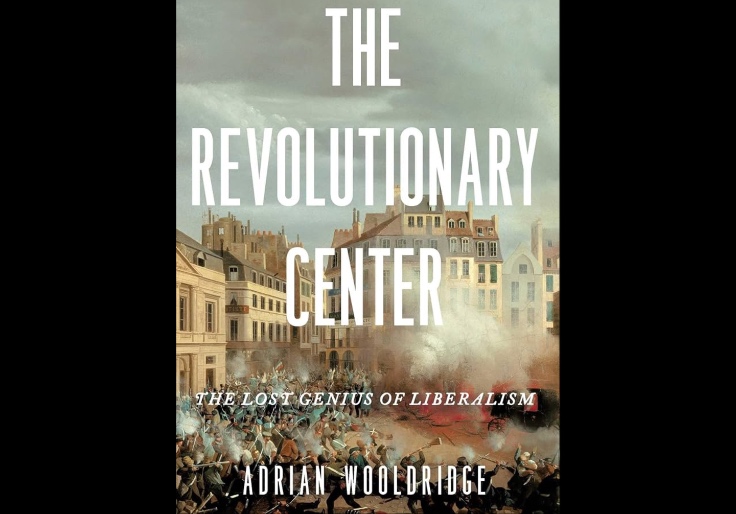
In a lengthy critique that blends history with policy analysis, former Economist editor Adrian Wooldridge argues that liberalism in the United States and Britain has lost its moral compass and needs a thorough reset. The book, published by Pegasus Books, is presented as a three‑part appeal to fellow liberals to recognize the damage caused by doctrinal drift, to trace the tradition's evolution, and to propose a more modest, self‑critical vision of the ideology.
Wooldridge, now a Bloomberg Opinion columnist and an Oxford‑trained historian, frames his argument as a call from within. He contends that liberalism's "half‑century of philosophical deviation, bad policy, and arrogance" has left the movement vulnerable to both right‑wing populism and left‑wing identity politics. By mapping the tradition from early thinkers such as Desiderius Erasmus and Thomas Hobbes to contemporary battles between "elitists and populists, capitalist‑triumphalists and capitalist‑catastrophists, woke warriors and crusty traditionalists," he paints a picture of a doctrine torn apart by internal contradictions.
One of the book's most pointed sections targets what Wooldridge calls the "most misguided liberal policy of recent decades": drug reform. He argues that liberal drug laws have produced "mass immiseration" in poor and minority neighborhoods, a claim that echoes criticism from community leaders in cities like Chicago and Vancouver who say that de‑criminalization has not reduced addiction rates. The author also turns to immigration, describing it as "one of the most difficult subjects for liberals to discuss" and suggesting that unchecked mass migration has generated "profound economic, social, and political costs." These remarks echo concerns raised by some Republican lawmakers in the House and by certain provincial ministries in Canada that are grappling with housing shortages and labor market pressures.
Education policy receives a similar treatment. Wooldridge laments the elimination of magnet schools and accelerated programs in the United States, and he cites the United Kingdom's recent cuts to Latin and music funding under Prime Minister Keir Starmer as "crushing excellence." He calls the decline of liberal arts education a "tragedy," a sentiment shared by many university presidents who warn that a narrowed curriculum could undermine civic engagement in both countries.
Beyond policy, Wooldridge focuses on elite behavior. He writes, "There is an ancien régime feel to the new liberal establishment, a culture of doing whatever is necessary, saying whatever is expedient and scratching whatever back demands scratching to hold onto your rich emoluments." He adds, "Liberals flatter themselves on their support for openness in all its dimensions. Yet it is easy to be pro‑openness when you are protected from its downside and enriched by its upside." These observations target high‑profile figures who champion climate action while flying private jets to Davos, a scenario that has drawn criticism from climate activists across North America.
The author's diagnosis rests on a classic liberal principle: the individual must be cherished, with rights protected and autonomy preserved. He lists core values such as freedom of speech, universal rules, individualism, competition, and meritocracy. Yet he also acknowledges that modern liberals often find themselves "caught between extremists on both sides," trying to reconcile opposing forces. In his view, liberalism should be "an argument not a catechism," a living practice that questions authority rather than accepting it.
Wooldridge's historical narrative emphasizes moments when liberalism reinvented itself. He points to the late nineteenth‑century crisis, when the doctrine risked becoming a "fossilized orthodoxy" and was forced to adapt to rising nationalism and socialism. That period, he notes, produced reforms that reshaped the political order in both the United States and Britain. By invoking that precedent, he suggests that today's liberals must once again revise the doctrine to meet contemporary challenges.
Critics, however, note a tension in Wooldridge's own story. While he praises liberalism's revolutionary origins, "a band of heroic liberals saved us all from bigotry and backwardness", he also calls for a retreat from the "recent taste for extremism." This paradox raises the question of whether the tradition can be both a catalyst for radical change and a force for cautious moderation. Scholars of political philosophy argue that the answer may lie in the broader liberal tradition, which blends Enlightenment ideas with classical republicanism, common law, and the "Scottish Common Sense" philosophy that shaped the American Constitution.
Understanding that blend is essential for North American readers. The U.S. Constitution, for example, reflects a pragmatic mix of liberalism and republicanism, a design that allowed the young republic to survive the totalitarian threats of the 1930s. In Canada, the Charter of Rights and Freedoms similarly weaves liberal protections with a parliamentary tradition that values collective decision‑making. Both systems illustrate how liberal ideas can be adapted to local political cultures, a point Wooldridge touches on but does not fully explore.
The book's relevance extends to current electoral battles. In the United States, the Democratic Party's internal debate over "moderate" versus "progressive" platforms mirrors the ideological split Wooldridge describes. In Canada, the Liberal Party's recent policy reversals on carbon pricing and immigration have sparked similar soul‑searching among its base. Voters in swing states and provinces are watching how these debates translate into concrete proposals, from infrastructure spending to social safety‑net reforms.
From a policy perspective, Wooldridge's call for "prudent" liberalism suggests a shift toward incremental reforms rather than sweeping overhauls. That could mean re‑examining drug policy with a focus on treatment rather than de‑criminalization, or designing immigration systems that balance humanitarian goals with labor market needs. For education, it might involve protecting elite programs while expanding access to high‑quality curricula across public schools.
What happens next depends on how the book is received by the liberal establishment. If party leaders in Washington and Ottawa take Wooldridge's critique seriously, we may see a new wave of policy proposals that emphasize fiscal responsibility, merit‑based education, and a more restrained approach to cultural issues. If the critique is dismissed as an elite rant, the internal rift could deepen, giving advantage to populist challengers on both the right and the left.
In sum, "The Revolutionary Center" offers a detailed, if sometimes contradictory, roadmap for reviving a liberalism that has become both too expansive and too complacent. Whether that roadmap will guide future legislation or simply add another voice to an already crowded debate remains to be seen, but its emphasis on self‑scrutiny and pragmatic reform is likely to resonate with voters who are weary of partisan extremes.