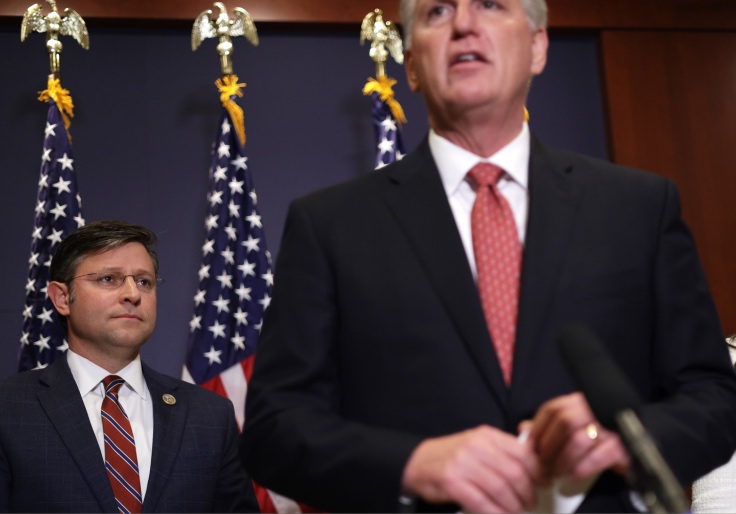
Kevin McCarthy first sought the House speakership in 2015 after John Boehner’s resignation. His candidacy was hampered by distrust among right‑leaning Republicans and by remarks he made concerning the Benghazi hearings. During the 2016 presidential campaign, internal frustration within the Republican Party grew, but the subsequent Trump presidency made House GOP politics appear less critical.
2015 to 2023: Two Attempts, Different Contexts
McCarthy’s second attempt came in 2023, following the 2022 midterm elections that proved tighter than many expected. The Supreme Court’s decision overturning Roe v. Wade was said to have influenced those elections. To secure the speakership in 2023, McCarthy required near‑unanimous support from House Republicans, giving the Freedom Caucus significant bargaining power.
Matt Rosendale, a Republican from Montana, summed up the mood among rank‑and‑file members: "I was praying each evening for a small majority because I recognized that that small majority was the only way that we were going to advance a conservative agenda."
McCarthy began the 2023 speaker vote with roughly 200 Republican supporters, meaning about ten per cent of the conference needed to be convinced. Chip Roy of Texas led the most influential members of the Freedom Caucus, demanding changes to decentralise House authority, while other Freedom members sought influential positions within the leadership hierarchy. Representative Matt Gaetz of Florida acted as the informal leader of opposition to McCarthy.
Negotiations with holdouts resulted in an agreement to allow any member to file a motion to vacate the speaker. On the first ballot McCarthy received 203 votes; on the fifteenth ballot, five days later, he secured 216 votes, with some members voting present.
Brief Tenure and Ouster
McCarthy’s tenure lasted 270 days, making it the briefest for a third‑ranking U.S. official since the 1870s. In September 2023, a government‑shutdown‑avoidance bill split the conference, prompting Gaetz to initiate a motion to vacate McCarthy. John Leganski suggested Gaetz’s true aim was to stop a bipartisan House Ethics Committee probe into alleged sexual misconduct with a minor, noting that Gaetz filed his legal response to the ethics investigators one day before the vote that removed McCarthy.
Seven Republican members joined Gaetz in the vote that ousted McCarthy. Mike Johnson was subsequently elected speaker. Leganski expressed suspicion that Johnson was more motivated by personal interest in the role and argued that holding any leader to the standard that they must have 100 percent support from their party at all times is unrealistic.
Looking Ahead: Institutional Changes and Outsider Leadership
In 2025 House Republicans increased the number of votes needed to trigger a motion to vacate. Leganski proposed that the majority leader should hold most of the power, vesting the lion's share of the power with the majority leader and reducing the speaker to a largely ceremonial seniority‑based role.
The Constitution lists the speakership as the first federal office, yet the presidency now dominates national politics. A Republican speaker must simultaneously negotiate with a Democratic president and the Freedom Caucus, a balance made difficult by narrow margins. The party appears to be looking for leadership from outside the traditional Washington establishment.