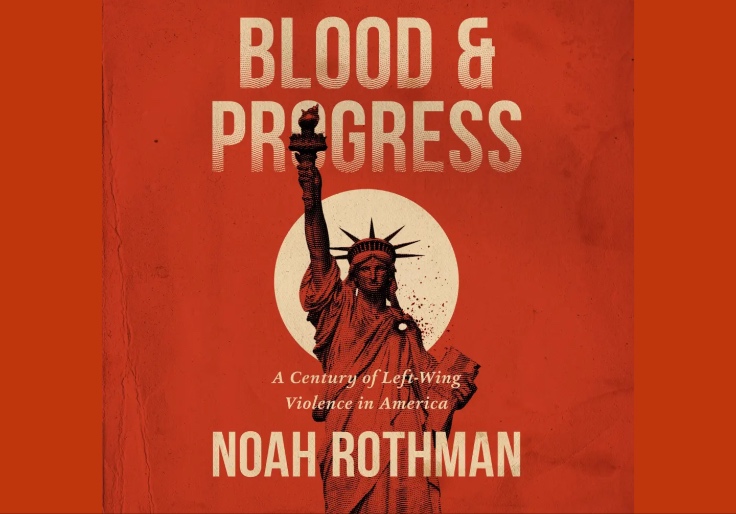
In his new book Strong> Blood & Progress: A Century of Left-Wing Violence in America, National Review's Noah Rothman confronts a stark reality: political violence is not confined to the right, but has deep roots on the left. The author faces a challenge familiar to all current affairs writers, deciding when to stop documenting events that continue unfolding at breakneck speed. For Rothman, this meant finalizing his manuscript amid escalating violence, including the third assassination attempt on former President Donald Trump and the 2025 murder of conservative activist Charlie Kirk, allegedly by a leftist extremist.
A Historical Pattern of Violence
Blood & Progress opens with Kirk's assassination, a shocking yet somehow normalized event in modern America, before dissecting a century of similar incidents. Rothman details the 2023 firebombing of Pennsylvania governor Josh Shapiro's home, the 2020 Black Lives Matter riots following George Floyd's death, and the 2018 plot to assassinate Supreme Court Justice Brett Kavanaugh. He also critiques Democratic leaders like Sens. Elizabeth Warren and Bernie Sanders, as well as Rep. Alexandria Ocasio-Cortez, for what he calls their "pregnant buts", condemning violence while justifying its causes.
The book traces this pattern back to early 20th-century anarchist movements and the 1970s Weather Underground, arguing that left-wing violence persists through an "activist ecosystem" that denies, justifies, or celebrates such acts. Rothman notes how the New York Times praised Seattle's 2020 autonomous zone as a "homeland for racial justice," even as it descended into chaos. This historical amnesia, he argues, enables cycles of violence to repeat.
The Normalization of Extremism
Rothman's analysis is personal. As a conservative writer focused on combating antisemitism, he admits even he has grown desensitized to violence once deemed unthinkable. The "fiery but mostly peaceful" riots of 2020 now feel distant, he writes, as attacks like the 2023 antisemitic murder outside Washington, D.C.'s Jewish Museum become grim routine. This numbness, he warns, is part of the problem.
The book does not spare the right. Rothman criticizes the GOP's response to the January 6 Capitol attack, calling it a missed opportunity for accountability. Yet his central thesis remains clear: addressing political violence requires acknowledging its bipartisan history and the media's role in shaping narratives. Until Americans confront this reality, Rothman fears, the cycle will continue.
Center Street publishes Blood & Progress on August 27. At 368 pages and $30, it is a sobering exploration of how political violence becomes normalized, and how it might be unmade.