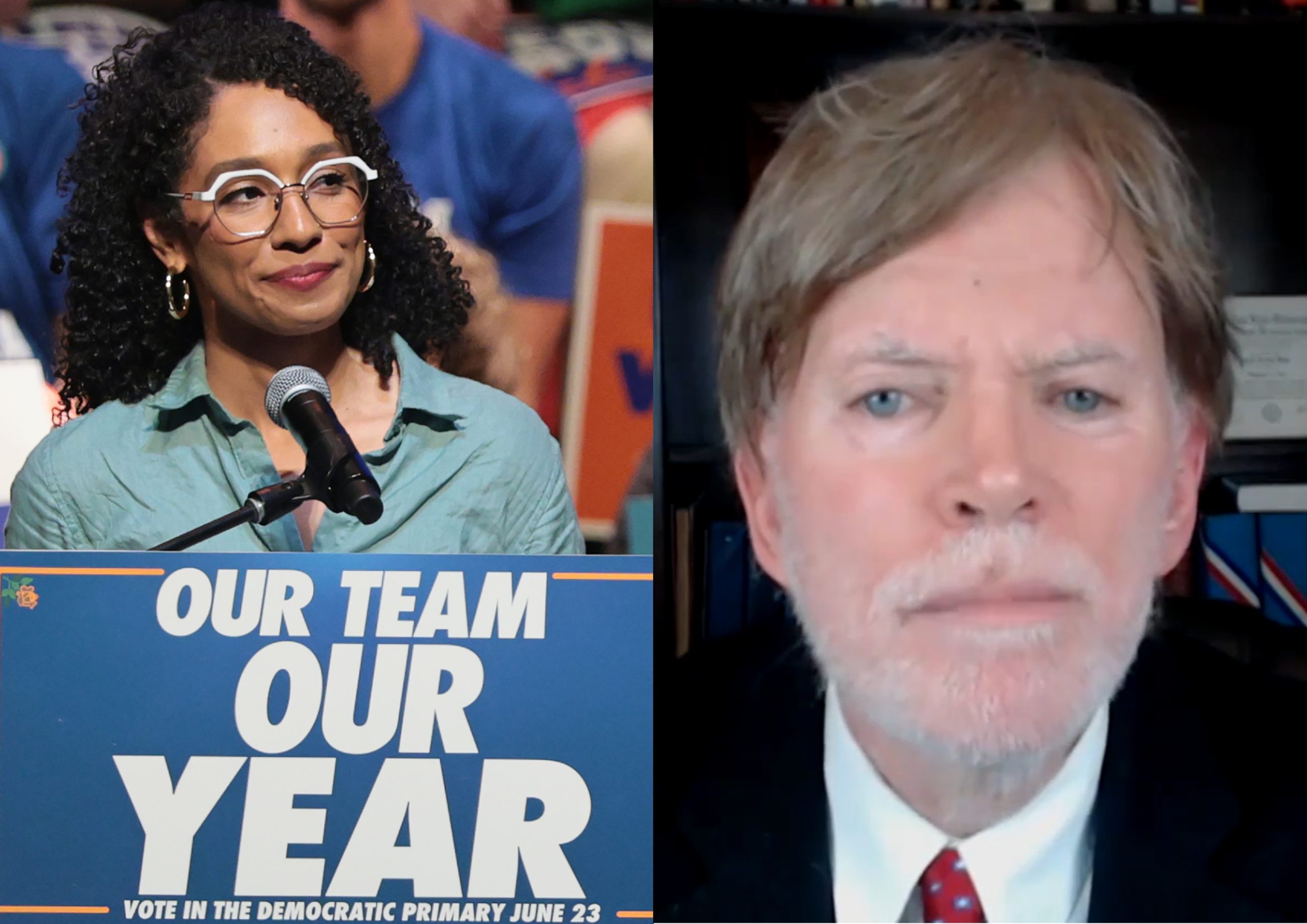
Presumptive Democratic congresswoman Darializa Avila Chevalier's opposition to interracial relationships has sparked a firestorm of controversy, with former KKK Grand Wizard David Duke emerging as an unlikely supporter of her views. In a recent interview with the Washington Free Beacon, Duke expressed his agreement with Chevalier's desire to "preserve her heritage" and criticized the idea of interracial relationships, saying that people have the right to "preserve their particular heritage." This statement has raised concerns about the potential consequences of such views, particularly in the context of the Democratic Party's platform and values.
Chevalier's views on interracial relationships were first expressed in a now-deleted social media post from September 2019, in which she criticized black and Arab men for "fetishizing ugly colonizer women." The post sparked widespread outrage and criticism, with many accusing Chevalier of promoting racist and discriminatory views. Despite the backlash, Duke has come to Chevalier's defense, saying that she has the right to preserve her heritage and that her views are not unlike his own. This has led to a heated debate within the Democratic Party, with some drawing parallels between the two figures.
Mark Halperin, a prominent political journalist, quoted an unnamed "Democratic Party stalwart" as saying that Chevalier is "our David Duke," suggesting that her extreme views are poisoning the party's chances of winning a majority. The comment has sparked a wider discussion about the party's tolerance for extremist views and its ability to distance itself from figures like Duke. This controversy highlights the challenges that the Democratic Party faces in navigating the complex and often fraught landscape of extremist views and hate speech.
Duke's own history of extremism and racism is well-documented. The former KKK Grand Wizard has a long record of promoting antisemitic and white supremacist views, and has been widely condemned for his role in promoting hate and intolerance. In 2019, he called Rep. Ilhan Omar (D-Minn.) "the most important Member of the US Congress" after she accused Jewish lawmakers of dual loyalty to Israel, sparking widespread outrage and criticism. This incident demonstrates the potential consequences of extremist views and the importance of holding public figures accountable for their statements and actions.
Despite his extremist views, Duke has found common ground with some far-left Democrats on issues like Israel and immigration. In his recent interview with the Free Beacon, he praised New York City's socialist mayor Zohran Mamdani, saying that his support for Chevalier was a "step forward" and that he shared some of Mamdani's views on Israel. However, Duke also expressed his disagreement with Mamdani on immigration, saying that he believed that the issue was being "orchestrated by the same elite" that had given the US "these wars." This highlights the complexities of the political landscape and the potential for unlikely alliances and disagreements.
The controversy surrounding Chevalier and Duke has sparked a wider discussion about the limits of free speech and the tolerance of extremist views within the Democratic Party. While some have defended Chevalier's right to express her views, others have condemned her for promoting hate and intolerance. The incident has also raised questions about the party's ability to distance itself from figures like Duke and to promote a more inclusive and tolerant platform. This debate is crucial in understanding the values and principles of the Democratic Party and its commitment to promoting inclusivity and tolerance.
Former GOP congressman Peter Meijer commented on the parallels between Duke's 1991 governor's race and Chevalier's New York congressional campaign, saying that the difference was that the modern Democratic Party would never do to Chevalier what the GOP did to David Duke. The comment highlights the challenges that the Democratic Party faces in navigating the complex and often fraught landscape of extremist views and hate speech. It also raises questions about the party's values and its commitment to promoting inclusivity and tolerance.
As the controversy surrounding Chevalier and Duke continues to unfold, it remains to be seen how the Democratic Party will respond to the criticism and whether it will take steps to distance itself from figures like Duke. The incident has sparked a wider discussion about the limits of free speech and the tolerance of extremist views, and has raised important questions about the party's values and its commitment to promoting inclusivity and tolerance. The Democratic Party's response to this controversy will be crucial in shaping its platform and values, and in determining its ability to promote a more inclusive and tolerant society.
In the context of the US political system, the controversy surrounding Chevalier and Duke highlights the importance of understanding the complexities of the political landscape and the potential consequences of extremist views. The US political system is designed to promote free speech and the exchange of ideas, but it also has mechanisms in place to prevent the promotion of hate and intolerance. The Democratic Party's response to this controversy will be crucial in determining its ability to navigate this complex landscape and to promote a more inclusive and tolerant society.
For American and Canadian readers, the controversy surrounding Chevalier and Duke has significant implications. It highlights the importance of understanding the complexities of the political landscape and the potential consequences of extremist views. It also raises questions about the values and principles of the Democratic Party and its commitment to promoting inclusivity and tolerance. As the controversy continues to unfold, it will be important for readers to stay informed and to engage in the discussion about the limits of free speech and the tolerance of extremist views.