The Special Inspector General for Afghanistan Reconstruction (SIGAR) delivered a report to Congress on 30 April that paints a stark picture of the security fallout from the United States’ 2021 withdrawal from Afghanistan. The document links the Taliban’s recent surge in revenue to a growing capacity to arm not only its own fighters but also a host of terrorist groups operating in the region.
Revenue growth and weapon transfers
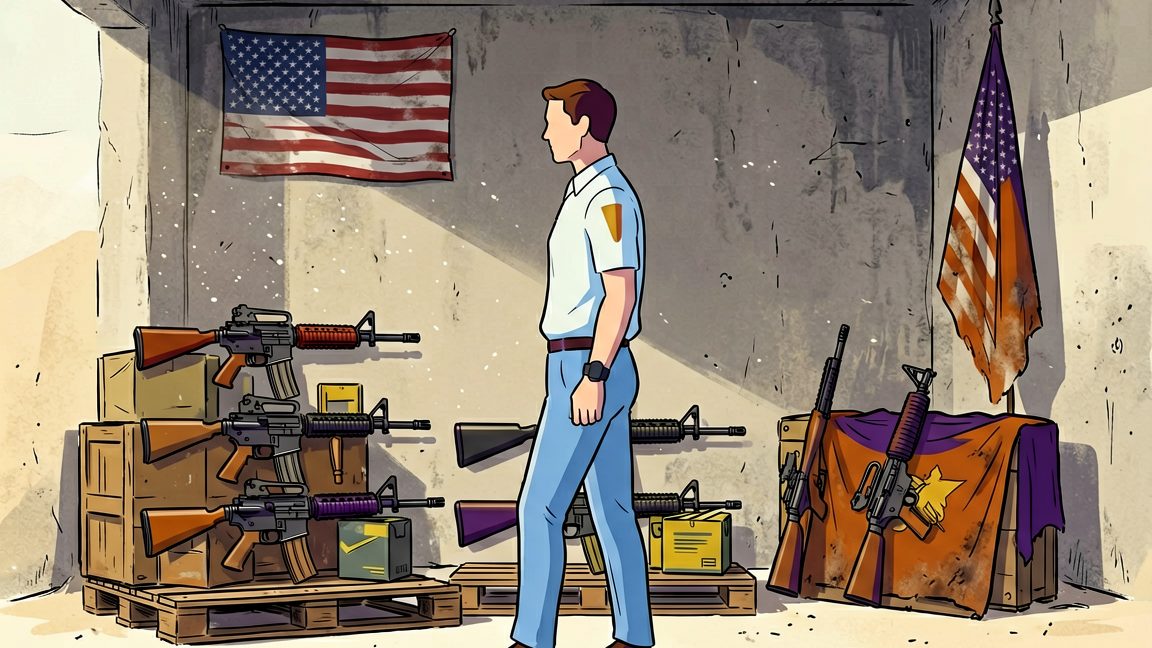
According to SIGAR, the Taliban’s income has risen sharply, prompting analysts to warn that the group’s influence is expanding and that the risk of terrorist activity escalating is now higher than before. The report also details how many of the weapons supplied by the United States to the Afghan Army have been diverted. Of the $18.6 billion worth of equipment handed over over the years, $7.12 billion in weaponry remains in Taliban hands. These arms have been redistributed to terrorist affiliates and, in some cases, have entered the black market.
The Pentagon’s assessment confirms that the retained weaponry enables the Taliban to equip its own ranks and to supply other extremist organisations. SIGAR identified more than two dozen terrorist groups active in Afghanistan, notably the Islamic State‑affiliated Khorasan Province (ISIS‑K) and Tehreek‑e‑Taliban Pakistan (TTP).
US aid programmes under scrutiny
In the months after the Taliban seized control, the Biden administration pledged nearly $4 billion in assistance. That funding was later curtailed: the United States Agency for International Development (USAID) was dissolved and several programmes were frozen amid concerns that the Taliban were interfering with, and misusing, the money.
The State Department also slashed its budget for programmes inside Afghanistan, terminating funding for all but two of the 24 initiatives it had been running. The cuts are projected to save American taxpayers more than $1 billion by the end of 2025.
Despite a sizeable US investment in girls’ education, the Taliban continues to bar most girls from attending school and restricts women from many forms of employment. The SIGAR report notes that American aid partners on the ground paid the Taliban at least $10.9 million in various fees, underscoring the need for tighter oversight.
Implications for policy and security
The findings have far‑reaching implications for US policy in Afghanistan and the wider region. SIGAR recommends a more sustainable approach that combines diplomatic, economic and military tools, and that engages regional partners more fully. It stresses that any future aid must be accountable and must not inadvertently bolster terrorist groups.
Analysts say the situation remains “complex and challenging”, with the potential to affect both regional and global security. Continuous monitoring and coordinated action with allies are described as essential to address the root causes of terrorism and instability.
Historical context
The United States first became involved in Afghanistan during the Soviet‑Afghan war of the 1980s, supplying the mujahideen who fought the Soviet occupation. After the Soviets withdrew, US engagement waned, creating space for the Taliban’s rise to power.
The September 11, 2001 attacks prompted a new US military intervention aimed at defeating al Qaeda and its Taliban allies. Early successes were followed by a resilient insurgency, and a 2009‑10 surge that temporarily stabilised parts of the country. Nevertheless, the Taliban retained a significant presence, and the 2021 withdrawal left a power vacuum that the group quickly filled.
For readers in the United States and Canada, the report underscores that the Taliban’s expanding financial base and access to sophisticated weaponry pose a tangible threat to regional stability and to the safety of American and allied interests abroad.
The findings were first reported by the Special Inspector General for Afghanistan Reconstruction (SIGAR) in its 30 April briefing to Congress.