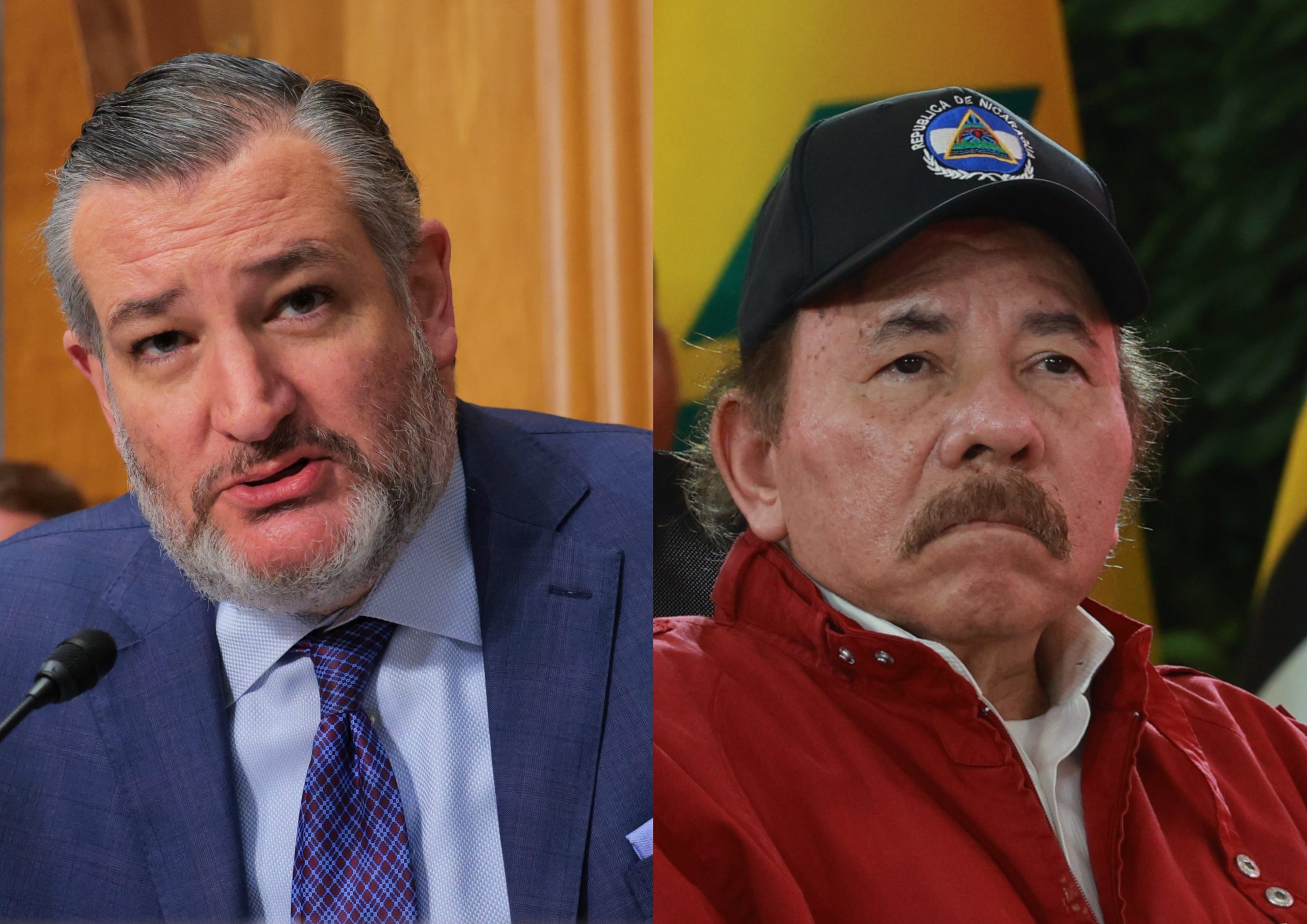
The U.S. Senate is considering legislation that would deepen economic pressure on Nicaragua, demanding that President Daniel Ortega end political repression and restore democratic elections. The measure, co‑sponsored by Republican Senator Ted Cruz of Texas and Democrat Senator Tim Kaine of Virginia, expands the scope of the 2018 Nicaragua Investment Conditionality Act, commonly known as NICA.
NICA, which Cruz authored, limited Nicaragua's access to U.S. financial assistance and to loans from multilateral institutions after the Ortega government was accused of violating human rights. The new bill would add the country's gold mining sector to the list of prohibited activities and would impose penalties on officials who target faith‑based organizations.
Ortega, now 80, and his wife Rosario Murillo, who serves as co‑president, announced in late July that they intend to eliminate future elections, a move that would cement a two‑decade rule. Since taking power in 2007, the couple has overseen a campaign of arrests, intimidation of opposition leaders, and the closure of dozens of non‑governmental and religious groups.
The Senate proposal cites United Nations reports that document disappearances, arbitrary detentions and the targeting of Christian ministries. In 2023, Nicaraguan authorities detained eleven pastors from the Texas‑based Mountain Gateway ministry and issued arrest warrants for three U.S. citizens linked to the organization. The detainees were released in September 2024 after diplomatic pressure from the State Department, but the government continues to monitor and harass faith‑based groups.
According to the bill's text, "the Ortega regime has engaged in systematic corruption, undermined democratic institutions, eroded the rule of law and committed widespread human rights abuses, including state‑sponsored violence against Nicaraguan citizens." The language also references "regional instability, forced migration, transnational repression and national security concerns," linking the situation to broader U.S. interests in the Western Hemisphere.
For American and Canadian policymakers, the stakes are clear. Nicaragua's political turmoil has contributed to a surge of migrants attempting to cross the U.S., Mexico border, a trend that has strained resources in border states and prompted tighter immigration enforcement. Canadian officials have also expressed concern about the flow of refugees and the potential for the crisis to spill over into neighboring countries that trade with Nicaragua, such as Costa Rica and Honduras.
The bill would keep existing sanctions in place until Ortega commits to "competitive, free and fair elections that meet democratic standards and permit credible international observation." It also calls for a review of any U.S. assistance to Nicaragua's gold sector, a lucrative industry that accounts for a sizable share of the nation's export earnings.
Under the International Emergency Economic Powers Act, the president can impose sanctions without a new congressional vote, but Congress retains the authority to enact more targeted measures. The 2018 NICA law required the administration to certify that Nicaragua was not meeting human‑rights standards before releasing certain funds. The new legislation seeks to make that certification process more stringent and to add new prohibitions that would affect private companies dealing in Nicaraguan gold.
Supporters argue that expanding sanctions will pressure Ortega to negotiate a political transition and will signal to other authoritarian regimes in the region that the United States will not tolerate systematic repression. Cruz told the Washington Free Beacon that "since the beginning of my career in the Senate I have sought to counter these abuses and tactics." Kaine echoed the sentiment, emphasizing that "the United States must stand with civil society and religious freedom wherever they are threatened."
Critics, however, warn that broader sanctions could hurt ordinary Nicaraguans more than the ruling elite. Economic analysts note that the gold sector employs thousands and that cutting off revenue could deepen poverty, potentially driving more people to seek asylum in the United States and Canada. Human‑rights NGOs have urged a calibrated approach that targets officials and corrupt enterprises while providing humanitarian aid to vulnerable populations.
The legislation also raises questions about coordination with the executive branch. President Donald Trump, who left office in 2021, had made Western Hemisphere security a priority, but his successor has taken a more multilateral stance, emphasizing diplomatic engagement with regional partners. The current administration has signaled willingness to work with Congress on human‑rights issues, yet it has not yet taken a definitive position on the new Nicaragua bill.
In the Senate, the measure is expected to be debated on the Foreign Relations Committee before moving to the full chamber. If passed, it would be sent to the House of Representatives, where similar bills have previously garnered bipartisan support. The House Foreign Affairs Committee has already scheduled a hearing on Central American migration, suggesting that the Nicaragua sanctions could become part of a larger legislative package addressing border security and regional stability.
Should the bill become law, enforcement would fall to the Treasury Department's Office of Foreign Assets Control, which maintains the list of individuals and entities subject to sanctions. Companies operating in the gold sector would need to conduct enhanced due‑diligence to avoid violating the new rules, a process that could increase compliance costs for U.S. and Canadian firms with business ties to Nicaragua.
For voters in the United States, the debate touches on issues of foreign‑policy accountability and immigration. Constituents in border states such as Texas, Arizona and California have expressed frustration with the flow of migrants from Central America, linking it to the political conditions in countries like Nicaragua. In Canada, the discussion resonates with policymakers who are grappling with the influx of asylum seekers and the need for a coordinated North‑American response.
The next steps will depend on the Senate's vote and the level of bipartisan consensus. If the bill clears both chambers, the president would have to sign it into law, after which Treasury would issue the final regulations. Until then, the Ortega regime remains under intense scrutiny, and the international community continues to monitor the human‑rights situation in Nicaragua.