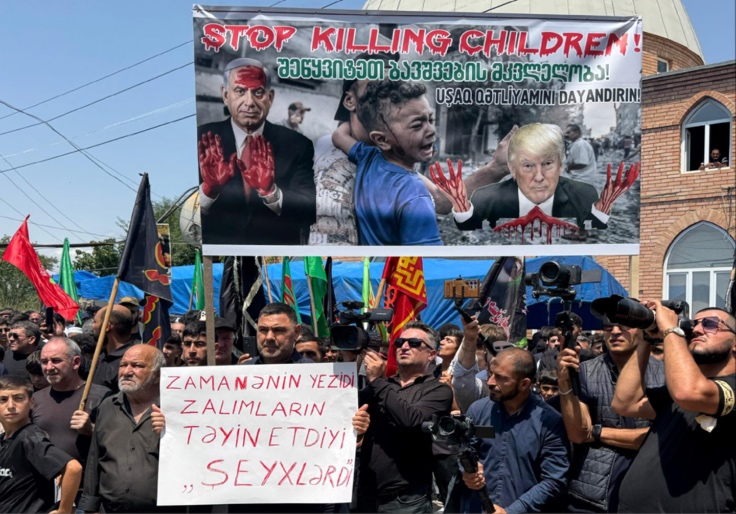
The Republic of Georgia, once a steadfast U.S. ally, has become a strategic platform for Iranian influence under its ruling Georgian Dream Party, according to experts at the Hudson Institute. This shift has allowed Iran's Islamic Revolutionary Guard Corps (IRGC) to recruit Georgian intelligence assets who can travel freely across Europe and the U.S. to carry out terrorist operations.
Iran's Expanding Influence in Eurasia
The transformation, accelerated during the U.S. conflict with Iran, saw Georgia permit Russia to use its airspace for airlifting supplies to Tehran, undermining American interests. This alliance has strengthened an international Axis of Resistance involving Russia, China, and Iran. House Foreign Affairs Committee member Joe Wilson (R., S.C.) called the situation a "Georgian nightmare," criticizing Georgian Dream's role in aiding Iran during the war.
"Georgian Dream has helped Iran by allowing Russian airlifters to transit its airspace en route to Iran, carrying supplies to undermine U.S. efforts," Wilson said. The Hudson Institute warned in a March report that Georgia now provides Iran a "new strategic platform in Eurasia," creating fertile ground for intelligence recruitment and paramilitary mobilization.
Targeting Vulnerable Communities
Luke Coffey, a senior fellow at Hudson's Center on Europe and Eurasia, highlighted the transnational risks: "Georgian citizens can travel easily to the U.S. and the Schengen zone. This is why Iran targets ethnic Azerbaijani Georgians." Tehran-backed social welfare groups in Georgia propagate regime propaganda among this Shia community, which faces economic vulnerabilities.
In one case, Iran recruited a Georgian citizen to assassinate U.S.-based journalist Masih Alinejad for her anti-regime activism. Iran has established branches of its Ahl al-Bayt World Assembly and the U.S.-sanctioned Al-Mustafa International University in Georgia. The latter, designated a terror outfit by President Donald Trump in 2020, allegedly provides the IRGC's Quds Force with resources for foreign operations.
Former Georgian parliament member Giorgi Kandelaki, coauthor of the Hudson report, noted Al-Mustafa's three campuses in Georgia and its $100 million annual budget. "There are confirmed cases of Al-Mustafa outposts being used for recruitment or operations against the U.S.," he said. An Al-Mustafa official was once exposed for plotting to assassinate an Israeli ambassador in Mexico.
Despite Iran's overt activities, "there's almost no awareness in Washington about Tehran's growing presence in Tbilisi," Coffey said. "The Georgian Dream party must understand this U.S. administration won't tolerate IRGC recruitment on their soil."