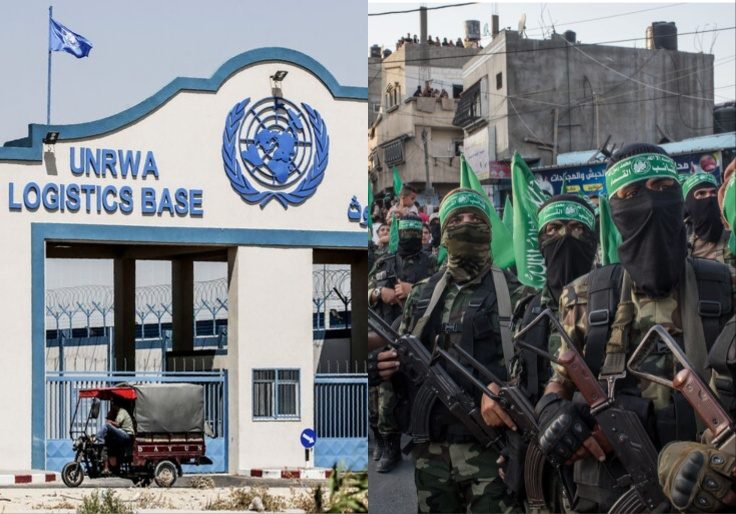
The United States Agency for International Development's independent inspector general released a confidential review in December 2025 that criticises the United Nations Office of Internal Oversight Services for its handling of a probe into UNRWA employees suspected of supporting Hamas during the Oct. 7 attacks. The report says the internal audit imposed a proof threshold that effectively insulated the agency from accountability.
UNRWA, the United Nations Relief and Works Agency for Palestine Refugees, receives funding from a coalition of donor governments, including the United States, Canada, the European Union and several Arab states. The agency provides education, health care and emergency assistance to roughly five million registered refugees across the West Bank, Gaza and neighboring countries. Since the Oct. 7 conflict, UNRWA has faced intense scrutiny over alleged infiltration by Hamas operatives.
The internal UN investigation, launched in 2024, examined 19 UNRWA staff members. It concluded that evidence was insufficient to link nine of those employees to the attacks. The findings were first reported by the Washington Free Beacon in November 2025. According to the Free Beacon, the UN audit dismissed Israeli intelligence, including intercepted communications and cell‑phone records, that purportedly tied the staffers to Hamas.
USAID's inspector general, an office that operates independently of the agency's development programs, conducted a parallel review. The inspector general's report, obtained by Senator Chuck Grassley's office, says the UN audit "set an impossibly high burden of proof" and ignored whether any of the staff members were members of Hamas, focusing only on direct participation in the Oct. 7 assaults.
"The OIOS investigation was limited to claims of possible involvement in the armed attacks," the inspector general wrote. "It did not review whether the UNRWA staff members were current or former members of Hamas." The report adds that the UN audit rejected Israeli evidence on the grounds that it could not be independently authenticated, even though the material was collected from a designated foreign terrorist organization.
Grassley, the chair of the Senate Judiciary Committee, sent a demand letter to UN Secretary‑General António Guterres on Aug. 27, asking for unredacted documents related to the OIOS investigation and any steps taken to prevent U.S. taxpayer money from reaching individuals with terrorist ties. He also wrote to State Department Secretary Marco Rubio, pressing for a tally of UN employees flagged for Hamas affiliation and for faster placement of those individuals on the federal blacklist that bars them from future U.S.‑funded projects.
The inspector general's review identified more than 100 UNRWA staff members who, according to the report, served as Hamas combatants or provided logistical support to the group. UNRWA has since terminated 70 employees, but the inspector general warned that without robust vetting, those workers could find employment with other NGOs or UN bodies that also receive U.S. aid.
U.S. officials have taken the findings seriously. A senior official from the former Trump administration, speaking on background, said the report is prompting Western donors to reconsider future contributions to UNRWA. "The USAID IG's investigation has ripped the veneer off of the UN's shoddy investigation and is causing the international community to rethink commitments," the official told the Free Beacon.
Canada, which contributes roughly CAD 30 million annually to UNRWA, has not publicly commented on the inspector general's report. However, Canadian officials have previously expressed concern about ensuring that aid does not fund extremist elements. The Canadian International Development Agency (CIDA) routinely requires recipient organizations to meet strict security vetting standards, a practice that may be revisited in light of the new U.S. findings.
The Senate Judiciary Committee's involvement reflects broader congressional interest in how U.S. aid is administered overseas. The committee's jurisdiction includes oversight of foreign assistance programs and the enforcement of anti‑terrorism statutes. Grassley's request for documentation aligns with a series of bipartisan efforts to tighten oversight of United Nations programs that receive U.S. funding.
UN officials have responded cautiously. A spokesperson for the United Nations said the organization had received Grassley's letter and would provide a response, but declined to comment on the specifics of the inspector general's findings. The spokesperson also noted that UNRWA is cooperating with ongoing investigations and has implemented "enhanced screening measures" for its personnel.
Legal scholars note that the dispute raises questions about the limits of UN internal oversight versus external accountability mechanisms. The Office of Internal Oversight Services is mandated to conduct audits, investigations and evaluations of UN programs, but it does not have the authority to enforce criminal sanctions. When evidence originates from a foreign intelligence service, the UN's ability to verify that material can be constrained by diplomatic considerations and by the agency's own standards for evidence.
For U.S. taxpayers, the practical impact hinges on whether Congress decides to alter funding levels. The United States provides roughly $150 million each year to UNRWA, a figure that has been subject to annual appropriations votes. If the Senate were to withhold or reduce that aid, UNRWA's capacity to deliver services in refugee camps could be compromised, potentially affecting education and health outcomes for hundreds of thousands of children.
Canadian policymakers face a similar dilemma. Reducing contributions could strain UNRWA's operations, but maintaining funding without stronger safeguards may expose Canada to political criticism at home. The issue is likely to surface in upcoming parliamentary debates on foreign aid, where opposition parties have already called for stricter vetting of UN partners.
Both the United States and Canada have mechanisms to place individuals on a blacklist that bars them from receiving federal contracts. The State Department's list, managed by the Office of Foreign Assets Control, currently includes only one UNRWA employee identified by the inspector general. Grassley's letter urges the department to accelerate the process, arguing that the slow pace undermines national security.
The next steps will involve a formal response from the United Nations, a potential congressional hearing on UNRWA funding, and likely pressure on the State Department to act on the blacklist referrals. If the Senate moves to condition future aid on compliance with stricter vetting, UNRWA may need to overhaul its recruitment and monitoring procedures to retain donor support.
In the meantime, the inspector general's report remains a key document for lawmakers and donor governments assessing the risk that U.S. and Canadian assistance could be diverted to extremist actors. The findings underscore the tension between humanitarian objectives and security concerns that has long complicated aid to the Palestinian refugee population.