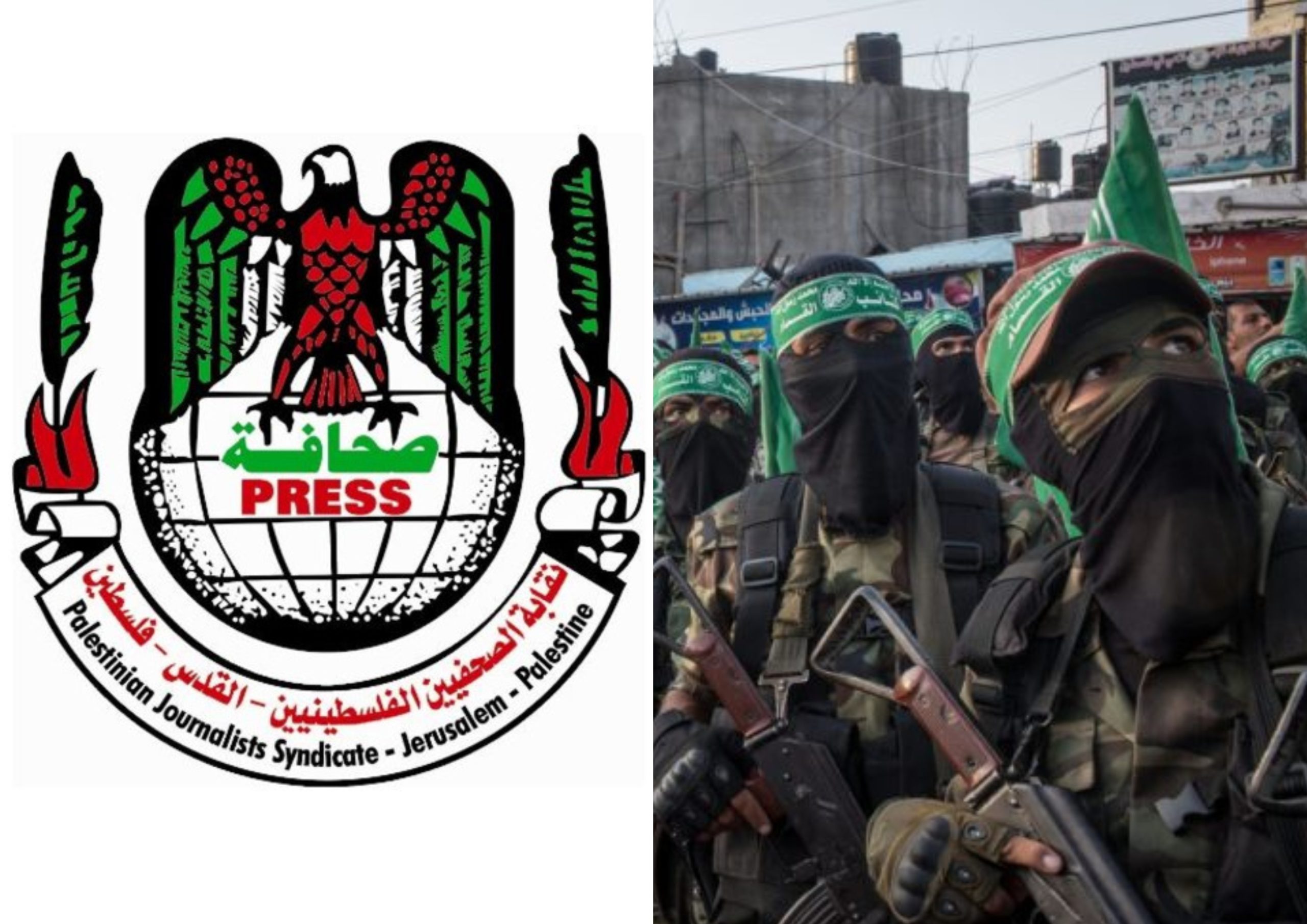
The Washington Free Beacon released an exclusive investigation that ties the Palestinian Journalists Syndicate, a Ramallah‑based media union, to the inclusion of confirmed Hamas and other militant operatives on the casualty lists of the Committee to Protect Journalists and the International Federation of Journalists.
According to the report, the syndicate, known by its Arabic acronym PJS, is led by Nasser Abu Bakr, a senior official who also holds a vice‑presidential post within the IFJ. Abu Bakr is described by the watchdog HonestReporting as a "pro‑terrorist" figure who has publicly praised individuals involved in attacks against Israeli civilians.
HonestReporting's audit found that PJS supplied information for 58 of the 218 entries on the CPJ's Gaza journalist database, representing roughly a quarter of the total. The audit also identified at least 120 names on that list that are linked to Hamas or other armed groups, a proportion that exceeds half of the entries reviewed.
The CPJ, a New York‑based nonprofit that monitors press freedom worldwide, has long relied on local partners to verify deaths in conflict zones. Its methodology typically involves cross‑checking reports from families, hospitals and local journalists before adding a name to its public database. The Free Beacon documents show that PJS was cited as a "top source" for many of the disputed entries, prompting the CPJ to announce a comprehensive review of its Gaza list.
The International Federation of Journalists, headquartered in Brussels and representing more than 600,000 media workers, also lists the PJS as an affiliate. The federation's website states that it works "closely with its affiliate, the Palestinian Journalists Syndicate to verify information in real time." HonestReporting says the IFJ removed eight individuals identified as militants from its list in July, but did so without a public explanation.
Abu Bakr's political ties extend beyond media advocacy. He is reported to sit on the Revolutionary Council of Fatah, the dominant faction of the Palestinian Authority, and to have posted tribute images to deceased militants on social media. In a 2022 Facebook post he eulogized Ghassan Kanafani, a figure described by the PJS as a "journalist, writer and thinker" who died fighting for Palestinian causes.
These revelations arrive as the United States and Canada grapple with how to assess information from conflict zones. Both governments have faced criticism for relying on NGO reports that may be influenced by partisan actors. Lawmakers in Washington have previously called for greater transparency in how press‑freedom organizations compile casualty data, arguing that inaccurate figures can affect foreign‑policy debates and aid allocations. The House Foreign Affairs Committee, for example, has held hearings on the reliability of humanitarian data from Gaza and has urged agencies to adopt stricter verification protocols.
In Canada, the issue resonates with ongoing discussions about the role of foreign NGOs in shaping public opinion on the Israel‑Palestine conflict. Canadian parliamentary committees have examined whether funding for certain advocacy groups should be conditioned on adherence to strict verification standards, a debate that could be informed by the findings of the Free Beacon investigation. The Standing Committee on Foreign Affairs and International Development has requested a review of the criteria used by Canadian International Development Agency partners when they cite casualty figures in briefing notes.
HonestReporting, a media‑monitoring organization that often critiques what it calls "anti‑Israel bias," issued a statement calling the PJS "the wellspring of the claim that the Israeli Defense Forces deliberately target journalists." The group argues that the syndicate's political agenda has been used to "launder" allegations that Israel is committing war crimes, a narrative it says predates the October 7 attacks.
The CPJ has not responded to requests for comment on its reliance on PJS data, nor has the IFJ addressed the partnership allegations. The PJS likewise declined to comment on the investigation or on the social‑media posts cited by HonestReporting.
Experts note that the episode underscores the difficulty of verifying deaths in densely populated war zones. "When local sources have political affiliations, it is essential for international NGOs to corroborate information through independent channels," said a media‑rights scholar at a U.S. university who asked to remain unnamed. "Otherwise, the credibility of the entire press‑freedom enterprise can be called into question."
For U.S. policymakers, the controversy may influence how congressional committees evaluate reports from NGOs when drafting legislation related to foreign aid or sanctions. The Senate Appropriations Subcommittee on State, Foreign Operations and Related Programs has signaled interest in requiring NGOs that receive U.S. funding to disclose their data‑collection methods. Similarly, Canadian officials could see the findings reflected in future audits of foreign‑funded civil‑society groups, especially those that receive support through the Global Affairs Canada grant program.
The broader media community is also watching the outcome. Press‑freedom organizations have faced criticism in the past for over‑reliance on single local partners. After the 2014 Gaza war, the CPJ revised its verification guidelines to include satellite imagery and third‑party medical records. The current review may prompt a similar tightening of standards, such as requiring multiple independent confirmations before a name is added to a casualty list.
In addition to procedural changes, the episode may have political ramifications. If the CPJ and IFJ confirm that a significant portion of their Gaza entries were based on inaccurate data, critics of the organizations could use the findings to argue that press‑freedom advocacy is being weaponized in the Israel‑Palestine debate. Pro‑Israel groups have already cited the Free Beacon report in congressional testimonies, while Palestinian civil‑society representatives have warned that the focus on data integrity could be used to downplay legitimate concerns about journalist safety.
The investigation also highlights the role of affiliate networks in the global journalism ecosystem. Affiliates such as the PJS provide language skills, on‑the‑ground access and cultural context that are difficult for distant NGOs to obtain. However, the Free Beacon report suggests that those same connections can create vulnerabilities when the affiliate has overt political loyalties. Balancing the need for local insight with the imperative of impartial verification remains a central challenge for organizations that track press‑freedom violations.
As the CPJ and IFJ undertake reviews of their Gaza casualty lists, the outcome could shape public discourse on the conflict and affect how governments and the public interpret claims of targeted attacks on journalists. A transparent correction process may restore confidence among donors and policymakers, while a failure to address the concerns could fuel further skepticism about the reliability of NGO‑generated data in high‑stakes geopolitical conflicts.