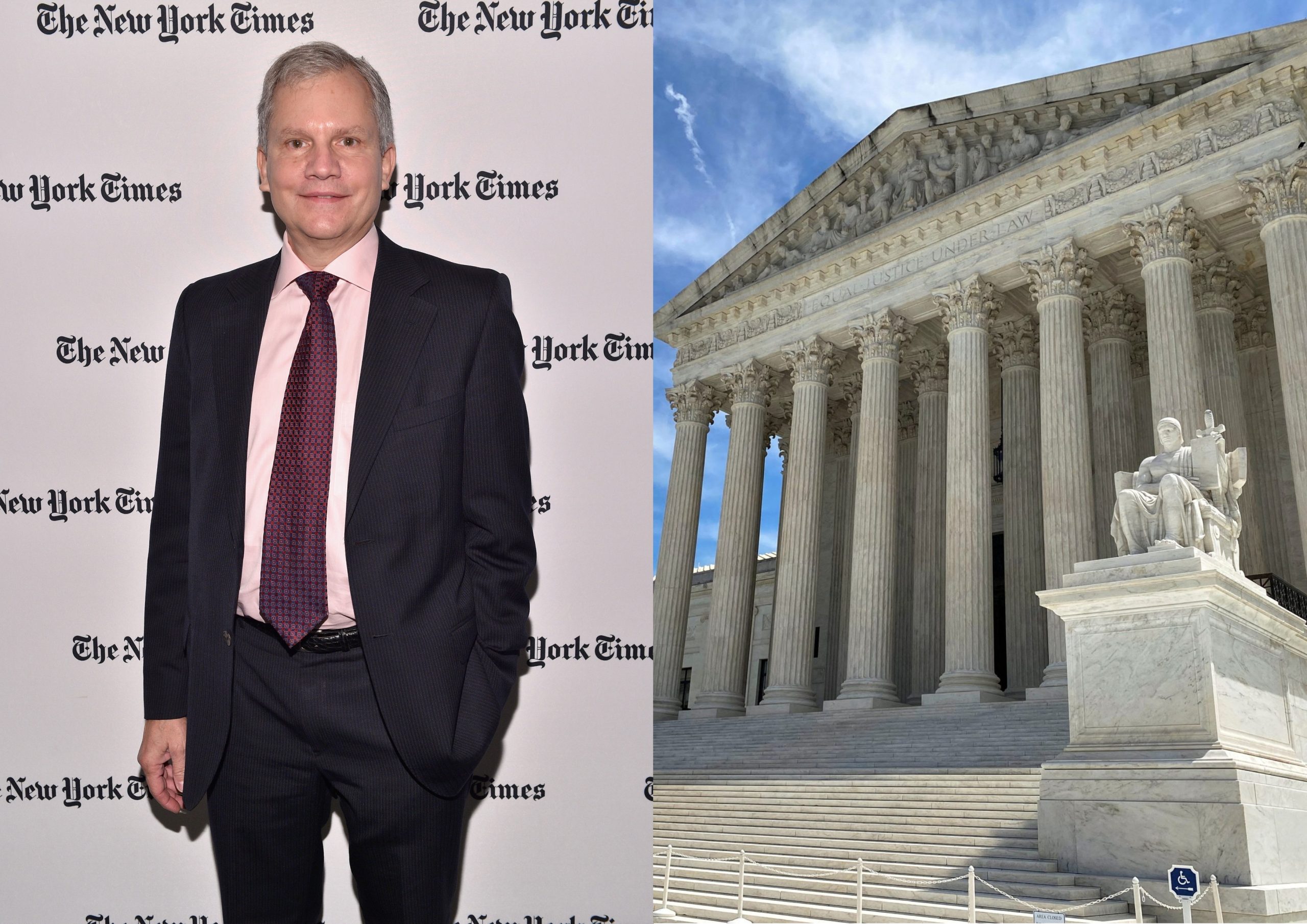
The New York Times published a front‑page investigation titled "How the Supreme Court Locks Away Its Own History," in which reporters Jodi Kantor, Julie Tate, Ann Marimow and Adam Liptak argued that the nation's highest court should make its justices' papers publicly available. The piece quoted University of California, Davis legal historian Mary Ziegler, who said the justices appear to be engaged in "reputation management" by sealing their records.
While the Times pressed the judiciary for openness, the newspaper's own historical records remain out of reach. The finding aid for the Arthur Ochs Sulzberger and Arthur Ochs Sulzberger Jr. collections, donated to the New York Public Library in 2007, specifies that the Sulzberger papers will not be accessible until 2035 and 2057 respectively. Arthur Ochs Sulzberger left the publisher's post in 1992 and the chief executive role in 1997; his son stepped down as publisher in 2017 and retired as chairman in 2020. Both sets of papers are therefore sealed for many years after the owners left the newsroom.
The contrast has sparked accusations of a double standard. Critics note that the Times editorial board has long championed stricter campaign‑finance rules that would limit political spending by wealthy donors, and has called for higher taxes on the affluent. At the same time, the newspaper has sought tax incentives for the construction of a new headquarters tower in Manhattan, a request that would effectively lower its own tax burden.
In addition to the archival issue, the Times is under pressure from its own shareholders. The National Center for Public Policy Research, which holds a stake in the publicly traded company, sent a letter, also signed by attorneys from the National Jewish Advocacy Center, requesting an inspection of the Times' books and records. The letter described the request as "grounded in concrete corporate risk" and said the documents were needed to assess whether the board and senior management had evaluated legal, reputational, financial and business consequences of the company's reporting practices.
The Times has not yet complied. In a statement the newspaper dismissed the shareholder request as "a clear attempt to chill First Amendment‑protected journalism." The same language was used when the Times demanded that the Supreme Court disclose its own archives, calling the court's secrecy "a clear attempt to chill Article III‑protected judging." The parallel phrasing has been highlighted by observers as evidence that the paper applies different standards to a private corporation and a federal institution.
Understanding the stakes requires a look at how both institutions handle historical records. Supreme Court justices traditionally file their papers with the National Archives, but the archives are subject to a 25‑year embargo after a justice's death. Some scholars argue that the rule hampers scholarly research and public accountability. The Times investigation joins a growing chorus of legal experts who want the embargo shortened or eliminated.
Public libraries, including the New York Public Library, operate under a mandate to provide open access to information. However, they also honor donor restrictions that can limit access for a set period. The Sulzberger donation is an example of a private agreement that supersedes the library's usual openness. The library's policy permits such restrictions when stipulated by the donor, a practice that has been used for other collections but is rarely scrutinized in the media.
The New York Times is a publicly traded company listed on the New York Stock Exchange. As such, it is subject to securities regulations that give shareholders the right to request information that could affect the company's value. Shareholder inspection rights are codified in the Securities Exchange Act, which allows investors to examine corporate books if they can demonstrate a legitimate purpose. The National Center for Public Policy Research's request fits within that legal framework, though the Times argues that the request is politically motivated.
Corporate governance experts note that transparency disputes within a public company can influence stock performance and public trust. If shareholders feel that the board is shielding itself from scrutiny, they may push for changes in leadership or policy. Conversely, a newspaper that positions itself as a watchdog of government may find its own practices under a microscope, especially when it benefits from public subsidies.
From a policy perspective, the Times' editorial stance on campaign finance and taxation aligns with progressive positions that have been debated in Congress and provincial legislatures across the United States and Canada. The paper's advocacy for higher taxes on the wealthy mirrors proposals in several U.S. states and Canadian provinces that aim to fund social programs. Critics argue that the Times' own tax break request for its new headquarters could undercut the credibility of those arguments.
The debate over the Sulzberger archives also raises broader questions about the role of philanthropy in shaping public knowledge. When a major media institution places its own history behind a decades‑long lock, it limits scholars' ability to study the evolution of American journalism, media ownership, and the influence of family dynasties on public discourse. The same argument applies to the Supreme Court, where sealed records can obscure the decision‑making process that affects national policy.
Legal scholars suggest that any move toward greater openness will likely require legislative action. In the United States, Congress would need to amend the Federal Records Act or pass a new law specifically addressing judicial papers. In Canada, similar discussions have emerged about the accessibility of Supreme Court of Canada judges' archives, though the legal framework differs.
What happens next will depend on how both institutions respond. The Supreme Court has not indicated a willingness to change its archival policy, and any amendment would face procedural hurdles. The New York Public Library, bound by the donor agreement, is unlikely to alter the access schedule without the Sulzberger family's consent. Meanwhile, the Times may face continued pressure from shareholders and public advocacy groups demanding that it align its internal practices with the transparency it champions in its editorial pages.
For readers and taxpayers, the core issue remains the same: whether powerful entities, whether a federal court or a media conglomerate, should be subject to the same standards of openness. The outcome could shape public trust in both the judiciary and the press, and will likely inform future debates about the balance between privacy, reputation management and the public's right to know.