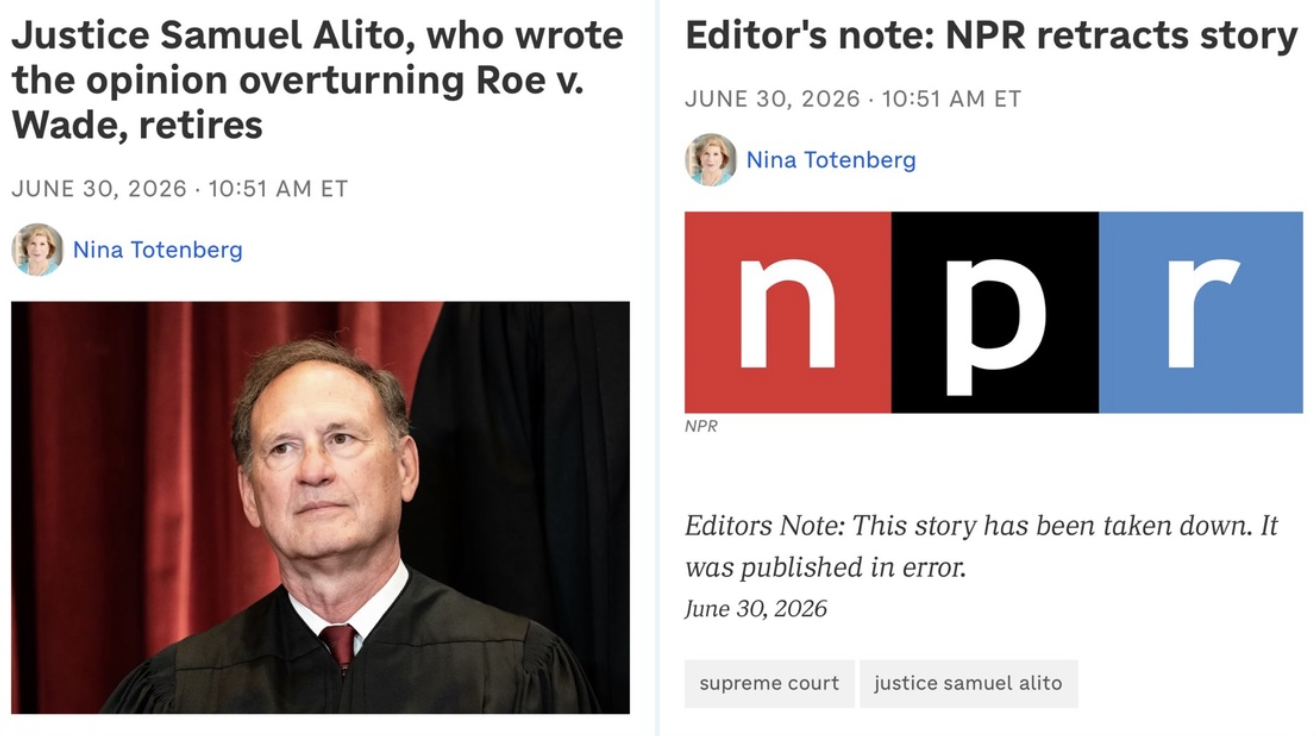
NPR has withdrawn a report that Justice Samuel Alito was planning to retire, replacing it with an editor’s note that attributes the error to veteran legal correspondent Nina Totenberg, who has covered the Supreme Court for five decades.
The retraction has revived broader concerns about the network’s editorial oversight, with critics pointing to other stories they say contain factual inaccuracies that have not been corrected.
In recent years NPR’s financial model has shifted dramatically. After congressional Republicans, including former President Donald Trump, moved to eliminate federal subsidies, the broadcaster lost its government funding and now depends on private donors and left‑leaning foundations. Critics argue that this change has intensified a perceived partisan tilt.
The watchdog group Camera, which monitors Middle‑East coverage, has accused NPR of consistently favouring narratives aligned with Hezbollah over Israel. Its director, Jennifer Kouzi, wrote: "NPR has abandoned the basic moral compass that news consumers should demand from journalism."
Conservative media monitor the Media Research Center has compiled a series of examples it says demonstrate a left‑wing bias. Its analysis of coverage of New York City Council member Zohran Mamdani claims interviewers asked “softball questions that sounded like what Democrats would ask at a precinct caucus.” The centre also highlighted a segment that described an alleged murderer as “hot”, calling it indicative of an “predictable anti‑Trump, anti‑Israel posture”.
Foreign reporting has drawn particular scrutiny. Segments from Lebanon have been accused of echoing Hezbollah’s messaging rather than providing critical analysis of the group’s activities. Domestic political coverage, according to critics, often presumes Donald Trump poses a threat to democracy and regularly features guests from left‑leaning organisations to reinforce that view.
A recent NPR story about scientists moving to the United Kingdom after Trump’s reelection quoted UC Irvine researcher Megan Peters, who said: "It became very apparent, very quickly, that the new administration did not value higher education." Critics note that the piece omitted context such as Trump’s Ivy League appointments or his education policy proposals, suggesting a pattern of uncritical storytelling.
The accumulation of these complaints has led to calls for greater accountability at NPR, with watchdogs urging the broadcaster to address perceived biases and improve its fact‑checking procedures.