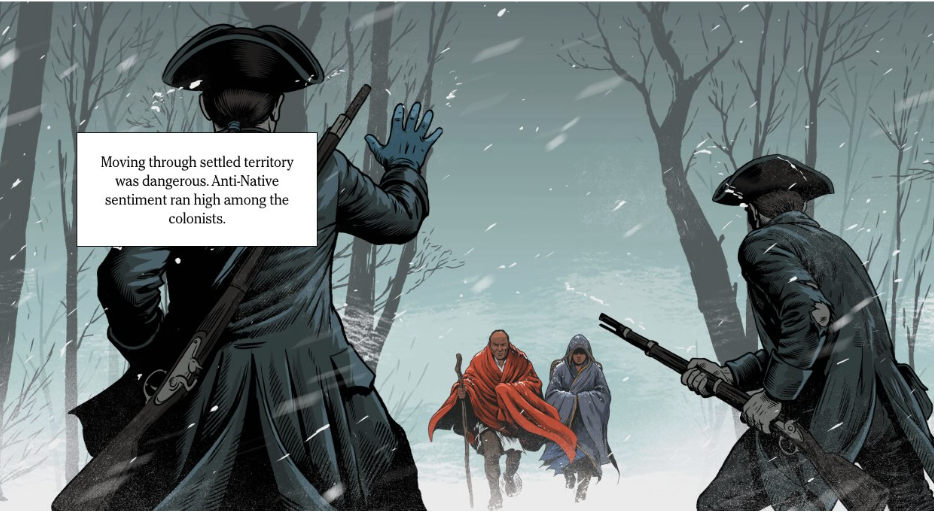
The New York Times Magazine has launched an animated history project to commemorate the United States’ 250th anniversary, arguing that anti‑Native American sentiment and the desire for land were central motives for the nation’s founders.
The series is illustrated by British artist Tim McDonagh, whose graphic style mixes comic‑book aesthetics with tattoo art. It traces tensions back to 1763 and claims that King George III’s attempts to curb westward expansion into Native territories, rather than the familiar grievance of taxation without representation, ignited colonial rebellion.
This narrative directly challenges the conventional story that the Revolution was sparked by “no taxation without representation”. It also omits reference to historian Bernard Bailyn’s research on ideological drivers such as the principle of consent of the governed.
Re‑casting familiar figures
Key founding personalities, including Samuel Adams and Thomas Jefferson, are portrayed as complicit in the dispossession of Indigenous peoples, even though Adams made a 1775 appeal to the Mohawk Nation to join the revolutionary cause.
The project deliberately sidelines major figures and instead highlights lesser‑known individuals such as Good Peter, a Mohawk leader, and Elizabeth Freeman, who challenged slavery in Massachusetts.
Criticism and political resonance
Critics argue the series aligns with contemporary progressive narratives about America’s origins. Jane Kamensky, president of Monticello, warned in an accompanying essay that history should not be reduced to “a graveyard of mustachioed villains”, while also noting the danger of uncritical hero‑worship.
The timing of the release coincides with heightened debate over historical education. Socialist Clare Valdez, a Democratic primary winner for a New York congressional seat, echoed the series’ theme, stating, "This nation was founded on genocide, on the mass displacement of people."
Reader reaction has been mixed; one comment observed, "The modern progressive discourse ignores the experiences of most who settled this country."
Historians stress that westward expansion involved a complex mix of alliances and conflicts with Native tribes, and that the very notion of private land ownership was anachronistic when applied to Indigenous communities. Primary documents such as the Declaration of Independence, they note, emphasise self‑governance rather than territorial claims.