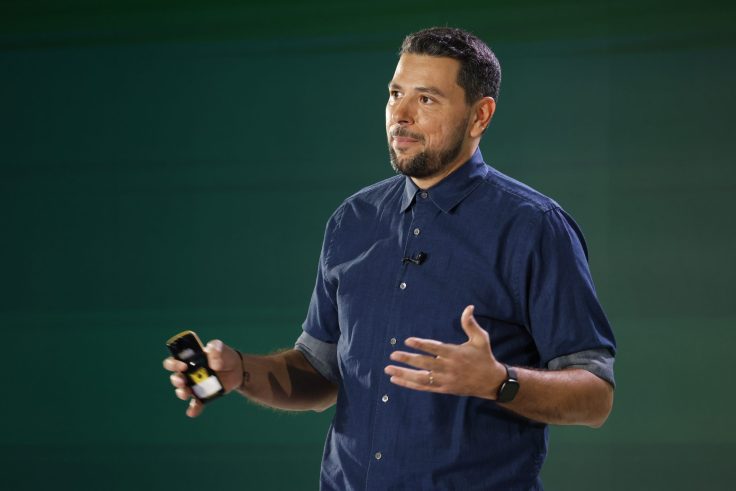
MS NOW announced on June 30 that "The Weekend: Primetime," co‑hosted by Ayman Mohyeldin, will be removed from the schedule as part of a cost‑saving effort. The decision marks the third time in four years that a show anchored by Mohyeldin has been pulled, following the 2025 cancellation of his solo weekend program on the same network and the 2022 termination of a similar series on Peacock.
Network president Rebecca Kutler issued a statement saying Mohyeldin and two of his co‑hosts would "remain with MS NOW and continue to contribute across our programming and platforms, bringing their respected reporting and distinct analysis to our audiences." In practice, Mohyeldin now appears only as a guest commentator, with no clear path to a permanent hosting slot.
Mohyeldin's on‑air presence has dwindled dramatically. In the six weeks since the cancellation, he has been featured roughly ten times, most often in panel discussions that touch on foreign policy, domestic politics, or media freedom. His social‑media output, once a daily fixture for a following that numbers in the hundreds of thousands, has slowed to occasional posts.
The pattern of cancellations is not accidental. MS NOW, formerly known as MSNBC, has been reshaping its lineup since the early 2020s, shedding shows that generate controversy or draw high production costs. The network's parent company, Versant, has been exploring strategic options that include a possible sale to private‑equity interests. Industry analysts note that such owners often prioritize profitability over niche programming, a trend that may explain the removal of shows that attract passionate but limited audiences.
Mohyeldin's reporting has consistently focused on Israel's actions in Gaza. He has described the conflict as a "genocide" and argued that Israel's ultimate aim is to expel Palestinians from the region. These positions have drawn sharp criticism from the Committee for Accuracy in Middle East Reporting (CAMERA), which on June 30 called him an "Israel‑bashing host" and cited a history of "biased reporting" that includes promoting the Epstein‑Mossad conspiracy theory.
Support for Mohyeldin's perspective comes from groups such as the Council on American‑Islamic Relations (CAIR). A CAIR representative appeared on his now‑canceled show to condemn Israeli "settlers" and claim that a Palestinian American was "massacred" in the West Bank with impunity. The network has allowed these guests, but the broader editorial line has shifted in recent months.
Mohyeldin's commentary after the Oct. 7, 2023 Hamas attacks placed the blame squarely on Israel and on what he called "failed policies" by the U.S. administration. In a December 2024 segment he cited an Amnesty International report that labeled Israel's actions in Gaza as genocide, and in February 2025 he suggested that former President Donald Trump's peace plan was a cover for a broader agenda involving Israeli Prime Minister Benjamin Netanyahu.
Since the cancellation, his on‑air remarks have largely avoided direct attacks on Israel. The only recent exception was a July 22 segment in which he highlighted a video from New York City Mayor Zohran Mamdani calling for the arrest of Netanyahu. A review by the Washington Free Beacon noted this shift, describing his recent appearances as focused on topics such as Iran's influence on the U.S. military, Republican silence on a Trump‑IRS settlement, and concerns about press freedom under the current administration.
A spokesperson for MS NOW declined to comment on personnel matters when approached by the Free Beacon. The network also did not respond to repeated requests for a statement from Kutler.
The broader cable news environment provides context for Mohyeldin's uncertain status. While a handful of marquee personalities command multi‑million‑dollar salaries, Rachel Maddow reportedly earns $25 million a year for a one‑day‑a‑week schedule, most anchors receive modest compensation and face little job security. An insider familiar with network contracts explained that once a host loses a regular slot, the contractual obligations often evaporate.
Mohyeldin's three co‑hosts have fared better. Antonia Hylton has been reassigned to anchor daytime weekend programming, Catherine Rampell continues as MS NOW's economics editor while contributing to The Bulwark, and Elise Jordan is writing a book on Dwight Eisenhower's inner circle for Knopf. Their continued visibility underscores the network's willingness to retain talent that can be redeployed across different formats.
The cancellations have sparked debate about diversity and ideological balance at MS NOW. Critics argue that the network is moving toward a "whiter" lineup, noting that recent departures have disproportionately affected hosts of color. Joy Reid, a Black commentator, was fired in February 2025 after a series of scandals, and Mehdi Hasan, a British‑born journalist known for his criticism of Israel, left after his show was canceled in November 2023. By contrast, white anchors such as Nicolle Wallace, Jen Psaki, Ari Melber and Chris Hayes have retained prominent slots.
Supporters of the network's restructuring point to ratings pressures and the need to attract a broader advertising base. Cable news viewership has declined overall, and advertisers are increasingly sensitive to brand safety concerns. Shows that generate controversy can attract both passionate viewers and advertiser boycotts, a tension that executives must navigate.
For American viewers, the shift may alter the range of perspectives available on a major news outlet. Mohyeldin's removal reduces the platform for a vocal critique of Israeli policy, a stance that has resonated with a segment of the audience that feels mainstream coverage underrepresents Palestinian concerns. Canadian audiences, who also receive MS NOW via cable and streaming services, may notice a similar narrowing of viewpoints, especially given the close media ties between the two countries.
Political analysts suggest that the network's next steps will hinge on the outcome of Versant's strategic review. If a private‑equity buyer takes control, further cost cuts and a focus on high‑margin programming are likely. In that scenario, niche shows that do not deliver strong advertising revenue could be the first to go.
Mohyeldin's own remarks at the finale of "The Weekend: Primetime" hinted at a possible return. He told viewers, "This certainly isn't a goodbye. You'll still see Catherine, Elise, Antonia and myself on MS NOW, asking the hard questions, holding the powerful accountable, and telling the stories that matter to you and this country." He did not specify whether the network had offered a new contract.
As the cable news landscape continues to contract, the fate of journalists like Mohyeldin illustrates the precarious balance between editorial independence, audience demand and corporate profitability. Whether he secures a new regular slot or remains a peripheral commentator will depend on both the network's financial calculus and the appetite of viewers for his brand of reporting.