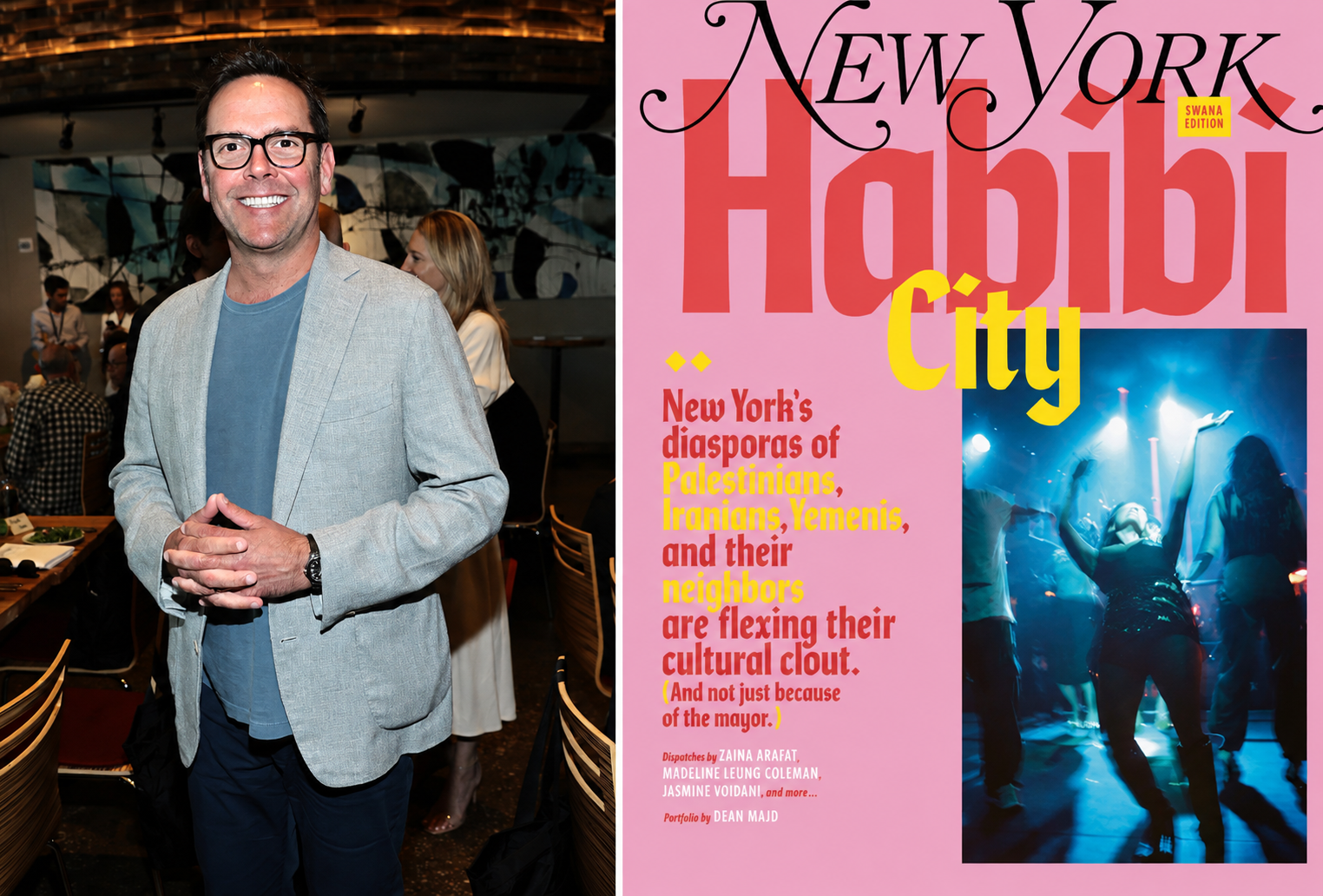
James Murdoch's media company Lupa Systems completed its purchase of New York magazine on July 8, and the publication's latest cover story has ignited a firestorm. The issue, titled "Habibi City," featured two long‑form pieces that describe Israel's war in Gaza as genocide. Critics ranging from the Anti‑Defamation League to conservative columnists have demanded a retraction, while the magazine's editors offered a vague apology that leans on diversity, equity and inclusion terminology.
The first article, written by Zaina Arafat, an adjunct assistant professor at Barnard College, examines a New York subculture that has emerged in recent years. Arafat's piece links cultural trends to political attitudes, but it also repeats the claim that Israel is committing genocide. The second, by Madeline Leung Coleman, focuses on food and includes a statement signed on October 26, 2023 that declares Israel's campaign in Gaza an attempt at genocide. Coleman's social‑media activity shows support for a student‑led encampment at Columbia University that protested Israel's actions and called for divestment.
In a response to the Washington Free Beacon, New York's editorial leadership, no names were provided, stated, "Our latest cover story is an exploration of a New York subculture that is making its presence felt, both culturally and politically, in new ways over the last few years. As with other communities forged by common experiences of conflict, there is an irreducible political dimension to any coverage of this subject." The statement continued, "We have endeavored to capture the tensions and live debates that exist within these communities, including how they relate to Israel. We are aware of the wide range of responses to the piece, including critiques from some in the Jewish community. We take these comments seriously, and, as always, we welcome and acknowledge good faith discussion and criticism about our journalism."
The language of "good faith discussion" has been interpreted by many as an attempt to shift focus from factual accuracy to the motives of the magazine's critics. Jonathan Greenblatt, chief executive of the Anti‑Defamation League, called the coverage "a blatant, disgusting double standard," arguing that the articles contain numerous factual errors and unverified accusations.
One of the most cited inaccuracies appears in Arafat's text, which describes Daniel Pipes as a "self‑proclaimed Islam critic" who created Campus Watch, an organization that compiled a list of faculty "to avoid." In reality, Pipes critiques Islamism rather than Islam, and Campus Watch is a project of the Middle East Forum, not an independent organization. Moreover, the list targets scholars whose work the project deems biased, not merely critics of Israel. Such errors have amplified concerns that the magazine prioritized a political narrative over journalistic rigor.
The controversy has taken on a broader political dimension because the acquisition of New York magazine is part of a larger deal that also brought Vox Media under Murdoch's control. On August 10, Vox published an editorial urging the United States to impose an arms embargo on Israel. The piece argued that supplying Israel with money and weapons runs counter to America's moral obligations and security interests. It did not address how an embargo would affect U.S. strategic goals, including the risk that Israel might turn to alternative arms suppliers such as China or Russia.
These editorial positions arrive at a moment when U.S. public opinion on the Israel‑Gaza war is shifting. Recent polls show a growing share of Americans, particularly younger voters, questioning unconditional military aid to Israel. At the same time, bipartisan support for Israel remains strong in Congress, where legislation to suspend aid has repeatedly stalled. The debate over media coverage reflects this split, as outlets on the left emphasize human‑rights concerns while right‑leaning commentators stress the strategic alliance.
In Canada, the issue resonates as well. Canadian politicians have faced pressure to reassess arms exports to Israel, and several provincial legislatures have debated resolutions condemning the war. While Canada's foreign‑policy framework differs from that of the United States, the media discourse in both countries influences public sentiment and can shape future parliamentary debates.
Ownership of New York magazine by James Murdoch adds another layer to the story. Murdoch, the son of media mogul Rupert Murdoch, has positioned Lupa Systems as a "new chapter" for the publication. Rupert Murdoch's own newspaper, the New York Post, ran an opinion piece by John Podhoretz that condemned the "Habibi City" cover as an indication that "Jews aren't welcome in Mamdani's NYC." Liel Leibovitz, writing for The Free Press, described Arafat's article as "a perfect manifestation of a specific grad school sensibility, light on logic and high on pretense and self‑importance." These critiques from within the Murdoch family's media empire highlight internal disagreements over editorial direction.
Understanding the stakes requires a brief look at how media ownership can influence coverage. The Federal Communications Commission does not regulate print media, so acquisitions like Murdoch's are largely subject to market forces rather than formal antitrust review. Critics argue that consolidation can reduce the diversity of viewpoints, especially on contentious foreign‑policy topics. Proponents contend that new ownership can bring fresh investment and editorial freedom.
Legal experts note that the articles in question do not appear to violate U.S. libel law, which requires a plaintiff to prove actual malice when the subject is a public figure. However, the ADL and other advocacy groups have signaled that they may pursue complaints with the National Press Club or other journalistic oversight bodies if they believe the reporting breaches professional standards.
For readers, the immediate question is whether New York magazine will issue a more detailed correction or stand by its original reporting. The editorial statement's emphasis on "good faith discussion" suggests the magazine may prefer to let the debate continue rather than retract specific claims. Meanwhile, advertisers have begun to distance themselves from the issue, with several major brands pausing placements pending a resolution.
What happens next will depend on several factors. If the controversy spurs a broader industry conversation, we could see new guidelines for reporting on conflicts where allegations of genocide are involved. Congressional hearings on media accountability have been floated by a handful of lawmakers, though none have advanced beyond committee discussion. In Canada, the House of Commons may hold a debate on media responsibility in foreign‑policy coverage, following recent motions to examine the role of Canadian outlets in the Israel‑Gaza narrative.
At the core, the episode underscores how ownership, editorial choices and political pressure intersect in the modern media landscape. As James Murdoch's Lupa Systems navigates its first major editorial crisis, the outcome will likely influence how other media companies approach contentious international stories, especially those that touch on deeply held beliefs about national security, human rights and identity politics.