

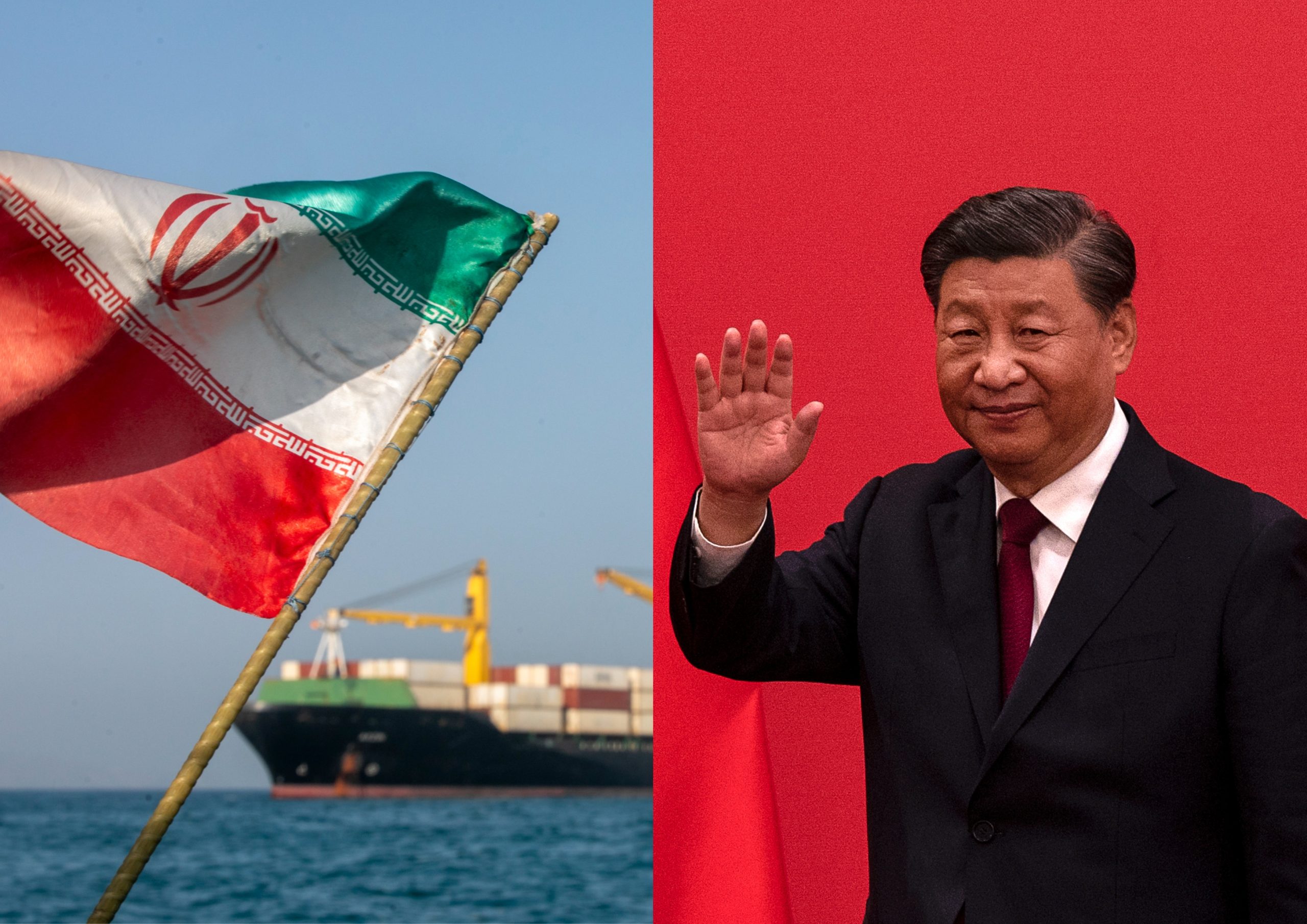
A French car manufacturer that is partially owned by the taxpayer-funded General Motors Company (GM) claims to have ceased its longtime business dealings with Iran, though experts have cast doubts on this claim.
GM owns a seven percent stake in PSA Peugeot Citroën, which has faced intense scrutiny for its business relationship with Iran.
Peugeot has long been one of Iran’s central auto partners, providing parts and technology to Iran’s leading car manufacturer, Khodro Company. Khodro is believed to have economic ties to the regime’s Islamic Revolutionary Guard Corps (IRGC).
Although Peugeot and GM maintain the manufacturer "suspended" shipments to Iran in March, sanctions experts argue that the relationship has continued to flourish behind the scenes.
"We are still quite concerned with Peugeot's business in Iran," said Nathan Carleton, spokesperson for United Against Nuclear Iran (UANI), a nonpartisan advocacy group that pressures international companies to cease dealings with Tehran.
"While Peugeot has claimed to have suspended shipments to Iran, numerous reports show that parts are still arriving there and automobiles still being produced—since March 2012 more than 100,000 Peugeot vehicles have been produced in Iran," Carleton said.
Peugeot’s alliance with Iran is of particular concern to UANI and other observers due to GM’s stake in the corporation.
"In this holiday season, as charities compete for Americans' generosity, Americans should know that thanks to GM's partnership with Peugeot, a company funded with their tax money has effectively made its own charitable contribution to enrich a genocidal regime," said Michael Rubin, a former Pentagon adviser on Iran and Iraq.
As one of Tehran’s top trading partners, the GM-backed Peugeot is responsible for injecting billions into the Iranian economy, thereby frustrating Western efforts to sanction Iran for its nuclear enrichment program.
"The hundreds of millions of dollars that Citroen generates for the Iranian economy through taxes, fees etc., flows through the IRGC, the entity that runs the financial arm of Iran’s nuclear and terror programs," said Mark Langerman, a financial adviser who is managing director at the Patriot Fund, an investment firm that shuns companies tied to Iran.
"We bailed GM out to the tune $50 billion and the U.S. Treasury Department owns over 25 percent of GM stock, which means by extension that we—you and me—own stock in a company that is partnered with one on the biggest contributors to Iran’s economy," Langerman said.
A GM spokesperson did not respond to a Washington State Beacon request for comment.
Reports indicate that Peugeot’s cars were still being sold in Iran as recently as November.
Peugeot’s claim to have "suspended" its business with Iran does not go far enough, said UANI’s Carleton.
"Peugeot has never said that it will permanently leave Iran or taken any sort of stand against the Iranian regime," he said. "At best Peugeot has announced temporary suspensions of shipments but vowed that they might resume in a few months. That is not the point of sanctions or our campaigns. Peugeot must pull out of Iran."
Peugeot disputes its critics’ claims, stating that it is simply impossible for the company to continue its Iranian exports.
"We decided to suspend everything" in February, a spokesperson at the company’s headquarters in France said.
Economic sanctions have made it virtually impossible for companies such as Peugeot to secure financial assurance on its deliveries to Tehran, the spokesperson said.
"You export with no assurance you’ll be paid, which is no way to do business," said the spokesperson. "Given that there’s no way to finance, we had to suspend the exports. We can’t make business with Iran anymore."
Peugeot does not intend to resume business with Iran in the near future due to increasing economic sanctions, according to the spokesperson.
The French carmaker has historically shipped parts to Iran’s Khodro, which then assembles and manufactures various Peugeot-designed automobiles.
Peugeot has also co-developed certain model vehicles with Iran, which has the manufacturing capability to fabricate some of these cars domestically.
Khodro has also partnered with Renault and Suzuki.
Iranian press reports have indicated that the suspension of Peugeot’s car parts shipments have failed to cripple the country’s auto sector.
"Iran has succeeded to not only supply spare parts for Peugeot cars it manufactures, but also to design and market other cars," Mohsen Salehinia, Iran’s deputy minister of industry, was quoted as saying earlier this year.
Several Peugeot car models were "still being sold in Iran" as late as November, according to Azerbaijan’s Trend News Agency.
GM originally struck a deal to purchase seven percent of Peugeot in February, when the company was still dealing with Iran despite U.S. economic sanctions banning this type of activity.
GM spent $400 million for its stake in Peugeot, according to reports.
The auto companies have since tightened their alliance.