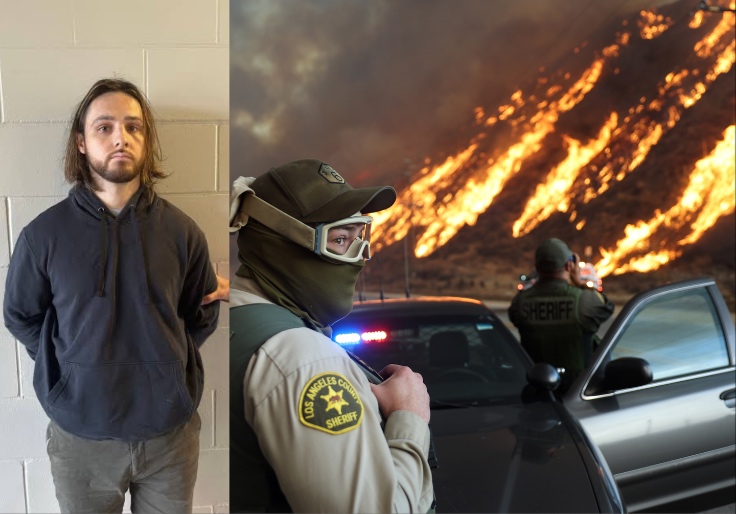
The United States Attorney’s Office has charged Jonathan Rinderknecht, a ride‑share driver who holds both U.S. and French citizenship, with three offences including arson in connection with the 2025 Palisades Fire in Southern California. The indictment, set to be heard from 19 October 2026, marks a shift from the climate‑change explanations that have dominated public discourse since the blaze killed 12 people, consumed 23,707 acres and razed 6,833 structures.
Prosecutors’ theory
According to a federal memo, investigators say Rinderknecht was driven by a deep‑seated belief that the wealthy were destroying the planet. The memo records that he searched the internet for news about Luigi Mangione – a man charged with murdering a CEO – using terms such as “free Luigi Mangione” and “lets take down all the billionaires”. Prosecutors argue that this online activity demonstrates a radical anti‑capitalist ideology that motivated him to set the fire.
Forensic evidence, the memo states, links the ignition point to a green Bic barbecue lighter found in Rinderknecht’s possession. The prosecution rejects the defence’s claim that New Year’s fireworks sparked the blaze, noting that no fireworks were reported in the area at the time.
Legal context and trial logistics
The trial will be conducted in a federal court in the district where the fire occurred, with a jury drawn from local citizens. The U.S. Attorney’s Office will present witness testimony and technical evidence to prove guilt beyond a reasonable doubt, while Rinderknecht’s defence team will contend that the case is fundamentally flawed and that their client is innocent of the charges.
The proceedings are expected to last several weeks, with a verdict anticipated in late 2026 or early 2027.
Broader implications
The case arrives at a moment when many Democratic politicians and media outlets have linked the Palisades Fire to climate change. Prosecutors, however, contend that the cause is “more complex and rooted in anti‑capitalist motives”, a stance that could reshape public debate about the relationship between environmental factors and politically motivated violence.
Critics have accused mainstream media, notably The New York Times, of presenting a one‑sided narrative. The newspaper ran front‑page stories and opinion pieces with headlines such as “climate change is supercharging disasters” and “climatic changes that seem to increase those risks almost year by year”, yet offered little coverage of the alleged anti‑capitalist motive.
Some commentators argue that the media’s response would differ if the alleged perpetrator were an immigrant‑hating Trump supporter targeting a heavily Hispanic neighbourhood, suggesting a double standard in how political violence is reported.
Social media and radicalisation
The indictment also raises questions about the role of online platforms in disseminating extremist ideologies. Rinderknecht’s use of social media to promote anti‑capitalist views and to glorify violent acts has prompted calls for greater scrutiny of how tech companies monitor and regulate hate speech.
Legal scholars note that the trial will test not only the factual basis of the arson charge but also the extent to which online radicalisation can be linked to real‑world violence.
Historical context of the fire
Investigators acknowledge that the Palisades Fire may have been indirectly ignited by the earlier Lachman Fire, which later reignited the blaze. Nonetheless, the prosecution maintains that Rinderknecht’s deliberate act was the decisive factor that turned a secondary flare‑up into a catastrophic conflagration.
The case has attracted attention from readers across the United States and Canada, who are increasingly concerned about the rise of political violence and the erosion of civil discourse.
The trial will therefore serve as a litmus test for how the justice system, the media and the public grapple with the intersection of environmental disaster, ideological extremism and the responsibilities of digital platforms.
The case was first reported by the original wire report.