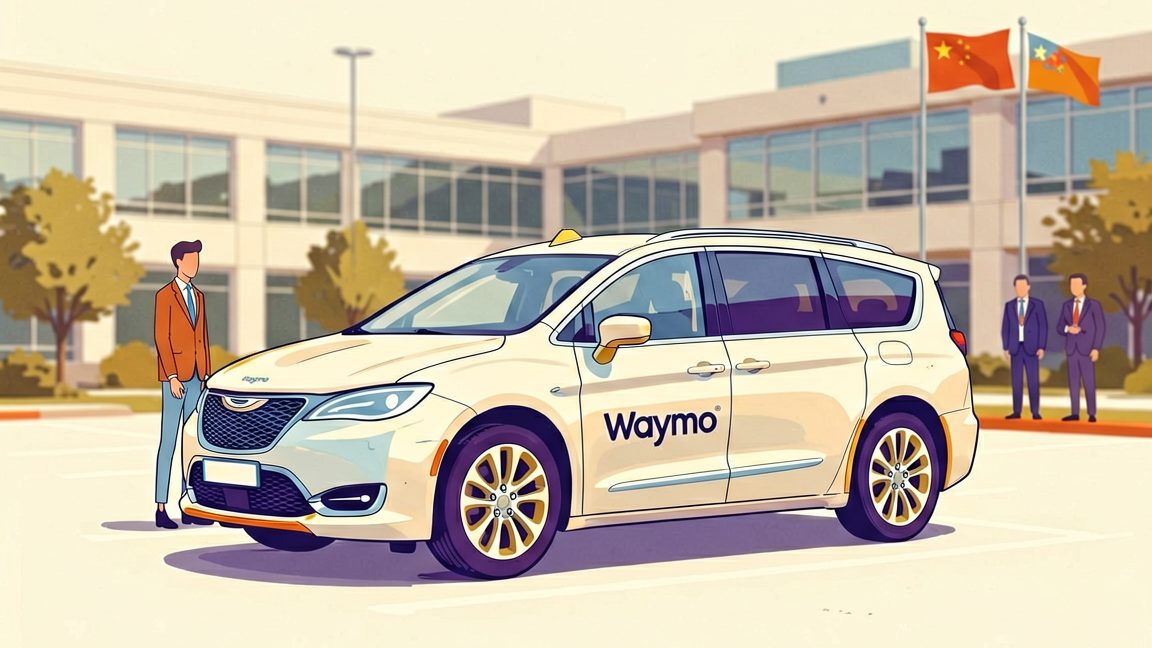
Waymo has renamed its newest robotaxi model after a small town in California, a decision that comes as US lawmakers examine the company’s links to Chinese‑owned carmaker Zeekr. The vehicles are built by Zeekr, a subsidiary of Zhejiang Geely Holding Group, which is fully owned by the Chinese conglomerate chaired by Li Shufu.
Li Shufu, also known as Eric, sits on the 14th National Committee of the Chinese People’s Political Consultative Conference (CPPCC) – a body that coordinates between the Communist Party Politburo and various interest groups as part of China’s United Front strategy. He also served as a delegate to the National People’s Congress until 2023 and was a vice‑chair of the All‑China Federation of Industry and Commerce, a CCP‑linked business group that promotes the Belt and Road Initiative.
Congressional questioning
On a Wednesday, Senator Bernie Moreno of Ohio asked Waymo’s chief safety officer whether the company was using Chinese‑made cars owned by Chinese firms. In response, Mauricio Peña said the tracking hardware is made and fitted in the United States on imported Zeekr cars, that the Chinese cars lack autonomous features, and that Waymo installs its system domestically without sharing data.
Senator Rick Scott of Florida has also raised concerns, writing to SEC Chair Gary Gensler that Zeekr’s NYSE listing masks its status as a subsidiary of a Chinese conglomerate with close CCP ties. He warned of possible slave‑labour in Zeekr’s supply chain and of incomplete disclosure of party connections in SEC filings.
Company’s security assurances
Waymo spokesperson Ethan Teicher said the company understands the senators’ worries, noting that Chinese‑origin autonomous technology could collect data or be accessed remotely. He explained that Waymo develops and installs the data‑collecting software, sensors and computing systems in America, arranging its operations so that the software, sensors and computing hardware that gather data are created and installed by Waymo in the United States.
The rebranding is being viewed as an attempt to distance Waymo from its Chinese supplier and to allay security concerns. US regulators, including the National Highway Traffic Safety Administration and the Federal Motor Carrier Safety Administration, set safety standards for autonomous vehicle development and testing. How the name change will affect Waymo’s dealings with these agencies remains to be seen.
Broader implications
The episode reflects a wider debate about Chinese involvement in critical technology sectors. In September 2024, Senators Marsha Blackburn and Gary Peters questioned Geely Holding Group and other Chinese automakers about national‑security risks arising from CCP affiliations, warning that vehicle sensors could be used to collect personal data or monitor critical infrastructure.
Canadian stakeholders may face similar dilemmas as they develop their own autonomous‑vehicle industry, balancing foreign investment with security considerations.