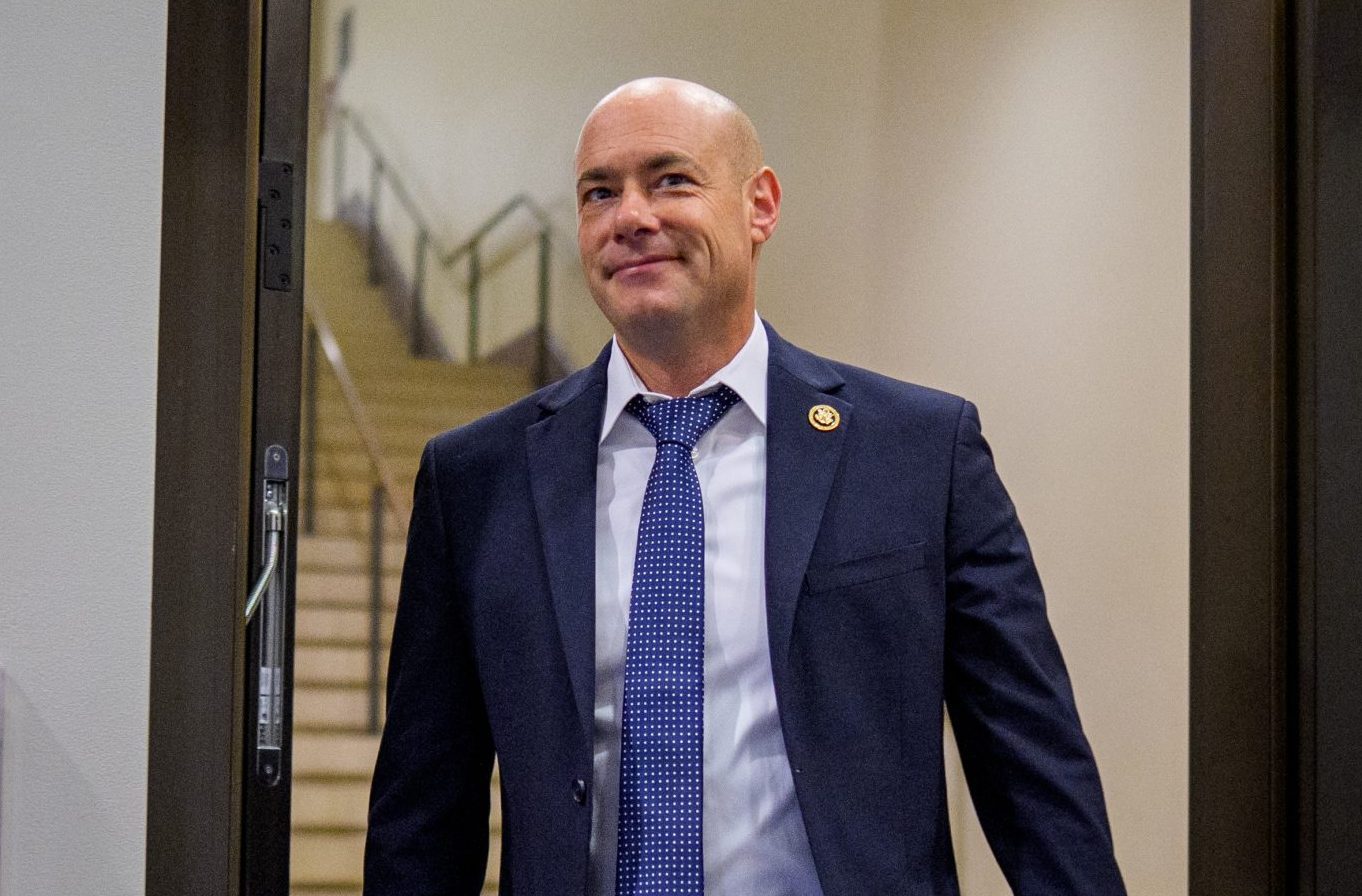
Rep Greg Landsman filed an amended 2022 financial disclosure that shows he owned 54 stock holdings worth between $377,000 and nearly $1.5 million, a stark contrast to the six positions he listed when he first ran for Ohio's 1st Congressional District.
In the original filing, Landsman reported six holdings valued at $90,000 to $300,000 and disclosed income of $12,000 to $33,000 from those assets. The amendment reveals that his earnings from stocks were at least 18 times higher than the amount he initially reported, raising questions about the completeness of his earlier paperwork.
Federal law requires members of Congress to file a financial disclosure within 45 days of any change in holdings under the STOCK Act of 2012. The STOCK Act was passed in response to concerns that lawmakers could profit from non‑public information and was intended to increase transparency by mandating timely reporting of trades, gifts, and other financial interests. Violations can trigger investigations by the Office of Congressional Ethics and may result in fines, though enforcement has historically been limited.
Candidates are not bound by the same deadline, but the public expects transparency during a campaign, especially in a swing district where financial ties can become a focal point of debate. Ohio's 1st District is a competitive battleground that flipped from Republican to Democratic control in the 2022 election. Landsman won the seat by a narrow margin over Republican Steven Chabot, and the district will be a key target for both parties in the 2026 midterms.
During the 2022 race, Landsman painted Chabot as beholden to the oil and pharmaceutical sectors, accusing the incumbent of siding with "out of control" gas companies. He posted on X that "Oil and gas corporations are making record profits right now. They're price gouging. It's outrageous, totally unfair to our working families, and a disaster for our economy."
The amended disclosure shows that Landsman himself held shares in Exxon Mobil, Diamondback Energy, and Horizon Therapeutics, companies he publicly criticized. The contrast between his campaign rhetoric and his personal portfolio has drawn scrutiny from political opponents and watchdog groups.
Landsman has positioned himself as a champion of ethics reform in Congress. He co‑sponsored the TRUST in Congress Act, which would require members, their spouses, and dependent children to place all investment assets into a qualified blind trust. He also introduced the Drain the Swamp Act and the Restore Trust in Government Act, both of which propose tighter restrictions on personal trading by lawmakers.
The TRUST in Congress Act would eliminate the ability of members to trade individual stocks, forcing them to rely on blind trusts that are managed without their input. Under current rules, members can hold stocks as long as they disclose them, a practice that critics argue creates opportunities for conflicts of interest.
In May 2025, Landsman announced that he and his wife had sold all individual stocks and moved the proceeds into mutual funds and exchange‑traded funds, citing the TRUST in Congress Act as the reason for the change even though the bill has not yet passed. He said he was "determined to be part of the generation that fixes a broken system" and did not want "a single constituent to think that I'm doing anything in DC but thinking about them."
Financial disclosures indicate that Landsman made 169 stock trades valued at $2.74 million during his time in Congress, contributing to a reported net worth that could be as high as $3.5 million. The volume of his trading activity has become a point of contention for those who argue that lawmakers should not profit from market movements while shaping policy.
In September 2024, the Washington Free Beacon reported that Landsman failed to report more than 87 financial transactions within the timeframe required by the STOCK Act. A campaign finance expert described the lapse as a violation of the law, which mandates timely reporting of trades to prevent insider advantages. The 2022 filing error does not fall under the STOCK Act because Landsman was a candidate at the time, not a sitting member.
Landsman did not respond to requests for comment on the amended filing or the earlier reporting breach. Political analysts note that the revelations could provide ammunition for Republican challengers in the upcoming race, especially given the district's narrow partisan balance.
The episode arrives amid a broader national conversation about whether members of Congress should be allowed to own individual stocks at all. In early 2025, the House voted on a separate bill that would ban members from trading individual equities, a measure that has gained bipartisan support in the wake of several high‑profile disclosures involving senior lawmakers.
For voters in the United States and Canada who watch congressional ethics reforms, Landsman's case underscores the tension between personal financial freedom and public accountability. Canadian observers often compare the U.S. disclosure regime with their own stricter conflict‑of‑interest rules for parliamentarians, noting that the American system still relies heavily on self‑reporting and limited enforcement.
As the 2026 midterms approach, the issue of stock trading by lawmakers is likely to feature prominently in campaign ads, donor discussions, and voter questionnaires. Candidates in swing districts such as Ohio's 1st will be pressed to demonstrate that their personal finances do not influence their policy positions, especially on energy and health‑care legislation where Landsman's own holdings have drawn attention.
Historically, attempts to curb congressional trading have faced procedural hurdles. The 2012 STOCK Act itself was a compromise that stopped short of prohibiting individual stock ownership. Subsequent proposals, including the 2023 "No More Stock Trades" resolution, failed to secure the supermajority needed to overcome a filibuster in the Senate. The current push for blind‑trust requirements reflects a shift toward structural solutions rather than simple disclosure.
Institutional critics argue that blind trusts can still be vulnerable if the trustee maintains informal communication with the lawmaker, while supporters contend that removing direct control eliminates the most egregious conflicts. The TRUST in Congress Act would also create a federal oversight board to certify trustees and audit compliance, a feature designed to address past enforcement gaps.
In the meantime, Landsman's own financial moves provide a real‑world test case. By converting his portfolio to mutual funds and ETFs, he has effectively removed the ability to trade individual equities, aligning his personal practice with the reforms he champions. Whether this step will satisfy voters or be viewed as a political calculation remains to be seen.
Ultimately, Landsman's delayed disclosure highlights the challenges of enforcing transparency rules in a system where personal wealth and public service intersect. Whether his self‑styled ethics crusade will survive the scrutiny of a swing district remains to be seen, but the story adds another chapter to the ongoing debate over financial conflicts in the nation's capital.