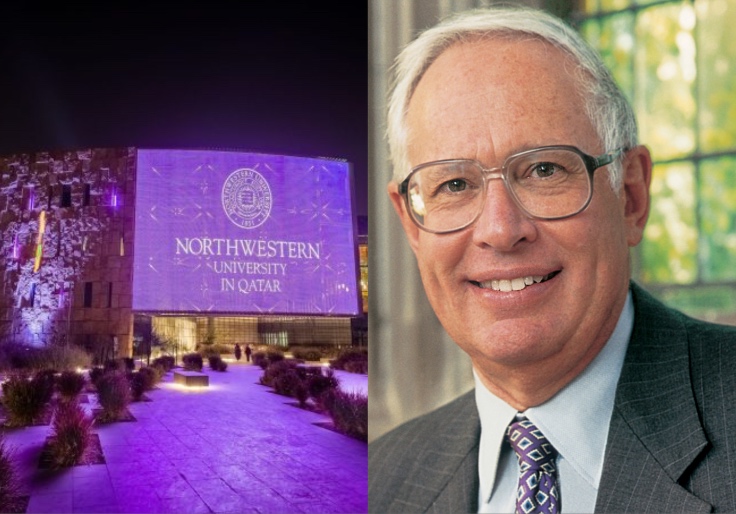
Interim president Henry Bienen has indicated that he is optimistic about the future of Northwestern University’s campus in Qatar and that the Gulf state is very eager to renew the agreement that expires in 2028. Bienen, who helped establish the Doha campus during his first term as president from 1995 to 2009, says the partnership remains a priority for the university.
The contract governing the campus contains a provision that bars students and faculty from criticising the Qatari government. According to a report by the Washington Free Beacon, the agreement also obliges the university and its staff to obey Qatari law and to respect the cultural, religious and social customs of the state. Qatar’s penal code criminalises government criticism and restricts certain online content, raising questions about the scope of academic freedom on the campus.
Following the Hamas attack on 7 October 2023, the Qatari government asked U.S. universities operating there to coordinate official communications. Northwestern’s Qatar campus did not issue a statement condemning the attack, a decision that has drawn scrutiny.
Teaching staff at the Doha campus include Ibrahim Abusharif, who runs the Doha Seminar and is linked to the Quranic Literary Institute, an organisation that was found liable for aiding Hamas in a 2008 lawsuit. The university’s media relations department notes that the campus provides international students – more than 70 % of whom are women – with access to a Western elite education and supports U.S. foreign‑policy interests.
Since 2014, about nine per cent of graduates from Northwestern Qatar have come from influential Qatari business or political families, and over ten per cent share the Al Thani family name, underscoring the close ties between the institution and the host country.
Comparison with Georgetown
Georgetown University, whose interim president Robert Groves has also voiced support for the university’s relationship with Qatar, operates under a similar agreement. The Georgetown contract requires the university to consult a Qatari government group when selecting themes and speakers for events in Washington, D.C. The Louis D. Brandeis Center has described that arrangement as a covert propaganda effort directed by a foreign nation.
Both institutions face the prospect of contract renewal in the coming years, with Northwestern’s agreement set to expire in 2028. The ongoing debate centres on whether the benefits of a Western education in the Gulf outweigh the constraints imposed by host‑nation legislation on free expression.