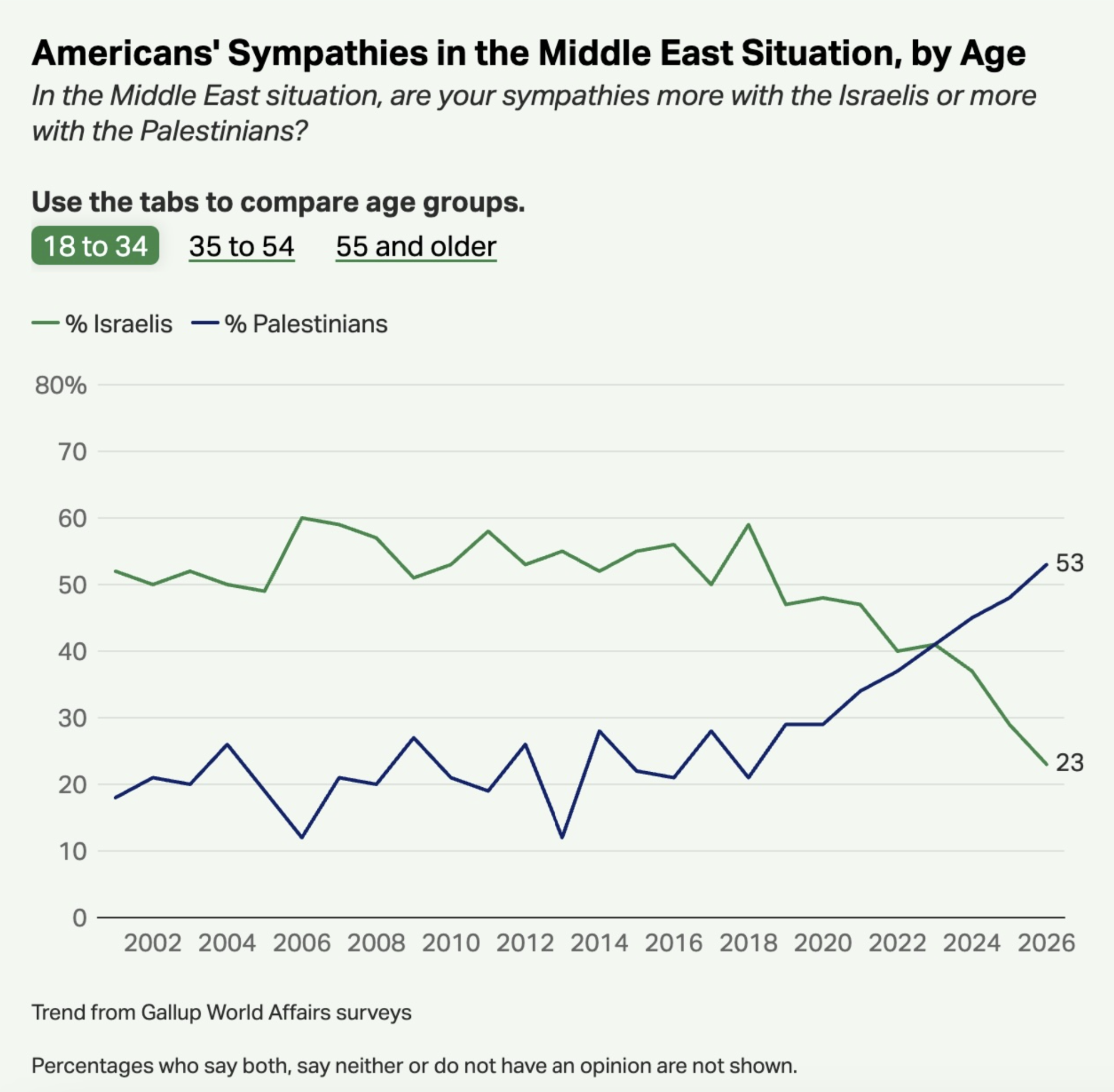
For the first time in a quarter‑century, more Americans express sympathy for Palestinians than for Israelis, according to the latest Gallup poll. The finding has sparked a flurry of analysis, but experts warn that the swing cannot be reduced to any single cause.
Demographic and secular trends
The decline in pro‑Israel sentiment is being driven by the same groups that are pulling down national pride: young people and Democrats. Gallup reports that 32 % of Gen Z Democrats say they feel little or no pride in being American – a record low. At the same time, secularism is on the rise. Among 18‑ to 29‑year‑olds, 36 % now identify with “no religion”, overtaking Catholics as the largest religious‑affiliation group.
One analyst observes, "The Zionist idea of a Jewish homeland may seem quixotic to Americans unmoored from religious or historical narratives." The comment points to the diminishing resonance of Israel’s 1948 Declaration of Independence, which grounds its claim in Biblical history, for a generation increasingly distant from traditional faith.
Media narratives and information ecosystems
Prominent media figures have weighed in. Former ABC News anchor Terry Moran posted on social media blaming Prime Minister Benjamin Netanyahu for eroding US support, invoking “mass death” and “destruction” in Gaza. Moran, who was previously dismissed for calling former President Donald Trump a “world‑class hater”, is among several commentators whose partisan framing has drawn criticism.
New York Times columnist Nicholas Kristof linked the shift to Netanyahu’s legacy, while Ezra Klein hosted a podcast in which he discussed “genocide” in Gaza with Matt Duss, a former foreign‑policy adviser to Senator Bernie Sanders. Wall Street Journal columnist William Galston offered a more measured take, tying the trend to both the Gaza war and Netanyahu’s leadership, but avoided the polemics found in Moran’s posts or Duss’s claim that the Gaza war “did not come out of nowhere”.
Limits of the polling data
Gallup’s own analysis cautions against over‑interpretation. The five‑percentage‑point sympathy gap for Palestinians is not statistically significant, and the survey excludes respondents who hold neutral or balanced views.
Beyond the numbers, the broader information environment plays a role. Outlets such as Qatar‑owned Al Jazeera and Turkey’s TRT World have amplified critical narratives about Israel, while US investigators have remained silent on foreign‑influence campaigns despite a 2024 warning from Director of National Intelligence Avril Haines about Iranian exploitation of Gaza‑war protests.
A foreign‑policy scholar summed up the consensus: "Monocausal explanations, whether from former anchors or think tanks, should be met with skepticism." The prevailing view is that demographic change, evolving media ecosystems and global realignments together explain the erosion of US support for Israel, rather than any single leader or conflict.