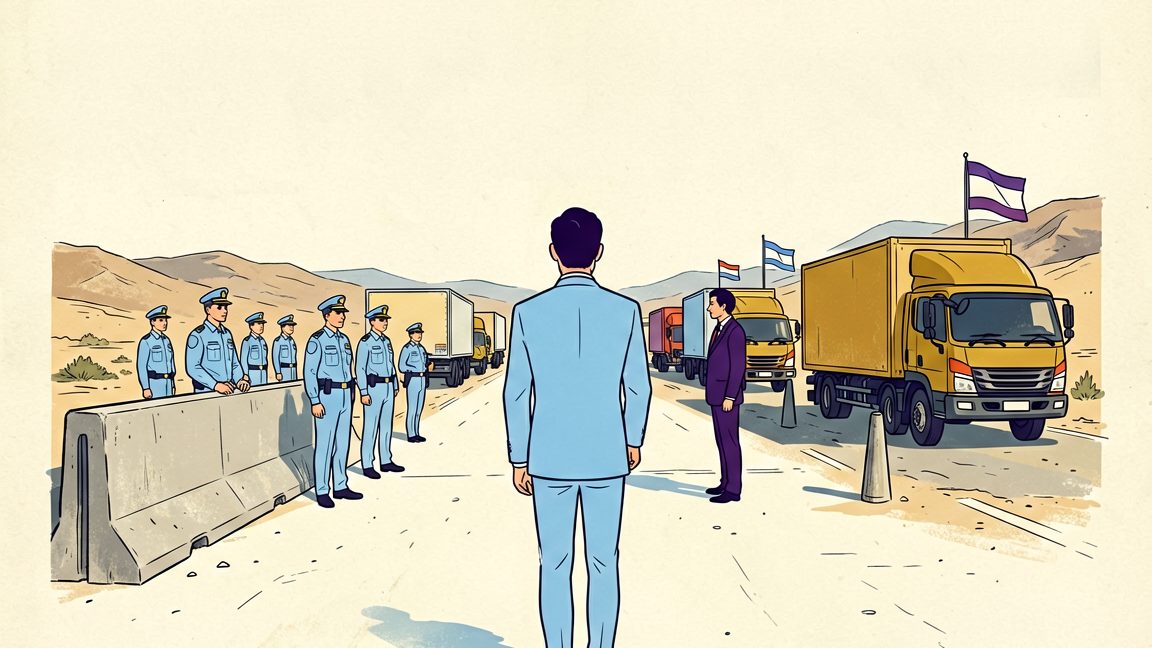
The United States and Israel are reportedly weighing a land blockade of Iran as a way to increase economic pressure on the Islamic Republic, a senior Israeli official told the Washington Free Beacon.
Concept and Context
The proposal would sit alongside the maritime embargo already in force, aiming to stop both imports and exports. The Israeli official outlined the idea in a remark: "What if you just block the land? Suppose Iran can't bring anything in, cannot take anything out."
The suggestion comes as the confrontation between the United States, Israel and Iran enters its sixth month, with both sides exploring a range of diplomatic and military options.
Practical Obstacles
Enforcing a land blockade would be difficult because Iran borders seven countries – Turkey, Turkmenistan, Afghanistan, Iraq, Pakistan, Azerbaijan and Armenia – each of which has a distinct relationship with Washington and Jerusalem. The Israeli source acknowledged that planners would need to map out every possible scenario before selecting a course of action.
US Position
A White House official, also speaking to the Free Beacon, said: "The Commander-in-Chief has all options at his disposal." This indicates that the United States is keeping its strategic toolbox open.
Potential for Rapid Escalation
In recent weeks Israel has kept a relatively low profile, avoiding retaliatory strikes since hostilities began in February. However, the same Israeli official warned that an Iranian attack would trigger an immediate and forceful response.
High‑Level Diplomacy
The warning was delivered as Prime Minister Benjamin Netanyahu concluded his eighth visit with President Trump since the latter returned to office in 2025. Their meeting was described as businesslike and focused on Iran, Gulf issues and possible ways to manage the war in the weeks and months ahead.
Wider Implications
The discussion of a land blockade highlights the growing tension in the region and the search for new levers to compel Tehran. International observers are monitoring the developments closely, aware that any expanded sanctions regime could have significant repercussions for regional and global stability.