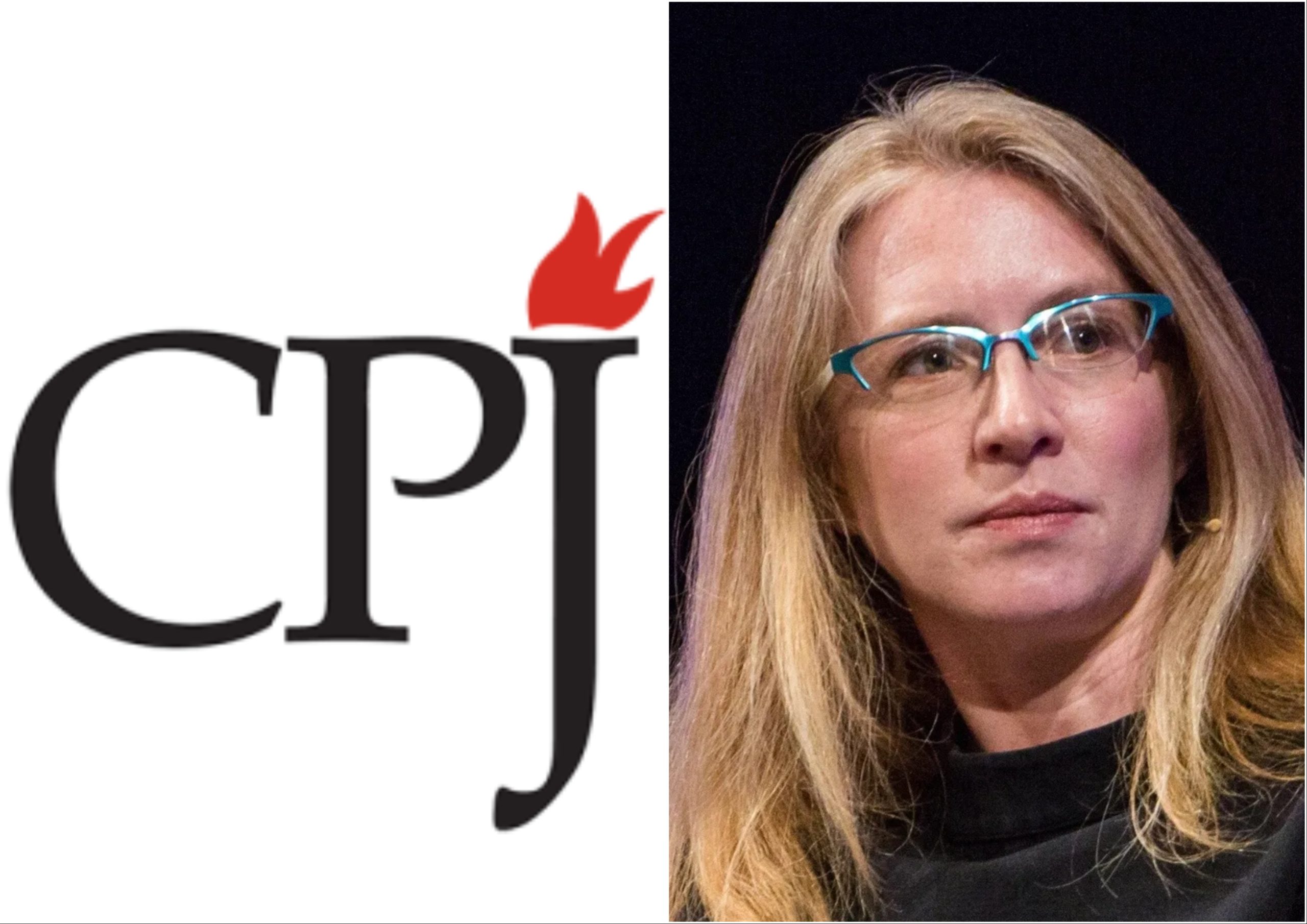
The Committee to Protect Journalists (CPJ) is a New York-based organization founded in 1981 to defend journalists worldwide. However, recent research by the media watchdog group HonestReporting has uncovered that several CPJ staffers have engaged in anti-Israel advocacy, raising questions about the organization's impartiality. The revelations come as the CPJ is already embroiled in controversy over its list of Palestinian "journalists" killed in the Gaza war, which has been found to include numerous military operatives for terror groups like Hamas and Palestinian Islamic Jihad.
The CPJ's board, composed largely of leading journalists from prestigious news operations, recently voted 17 to 1 in favor of keeping a contested definition that considers people who work for "organizations affiliated with militant groups" as journalists. The decision has sparked outrage, with critics arguing that it blurs the lines between journalism and terrorism. The only dissenting vote came from Fox News, which opposed the definition.
HonestReporting's research found that at least half a dozen CPJ staff members have expressed anti-Israel views, including support for the Boycott, Divestment, and Sanctions (BDS) movement and accusations of "genocide" against Israel. One staffer, Rama Sabanekh, a Levant researcher, penned a manifesto in 2017 outlining support for the BDS movement and advocating for "resistance and revolutionary violent pressure" against "the Zionist occupation." Sabanekh also helped orchestrate a protest at University College London in 2016, which resulted in police being called to the scene and Jewish students being barricaded inside a room.
Another staffer, Yasmine Mosimann, a specialist editor for the Middle East and North Africa, supported the BDS movement and backed a vote by McGill undergraduate students to support anti-Israel boycotts. Mosimann also penned articles for the McGill Daily about the "voices of Palestine" and "understanding state violence in Palestine."
CPJ's Middle East and North Africa regional director, Sara Qudah, has worked with and platformed Hamas operatives and those affiliated with the Palestinian Islamic Jihad terror group. Qudah referred to a Palestinian man who was killed while trying to seize an IDF officer's weapon as a "martyr" and accused Israel of perpetrating "industrial-scale mass killing" and "literal genocide."
CPJ CEO Jodie Ginsberg has also been accused of platforming Hamas operatives, including reposting a message from a supposed Palestinian journalist who was later revealed to be a Hamas squad leader. Ginsberg never removed the post or acknowledged the individual's true identity.
The CPJ's chief global affairs officer, Gypsy Guillén Kaiser, has also promoted anti-Israel content on social media, including a post by New York Times columnist Nicholas Kristof that alleged Israeli soldiers raped Palestinian journalists. Kaiser wrote "The facts. #ThisIsJournalism" above Kristof's article, despite the report being widely discredited.
The Free Beacon recently reported on pronounced anti-Israel bias by CPJ board members, including New York Times writer Lydia Polgreen and Nobel laureate Maria Ressa. The anti-Israel biotech heiress Nika Soon-Shiong was ousted by the board after an argument over the Free Beacon's coverage.
HonestReporting CEO Jacki Alexander said the body of evidence on the CPJ's staff casts a shadow over any anti-Israel report in mainstream media that uses the CPJ as a credible source. "These revelations are not surprising for the staff of an organization that considers Hamas terrorists journalists and is contemplating considering state-sponsored propagandists as journalists," Alexander told the Free Beacon. "CPJ is meant to protect journalists. They appear to be neglecting that duty in order to promote an anti-Israel narrative at the expense of actual journalists."
The CPJ did not respond to a request for comment. The organization is currently undertaking a review of its documentation of journalists killed in the Israel-Gaza war since 2023, but questions remain about the impartiality and mechanisms underpinning that review, particularly since it may be overseen in part by several staffers who have evidenced strong bias against Israel.