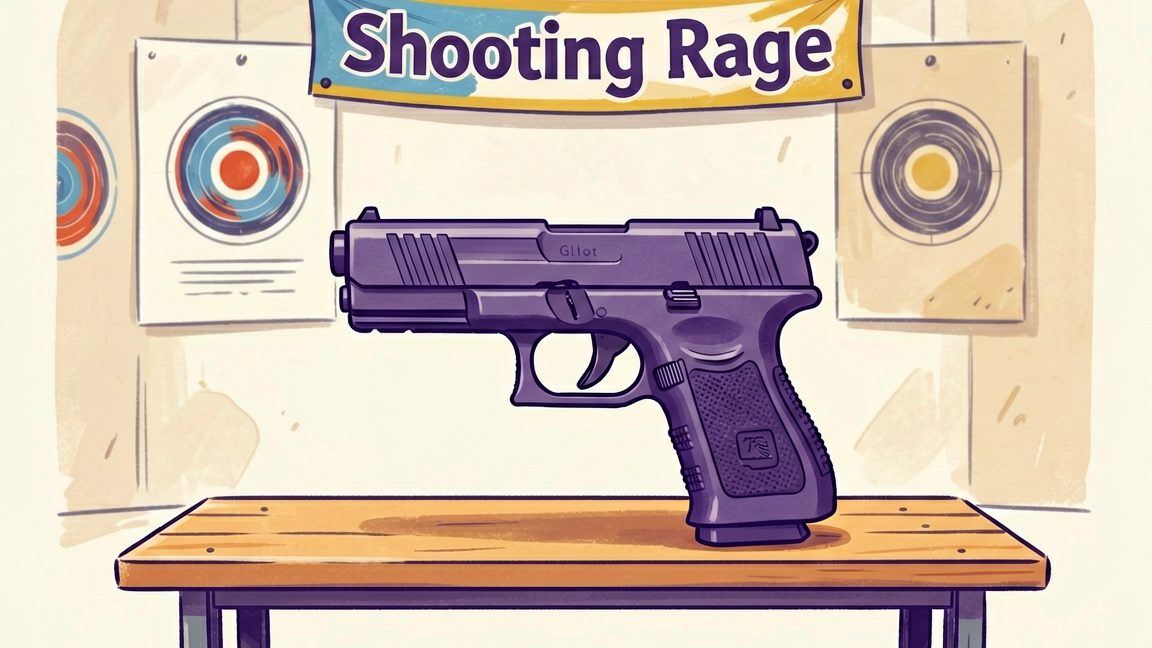
David Yamane’s new book, Gun Curious, attempts to bridge the gap between the United States’ gun‑owning majority and the public‑policy debate that often paints them as obstacles to progress. A former liberal professor who entered the world of firearms only after a personal crisis, Yamane now owns thirteen guns and presents himself as a sociologist of gun culture rather than a partisan commentator.
A personal conversion
The journey began when Yamane separated from his first wife and moved into an apartment block. A neighbour’s experience of domestic violence, combined with Yamane’s own sense of powerlessness, prompted him to contemplate personal protection. Influences also included his enjoyment of the reality series Top Shot and a friend who had carried a weapon while serving in the Coast Guard. After firing a gun for the first time, he says he was “hooked”, and he subsequently acquired a licence and a growing collection of firearms.
Understanding the majority
Yamane’s academic work seeks to describe the vast majority of gun owners who possess weapons for legitimate purposes – hunting, sport shooting, self‑defence or simply as a hobby – without reducing them to a pathological group. He argues that while gun‑related violence remains a serious public‑safety concern, the everyday practices of most owners are overlooked in policy discussions.
He points out that non‑owners often rank gun owners as socially acceptable as atheists and Muslims, with members of the National Rifle Association faring even worse in public opinion surveys. Yet he contends that humanity’s attraction to projectile weapons is neither new nor abnormal; firearms are the latest stage in a millennia‑long evolution of tools designed to launch projectiles.
Risks and responsibilities
The book does not shy away from the dangers of gun ownership. Yamane recounts a personal lapse – preparing his handgun for storage but leaving a round in the chamber – as a reminder of the need for rigorous safety habits. He notes that fatal accidents are rare, but routine mishaps and emergency‑room visits occur with some frequency.
Self‑defence, while often highlighted in the public debate, is placed eighth on a risk‑reduction hierarchy by Aaron Haskins, a risk‑management professional and gun owner. Haskins ranks physical fitness and regular medical check‑ups above the prospect of using a weapon to avert danger.
Training and community
Yamane highlights the role of trainers who strive to minimise negative outcomes and stress the responsibilities that accompany carrying a firearm. He also explores how gun owners form social bonds through clubs, ranges and online forums, creating a subculture that is both practical and identity‑forming.
Why the book matters
Gun Curious is positioned as a resource for readers unfamiliar with firearms and for everyday owners seeking a broader context for their hobby. By presenting a balanced portrait – acknowledging the real hazards while underscoring the normality of gun ownership for most Americans – Yamane hopes policymakers will view gun owners as potential allies rather than perpetual adversaries.
The work offers a rare sociological lens on a topic that is usually framed in stark moral terms, suggesting that a deeper understanding of the everyday gun‑owner could inform more effective and less polarised policy solutions.