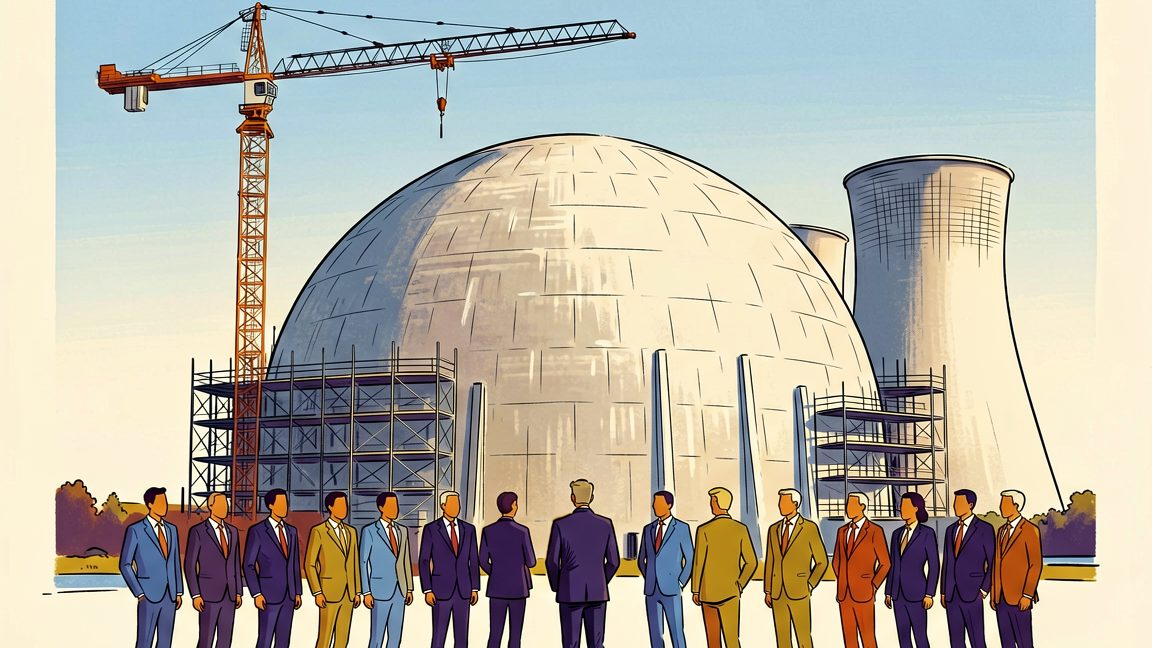
The United States Department of Energy announced on Tuesday a loan programme worth $17.5 billion to support the construction of ten new nuclear reactors. The financing will be administered by the Office of Energy Dominance Financing within the department.
Programme details
The loans are intended for five utilities that will each receive funding for two reactors. Seven utility companies have already submitted letters of intent to Westinghouse, the supplier of the AP1000 design, and the department will select five of them for the programme.
Each selected utility must invest $500 million before any loan funds become available, after which the utility and Westinghouse will jointly own each reactor project. The agency has made clear that it will not take an ownership stake in any of the projects.
Reactor capacity and impact
Every AP1000 unit is rated at 1.1 gigawatts, a capacity that can supply roughly one million homes. Ten such reactors would therefore provide enough electricity for about ten million households.
The programme is expected to generate thousands of jobs and stimulate local economies, while also improving national energy security and reducing reliance on imported fuels.
Context and background
Only two nuclear reactors have been licensed and built in the United States in the 21st century, both located in Georgia. Those projects experienced cost overruns and delays, but were financed with Department of Energy loans during the first Trump administration.
Energy Secretary Chris Wright has said the department is working to add dispatchable, reliable and secure energy, to lower electricity prices and support a re‑industrialisation of the country. He has also described the nuclear permitting process as overly bureaucratic, slow and difficult, noting that it has undermined the economics of new nuclear development.
The Nuclear Regulatory Commission remains responsible for overseeing the construction and operation of nuclear reactors in the United States.
Future outlook
A study by S&P Global Commodity Insights projects that U.S. electricity demand could rise by 50 percent by 2040, underscoring the need for additional baseload capacity. Former President Donald Trump set a goal to begin construction of ten new nuclear reactors by 2030.
Industry leaders have argued that expanding domestic nuclear capacity is essential for the United States to maintain its leadership in artificial intelligence, advanced manufacturing and other future‑defining sectors, and to provide the baseload energy required for those ambitions.