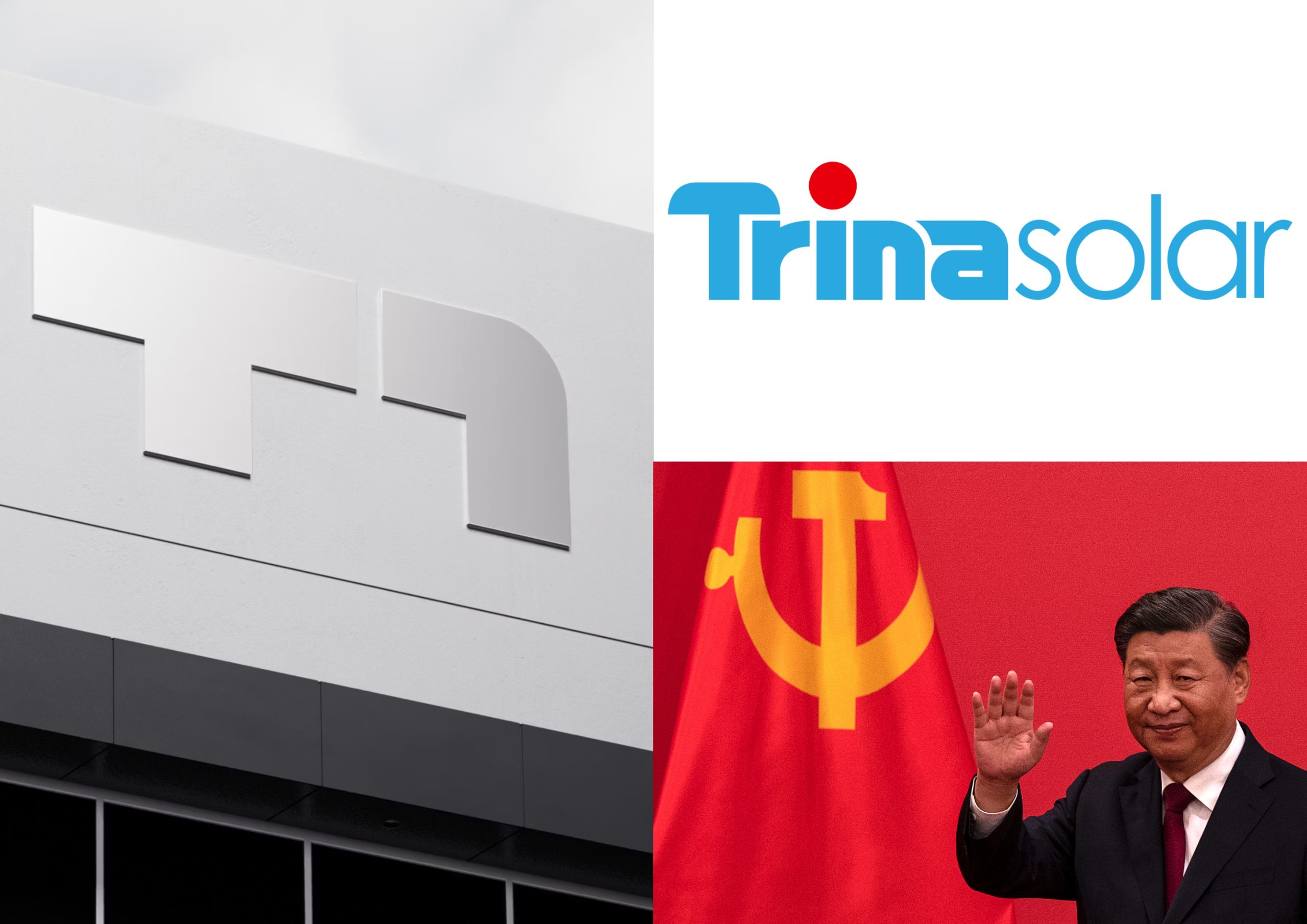
The Treasury is poised to tighten rules that bar firms controlled by Chinese interests from claiming the United States’ green‑energy tax credits, and T1 Energy is at the centre of the debate. The company, which manufactures solar panels in Texas, relies heavily on Trina Solar – a Chinese conglomerate with documented ties to the Chinese Communist Party – for equity, technology and supply‑chain services.
Ownership and contractual ties
Financial disclosures show Trina Solar holds an 11 % stake in T1 Energy and has entered into advisory, manufacturing and sales‑support contracts that run until 2029. The partnership extends beyond shareholding: Trina supplies components, labour and marketing services to T1’s Texas plant and is its largest customer. In 2025, T1 recorded $632.2 million in sales to Trina and $95.5 million in purchases from the Chinese firm, a relationship that analysts say creates a dependency inconsistent with the domestic focus of the tax‑credit programme.
Legislative backdrop
The One Big Beautiful Bill Act, a cornerstone of the current administration’s energy policy, prohibits companies owned or controlled by Chinese interests from receiving tax credits that could total up to $1.3 billion a year for qualifying projects. Because Trina is T1’s second‑largest shareholder and primary business partner, the company falls squarely within the scope of the new rules.
Industry reaction
Thomas Beline, a trade attorney representing U.S. solar firms, warned that “T1 is the tip of the spear.” He added, “If enforcement doesn't start here, these structures will proliferate.” Nathan Picarsic of Horizon Advisory argued that Treasury’s guidance must look beyond direct ownership to the broader supply‑chain entanglement, noting that T1 licences technology from Trina through a Singapore intermediary.
Chinese connections
Trina Solar’s links to Beijing are well documented. Its chief executive, Gao Jifan, serves as a deputy to China’s National People’s Congress, and the firm appears on the Pentagon’s list of companies associated with the Chinese military. The International Energy Agency has reported that China’s five‑year plans have helped Trina capture roughly 80 % of global solar‑panel production.
Calls for vigilance
Critics argue that allowing T1 to retain the credits would undermine U.S. efforts to counter Beijing’s industrial strategy. Michael Lucci of State Armor has warned that the United States should not fund China’s solar dominance through these subsidies.
Recent developments
T1 recently expanded into battery storage by acquiring KORE Power, a firm that also has ties to Chinese battery maker DFD New Energy. While T1 points to SEC filings that detail ownership structures and contractual safeguards to assert it has “no control” from Trina, internal documents confirm that Trina’s equity stake and commercial relationships remain in place. The Treasury is expected to finalise its enforcement framework this summer, leaving T1’s eligibility in doubt.
First reported by the source report.