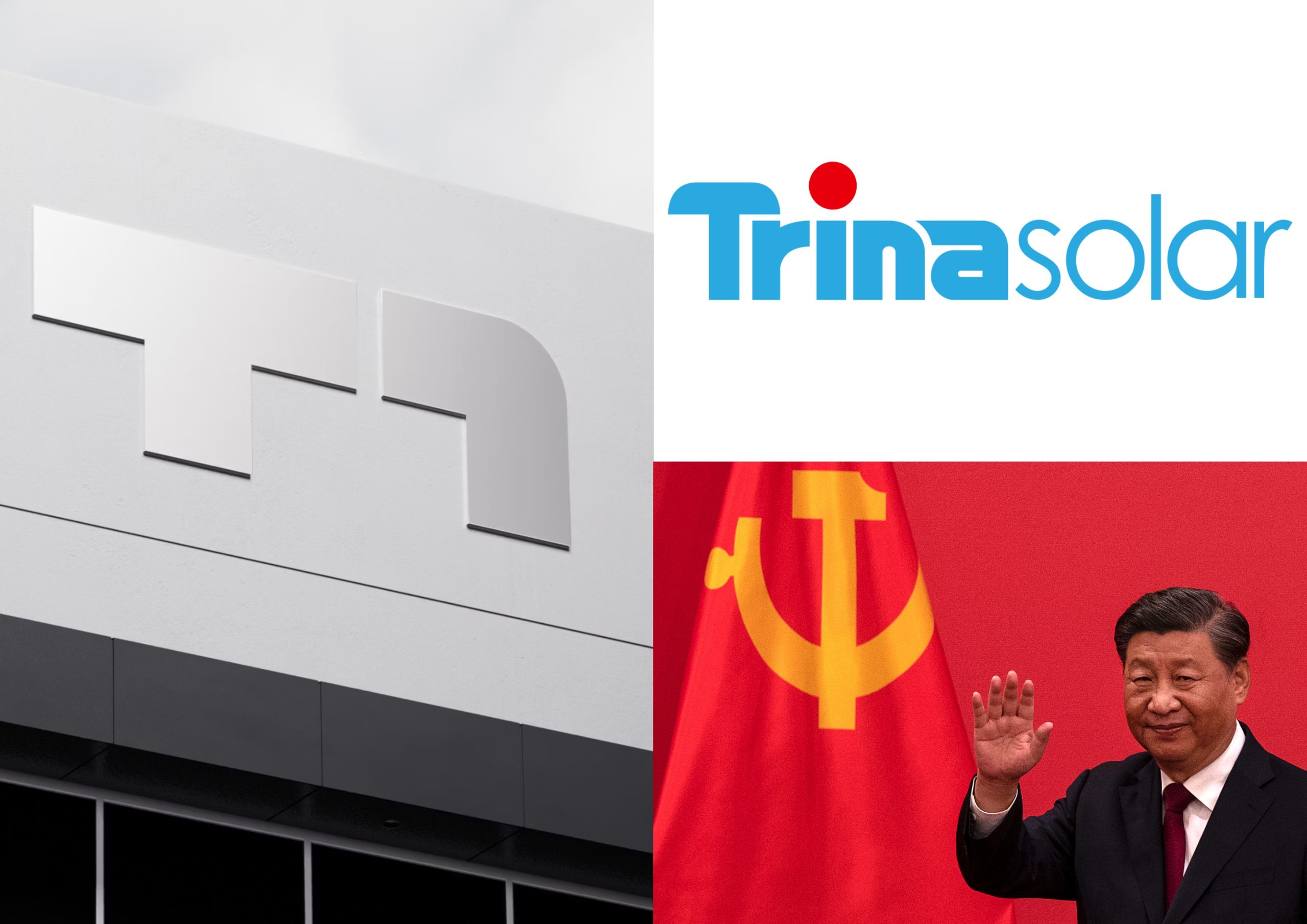
T1 Energy's Dual Allegiance
T1 Energy, a Texas-based solar panel manufacturer, is lobbying to maintain eligibility for lucrative U.S. green energy tax incentives despite ongoing business and financial ties to Trina Solar, a Chinese solar conglomerate with deep connections to the Chinese Communist Party. The company's position has drawn heightened attention as the Trump administration prepares to finalize enforcement rules under the 2025 One Big Beautiful Bill Act, which bars Chinese-controlled entities from receiving the subsidies.
The One Big Beautiful Bill Act, a cornerstone of Trump's energy policy, prohibits companies owned or controlled by Chinese interests from claiming tax credits worth up to $1.3 billion annually for qualifying projects. T1's relationship with Trina Solar, its second-largest shareholder and primary business partner, falls directly under the law's scope. Financial disclosures show Trina holds an 11% stake in T1 and contracts for advisory, manufacturing, and sales support through 2029.
Ties to Beijing Complicate Tax Credit Bid
Trina Solar's influence extends beyond equity: The Chinese firm supplies components, labor, and marketing services to T1's Texas plant while remaining its largest customer. In 2025, T1 reported $632.2 million in sales to Trina and $95.5 million in purchases from the company, relationships that experts argue create dependency risks inconsistent with the tax credit program's domestic goals.
"T1 is the tip of the spear," said Thomas Beline, a trade attorney representing U.S. solar firms. "If enforcement doesn't start here, these structures will proliferate." Nathan Picarsic of Horizon Advisory added that Treasury rules must account for "supply chain entanglement" beyond direct ownership, citing T1's reliance on Trina for technology licensing via a Singapore intermediary.
Trina's ties to Beijing are well-documented: Its CEO, Gao Jifan, serves as a deputy to China's National People's Congress, and the company appears on the Pentagon's list of firms linked to the Chinese military. China's five-year plans have systematically subsidized solar dominance, enabling companies like Trina to control 80% of global solar panel production, per the International Energy Agency.
Advocates warn that allowing T1 to retain credits despite its Trina ties would undermine U.S. efforts to counter Beijing's industrial strategy. "China wants America to fund its solar dominance through these tax breaks," said Michael Lucci of State Armor. "The Treasury must ensure subsidies don't flow to CCP-aligned entities."
T1 recently expanded its portfolio with the acquisition of battery storage firm KORE Power, which has its own ties to Chinese battery company DFD New Energy. The company maintains it has "no control" from Trina, pointing to SEC filings detailing ownership structures and contractual safeguards. Yet internal documents show Trina's stake and ongoing commercial relationships persist, creating uncertainty as Treasury finalizes its enforcement framework this summer.