A report published on Thursday by the National Academies of Sciences, Engineering, and Medicine (NASEM) asserts that human‑caused changes to the thermodynamics of the climate system have a direct and well‑understood impact on extreme temperatures, extreme rainfall and compound hot‑dry events. While the scientific conclusions are clear, the document has drawn immediate scrutiny because it acknowledges contributions from individuals and organisations involved in lawsuits against major oil companies.
Legal connections in the report
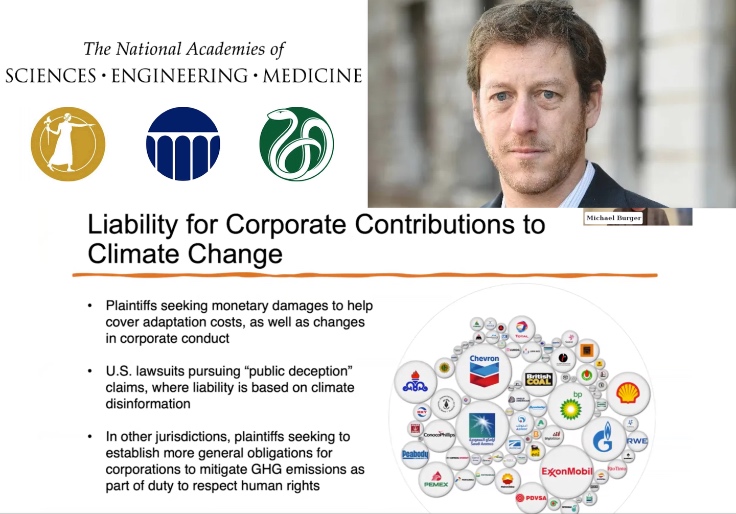
The report lists Michael Burger as a contributor. Burger is a legal scholar and of counsel at Sher Edling, the law firm that is suing Chevron, ExxonMobil and other oil majors on behalf of Democratic‑led states and cities. Although Burger is also affiliated with Columbia University’s Sabin Center for Climate Change Law, the report does not disclose his role at Sher Edling, even though he informed NASEM of his litigation involvement during a 2024 presentation. The Sher Edling actions cover jurisdictions that together contain roughly a quarter of the U.S. population.
Funding and research sources
In addition to Burger’s input, NASEM cites research from Climate Central, a nonprofit whose funders include charities that have collectively donated $26.5 million since 2017 to support anti‑oil litigation. Climate Central’s methodology for attributing specific weather events to climate change has previously been criticised as politically motivated.
The Heising‑Simons Foundation, which funded the NASEM report, is linked to the America Is All In coalition. That coalition is led by former Biden climate official Gina McCarthy and California Governor Gavin Newsom (D), both of whom advocate for aggressive emissions cuts.
Expert criticism
Constitutional law scholar John Shu, speaking to the Washington Free Beacon, described the situation as “All of it is very suspicious and too convenient.” He added that the report’s undisclosed affiliations raise a serious credibility problem and suggest a clear conflict of interest.
Implications for upcoming litigation
The timing of the report is notable. It precedes a Supreme Court hearing scheduled for July 2026 that will decide whether cases such as County of Boulder v. ExxonMobil can proceed. A favourable ruling could set a precedent for billions of dollars in damages in similar climate‑related lawsuits.
Historical context
This is not the first time NASEM’s climate work has been questioned. In 2023 the Federal Judicial Center removed a climate chapter co‑authored by Burger from its Reference Manual on Scientific Evidence after Republican lawmakers and attorneys general raised concerns about its objectivity.
Critics argue that the latest report risks further eroding public trust in scientific institutions by blurring the line between research and advocacy.