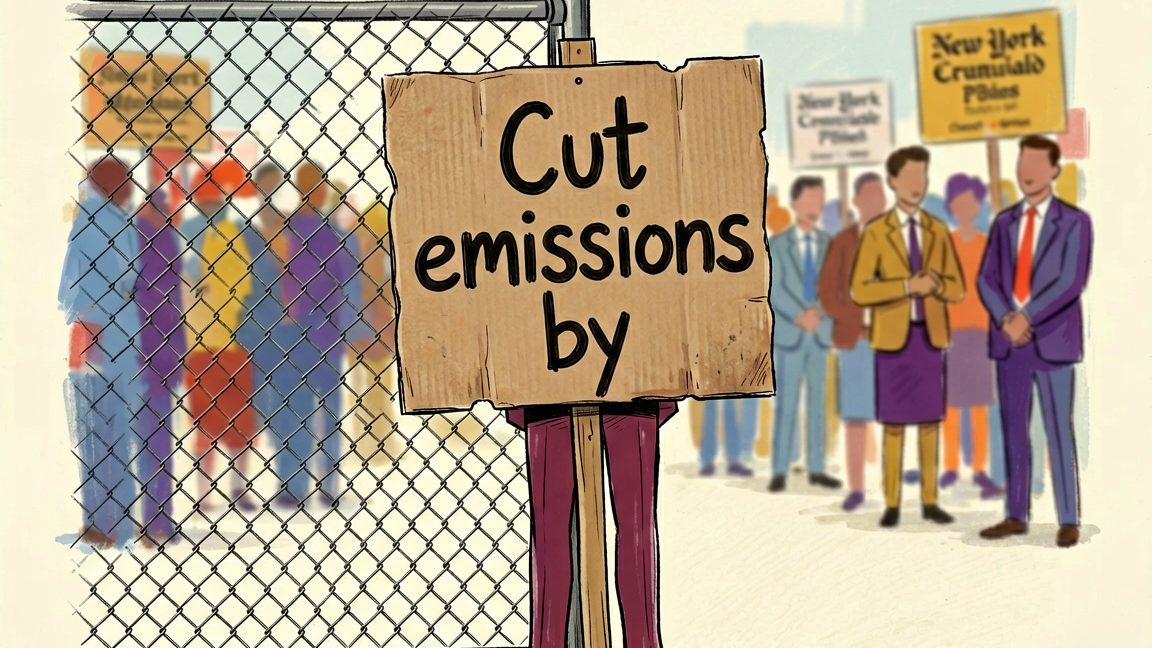
Michael Grunwald, a liberal journalist and author known for his work on climate change, has warned that a strand of climate activism is doing more harm than good. In the spring issue of Liberties, he contends that activists often overstate the immediacy of climate threats, a habit he says "global warming is making droughts and floods worse, but it is not making them happen".
Exaggerated Rhetoric and Counter‑productive Goals
Grunwald challenges the push for an abrupt 43 % cut in greenhouse‑gas emissions by 2030, describing the target as both annoying and inaccurate. He argues that while climate change intensifies extreme weather, it does not create droughts or floods outright. The journalist also suggests that the most extreme language alienates mainstream voters and erodes the credibility of the environmental movement.
He points to opposition to zero‑emissions nuclear plants, to installing solar panels in tortoise habitats, and to the transmission lines needed for renewable distribution as examples of knee‑jerk resistance that does not help the environment.
Calls for Pragmatic, Bipartisan Solutions
Despite his criticism, Grunwald is not opposed to all environmental action. He highlights areas where bipartisan cooperation is already bearing fruit, such as geothermal projects and nuclear power development. He also argues that a blanket ban on natural gas would hinder the electrification required to decarbonise the economy.
Polling, he notes, shows that climate change is a low priority for many American voters. Consequently, he urges green groups to stop pressuring Democratic candidates to adopt radical policies and instead allow more moderate positions that improve electability.
Political Context in the United States and Canada
The debate in the United States remains sharply divided. Democrats generally back aggressive emission‑reduction plans, while Republicans often resist them. The 2020 presidential election featured Democratic contenders such as Bernie Sanders and Elizabeth Warren proposing sweeping climate agendas, contrasted with Republican incumbent Donald Trump dismissing climate change as a hoax. Nonetheless, bipartisan initiatives have emerged, notably the Energy Act of 2020, which includes provisions to promote clean energy and cut emissions. Some Republican lawmakers, including Senator Lindsey Graham, have introduced legislation supporting climate action.
In Canada, Prime Minister Justin Trudeau’s Liberal government has implemented a carbon tax and other measures, while the Conservative opposition challenges these steps. Yet, bipartisan effort is evident in the passage of the Climate Change Act, which also seeks to advance clean‑energy goals.
Grunwald’s Broader Critique of the Left‑Wing Climate Agenda
Grunwald is a vocal critic of the Green New Deal and the Sunrise Movement, which he describes as “stalking horses for socialism”. He also opposes degrowth, the idea that economic expansion is incompatible with environmental sustainability. In a follow‑up conversation, he asserted that "President Trump is a bigger problem for the environment than the climate left", arguing that eco‑catastrophism is harmful but that a Trump‑style approach would be a genuine ecological disaster.
Identifying himself as centre‑left, Grunwald says his stance has made him a known figure within environmental circles for opposing radical climate policies. He maintains that deprioritising climate issues will not make Democrats more popular, and that a balanced, compromise‑oriented approach is essential for long‑term progress.
The discussion surrounding climate change is complex and multifaceted, with a growing chorus urging nuance over extremism. Grunwald’s perspective adds to a broader conversation about how best to address the challenges of a warming planet while preserving political viability.