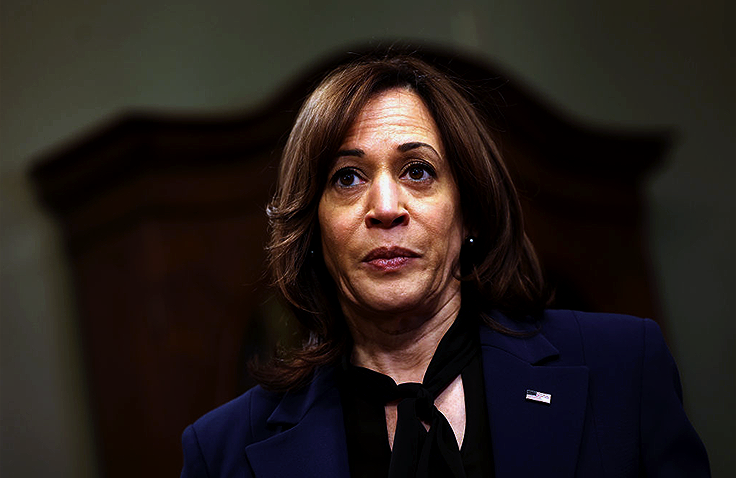
Since assuming the vice presidency in January 2021, Kamala Harris has become a focal point for both supporters and critics of the Biden administration. Her constitutional role places her directly in the line of succession, makes her the president of the Senate, and assigns her a portfolio that includes immigration, voting rights and diplomatic outreach. In the United States, the vice president's duties are defined by Article I, Section 3 of the Constitution, which gives her the power to cast tie‑breaking votes in the Senate and to preside over its daily proceedings. The Presidential Succession Act of 1947 also designates the vice president as first in line to assume the presidency should the office become vacant.
As the 2024 presidential contest gathers momentum, Harris's record and public profile are being examined for clues about the Democratic ticket's prospects. The 2024 election will be decided through a series of state primaries and caucuses that allocate delegates to the party's national convention. In most states, a candidate must win a majority of pledged delegates to secure the nomination, while the party's superdelegates, unpledged party officials, can influence the final tally if the pledged count is close. The Democratic National Committee has set the primary calendar to begin in early February, with Iowa, New Hampshire, Nevada and South Carolina traditionally serving as early indicators of candidate viability.
Harris's rise began in the San Francisco District Attorney's office, where she was elected in 2003 and served until 2011. Her tenure was marked by a mix of progressive rhetoric and a series of high‑profile prosecutions that drew both praise and protest. In 2011 she became California's attorney general, the first woman and the first person of South Asian descent to hold the post. As attorney general she oversaw a statewide crackdown on illegal immigration and launched a series of initiatives aimed at consumer protection and environmental enforcement. She won a U.S. Senate seat in 2016, becoming the first Black woman to represent California in Congress, before launching a brief presidential campaign in 2019 that ended before the first primary votes.
The criminal‑justice record that Harris built as a prosecutor continues to shape public debate. While she championed reforms such as a statewide ban on the death penalty and a push for diversion programs, she also defended convictions that later attracted criticism from criminal‑justice reform advocates. A 2020 review of her tenure as district attorney highlighted that nearly two thousand individuals were sentenced for marijuana‑related offenses, a statistic that reform groups cite when questioning her commitment to the drug‑policy changes the Biden administration has pursued. These contradictions have become talking points for opponents who argue that her past does not align with the progressive platform the party promotes.
In her vice‑presidential role, Harris has taken on a range of policy initiatives. She has led the administration's outreach to Central American migrants, traveling to the region to discuss the root causes of migration and to promote U.S. aid programs. She has also chaired the White House task force on voting rights, pushing for legislation that would restore and protect voting access after the 2021 Supreme Court decision in Brnovich v. Democratic National Committee that limited the scope of the Voting Rights Act. On the foreign‑policy front, Harris has represented the United States at diplomatic events in Europe and Asia, emphasizing a multilateral approach to climate change and security challenges.
Within the Democratic Party, Harris's relationship with President Biden has been described as both collaborative and strained. Sources close to the administration note that she has occasionally pushed back on policy proposals that she believes could alienate key voter blocs, such as moderate suburban voters concerned about immigration enforcement. At the same time, senior party officials have warned that a perceived lack of cohesion could undermine the ticket's ability to present a united front against Republican challengers. The internal dynamics are further complicated by the presence of other high‑profile Democrats who are positioning themselves for a possible 2024 presidential run, creating a competitive environment for fundraising and media attention.
Public opinion on Harris remains mixed. A Pew Research Center poll released in June 2024 showed that 38 percent of registered voters approved of her performance as vice president, while 45 percent expressed disapproval. Among Democratic voters, approval was higher at 48 percent, but a separate poll by Quinnipiac University indicated that 42 percent of Democratic respondents viewed her as a potential presidential candidate in 2028, suggesting that her long‑term ambitions are on the radar of the party base. Republican respondents, by contrast, expressed a largely negative view, with 62 percent indicating they would not support a ticket that included Harris.
The historical significance of Harris's vice presidency cannot be overlooked. She is the first woman, the first Black person and the first person of South Asian heritage to hold the office. This breakthrough has been celebrated as a milestone for representation, and it has energized segments of the electorate that have traditionally felt excluded from the political process. For Canadian readers, Harris's presence in the White House signals a continuation of the United States' focus on immigration reform and cross‑border cooperation, issues that directly affect Canada's own immigration policies and labor markets.
Harris's involvement in immigration policy has particular relevance for Canada's southern border. Her advocacy for addressing the root causes of migration in Central America aligns with Canadian initiatives that fund development projects in the same region. Moreover, any shift in U.S. enforcement priorities could alter the flow of asylum seekers and economic migrants who cross into Canada via the northern border, influencing Canadian immigration courts and settlement services.
On voting rights, Harris's push for federal legislation resonates beyond the United States. Canadian observers note that the United States' approach to protecting ballot access may serve as a comparative case for discussions about electoral reform in Canada, especially as provinces consider changes to voter identification requirements and mail‑in voting procedures.
Looking ahead to the 2024 election, Harris's performance as vice president will be measured against both domestic expectations and international perceptions. If she can navigate the tensions within the Democratic Party, address the lingering questions about her criminal‑justice record, and articulate a clear vision on immigration and voting rights, she could solidify her standing as a key asset for the ticket. Conversely, continued criticism from progressive activists and a hostile Republican narrative could diminish her influence and force the Biden campaign to recalibrate its messaging in the final months before the November vote.