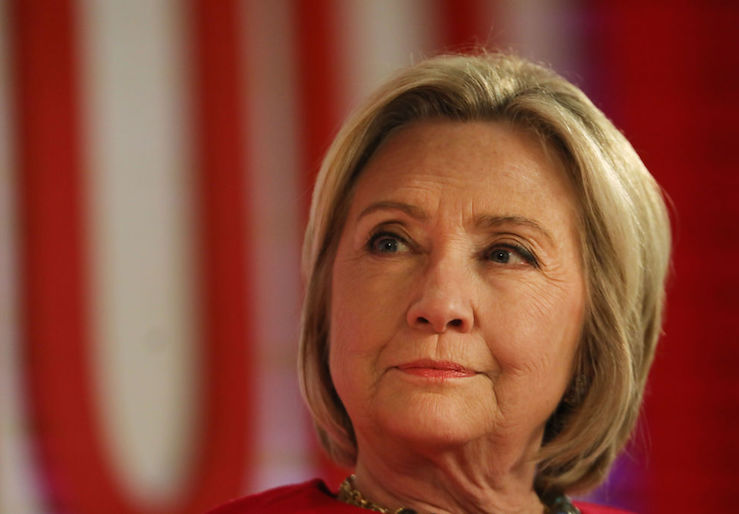
Former Secretary of State Hillary Clinton is slated to appear before a House committee later this year to answer questions about her involvement in the federal investigation of financier Jeffrey Epstein. The hearing, announced by the House Foreign Affairs Committee, follows a series of subpoenas issued to both Clinton and her husband, former President Bill Clinton, after they declined to cooperate with earlier inquiries.
Clinton's appearance comes at a time when her political legacy remains a focal point for both supporters and critics. As the Democratic nominee who lost the 2016 presidential race to Donald Trump, she continues to be a polarizing figure in national politics. The testimony is expected to address whether the Clintons used their influence to affect the course of the criminal probe, a question that has been raised by several Republican lawmakers.
During her eight‑year tenure as secretary of state from 2009 to 2013, Clinton oversaw a diplomatic corps that managed a range of crises, including the Arab Spring uprisings, the rise of the Islamic State, and the 2012 attack on the U.S. diplomatic mission in Benghazi, Libya. The Benghazi incident, which resulted in the death of Ambassador Christopher Stevens and three other Americans, sparked a protracted congressional investigation that examined security lapses and the administration's public messaging. While the investigations did not produce criminal charges against Clinton, they contributed to a broader narrative of controversy surrounding her time in office.
Another enduring controversy stems from Clinton's use of a private email server while serving as secretary of state. In 2015, it was revealed that she had transmitted classified information through a personal email account. The Federal Bureau of Investigation conducted a review and, in July 2016, announced that it had found no evidence of intentional wrongdoing, though it noted that some emails were marked as classified. The episode fueled criticism from opponents who argued that the practice jeopardized national security, and it became a recurring theme in the 2016 campaign.
The upcoming testimony is also linked to the broader Epstein case, which has drawn intense public attention since the financier's 2019 death in custody. Epstein was accused of operating a network that facilitated sexual exploitation of minors, and his connections to high‑profile individuals have been the subject of extensive media coverage. Federal prosecutors have indicated that the Clintons were among the individuals who were asked to provide information about Epstein's activities and financial dealings. Their refusal to appear before the grand jury led to the issuance of subpoenas, which the committee now seeks to enforce through the upcoming hearing.
Republican members of the committee have framed the testimony as an effort to hold powerful figures accountable. Representative James Moran, a senior member of the committee, said the hearing will "expose whether political influence was used to obstruct a criminal investigation." Democratic members, meanwhile, have cautioned against turning the hearing into a partisan spectacle. Representative Jamie Rogers, a Democrat from New York, emphasized that "the focus should be on facts, not on political point‑scoring."
Clinton's legal team has signaled that she will cooperate with the committee, but they have also indicated that they intend to assert executive privilege where appropriate. Executive privilege is a legal doctrine that allows a president and, in some cases, senior officials to withhold communications from congressional scrutiny if they pertain to the conduct of official duties. While the privilege does not automatically apply to a former secretary of state, the legal arguments surrounding it are likely to be a central element of the hearing.
The political stakes of the testimony extend beyond the immediate questions about Epstein. For the Democratic Party, the hearing could influence the narrative surrounding the 2024 presidential primary, where several candidates have positioned themselves as alternatives to the Clinton legacy. Former Vice President Joe Biden, who defeated Clinton's primary challenger in 2020, has repeatedly defended her record, but younger candidates such as Governor Pete Burgum and Senator Maya Miller have used the controversies to differentiate themselves.
In the United States, the outcome of the hearing may affect public opinion on government transparency and accountability. Polls conducted after the 2016 election showed that a significant portion of the electorate viewed the Clinton email controversy as a factor in their voting decisions. A recent Pew Research Center survey released in January 2026 indicated that 42 percent of registered voters still associate Clinton with "political scandal," while 35 percent view her as a "dedicated public servant." The hearing could shift those perceptions, depending on the evidence presented and the media coverage that follows.
Canadian observers are also watching the developments closely. The United States' political climate influences cross‑border trade, security cooperation, and immigration policy, all of which have direct implications for Canada. Analysts at the Centre for International Governance Innovation note that "any erosion of confidence in U.S. institutions reverberates north of the border, affecting bilateral negotiations and public sentiment." Moreover, the Clinton‑Epstein connection raises questions about how elite networks operate across national boundaries, a topic that has been explored in recent Canadian parliamentary hearings on foreign influence.
The procedural path for the hearing is governed by the House's rules on subpoenas and witness testimony. Once a committee issues a subpoena, the witness is required to appear before the designated subcommittee or face a contempt citation. In past high‑profile cases, such as the testimony of former National Security Advisor Michael Flynn, the House has pursued contempt charges when witnesses refused to comply. Legal scholars suggest that the likelihood of a contempt citation depends on the political composition of the House and the willingness of the leadership to pursue enforcement.
Beyond the immediate legal and political ramifications, the hearing may also shape the broader discourse on how powerful individuals are held accountable in the United States. The Clinton case sits at the intersection of several recurring themes: the use of personal email for official business, the handling of diplomatic security failures, and the influence of wealth and connections on criminal investigations. Each of these issues has prompted legislative proposals aimed at tightening oversight, such as the 2024 Email Transparency Act, which would require all federal officials to use government‑issued email accounts for official communications.
Critics of the hearing argue that it risks becoming a "political theater" that distracts from pressing policy debates, such as climate change, health care reform, and the upcoming mid‑term elections. Supporters counter that accountability is a cornerstone of democratic governance and that the public deserves clarity on whether any misconduct occurred. As the date approaches, both sides are mobilizing legal teams, public relations strategies, and grassroots outreach to shape the narrative.
In the weeks leading up to the testimony, the House committee will release a list of documents it expects the Clintons to produce. These may include correspondence related to Epstein's financial transactions, travel records, and any communications with the Department of Justice concerning the investigation. The committee's staff has indicated that it will also review publicly available materials, such as the 2015 email release and the 2016 FBI assessment, to contextualize any new evidence.
The outcome of the hearing will likely be measured not only by the immediate findings but also by its impact on future congressional oversight. If the committee secures a substantive record, it could set a precedent for how former officials are summoned to testify in matters involving alleged criminal conduct. Conversely, if the hearing yields limited new information, critics may argue that the process was more about political point‑scoring than about uncovering truth.
Regardless of the final verdict, the Clinton testimony underscores the enduring relevance of past administrations to current political debates. As voters in the United States and Canada continue to evaluate the performance of public officials, the balance between transparency, legal privilege, and political accountability remains a contested terrain. The upcoming hearing will add another chapter to the ongoing conversation about how the nation's most powerful figures are held to account.