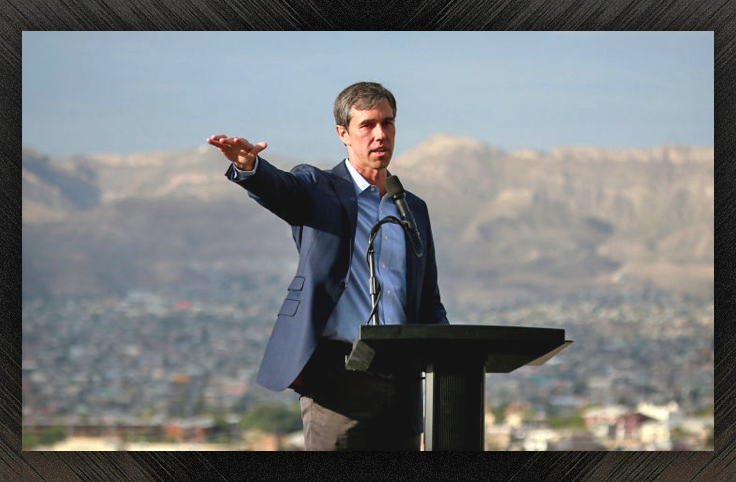
Beto O'Rourke, a former U.S. representative from Texas's 16th district, has found himself back in the national spotlight as critics focus on his recent remarks about President Joe Biden's border wall order and a $100,000 donation linked to the collapsed cryptocurrency exchange of Sam Bankman‑Fried. The controversy arrives at a moment when the Democratic Party is reassessing its strategy in a state that has voted Republican for every presidential election since 1980, yet shows signs of demographic change that could alter future outcomes.
O'Rourke entered politics as a member of the El Paso City Council in 2005, serving until 2011 before winning a seat in the House of Representatives in 2012. He held that seat for three terms, leaving Congress in 2019. Since then, he has pursued three major campaigns that ended in defeat: a 2018 bid for the U.S. Senate against incumbent John Cornyn, a 2020 run for the Democratic presidential nomination, and a 2022 campaign for Texas governor against Republican incumbent Greg Abbott. Each loss has reshaped the Democratic Party's approach to Texas, a state that has long been dominated by Republicans at the federal level. Party strategists have counted on O'Rourke's national profile to attract donors and energize younger voters, but his repeated defeats have also prompted questions about whether the party should continue to invest heavily in his candidacies.
The Texas political landscape is governed by a set of rules that differ from those in many other states. Texas holds its statewide elections in November of even‑numbered years, and candidates must qualify by filing a declaration of candidacy with the Secretary of State and meeting residency and age requirements. Primary elections are open, meaning any registered voter may choose which party's primary to vote in, a factor that can advantage candidates with broad name recognition like O'Rourke. However, the state's "winner‑takes‑all" allocation of electoral votes in presidential contests and its single‑member congressional districts have historically amplified the Republican advantage, making any Democratic breakthrough a high‑stakes gamble.
In October 2023, O'Rourke publicly criticized Biden's executive order that paused construction of the southern border wall, calling the move "impotent political posturing." The comment appeared in a column by Ben Wilson of The Hill, where O'Rourke argued that the pause would not address the underlying immigration challenges facing Texas border counties. The statement drew swift rebuke from Texas Republicans, who accused O'Rourke of undermining national security. State Representative Matt Gaetz, a vocal opponent of the wall, called the criticism "out of touch with the realities on the ground." Some Democrats, however, praised O'Rourke for highlighting the limited impact of a symbolic pause on a project that has been stalled for years. The border wall debate itself is rooted in a series of appropriations battles that began in 1996, when Congress first authorized a physical barrier. Subsequent funding measures have been subject to annual congressional approval, and executive orders can only halt, not permanently cancel, construction without new legislation.
Gun policy has also been a flash point for O'Rourke. While he has advocated for expanded background checks, a ban on assault weapons, and a national red‑flag law, he has repeatedly denied any intention to confiscate law‑abiding firearms. In a 2022 town hall, he emphasized that "responsible gun owners will not be penalized" while urging Congress to close loopholes that allow dangerous individuals to obtain weapons. The United States Senate's filibuster rule, which requires a three‑fifths majority to close debate on most legislation, has made comprehensive gun reform difficult at the federal level. In Texas, the state legislature has passed some of the nation's most permissive gun laws, including open carry without a permit, which creates a stark contrast with the policies O'Rourke promotes at the national level.
O'Rourke's media presence extended beyond policy debates. In March 2019, he appeared on the cover of Vanity Fair, a few months after his Senate loss and weeks before announcing his presidential run. The cover story, titled "The Rise of Beto," portrayed him as a fresh face in national politics and helped cement his reputation as a charismatic fundraiser. The profile highlighted his ability to draw small‑donor contributions through online platforms, a tactic that later became a hallmark of Democratic campaigns seeking to reduce reliance on large corporate donors.
Financial scrutiny resurfaced in July 2023 when The Washington Post reported that O'Rourke's 2022 gubernatorial campaign had received a $100,000 contribution from a political action committee linked to Sam Bankman‑Fried, the founder of the now‑defunct crypto exchange FTX. O'Rourke's campaign returned the money after the report, stating that the donation "did not align with our standards for transparency." The incident sparked a broader conversation about the influence of cryptocurrency donors on political races. Federal election law requires that contributions to federal candidates be reported to the Federal Election Commission (FEC) within a strict deadline, and that donors be U.S. citizens or permanent residents. While the donation in question was made to a state‑level campaign, state election officials in Texas have similar reporting requirements, and the return of the funds was seen as an effort to stay within those rules. Texas law also caps contributions to state candidates at $10,000 per individual, a limit that would have been exceeded by the $100,000 figure had it been accepted directly.
Analysts say the combination of policy missteps and fundraising controversies may limit O'Rourke's appeal to moderate voters in Texas. "He has the charisma but he also carries baggage that makes it harder for swing voters to trust him," noted political scientist Dr. Laura Mendoza of the University of Texas at Austin. The Democratic Party's internal calculations often rely on predictive models that weigh candidate favorability, fundraising capacity, and demographic trends. O'Rourke's name recognition scores high, but the models also flag negative sentiment from independent voters who view the border wall comment as a sign of political grandstanding and the crypto donation as a lapse in vetting.
Texas remains a key battleground for both parties, with demographic shifts in urban areas and a growing Hispanic electorate offering Democrats a potential foothold. According to the U.S. Census Bureau, the Hispanic share of the Texas population grew from 39 percent in 2010 to 41 percent in 2022, and younger voters in cities such as Austin, Dallas, and Houston are increasingly leaning Democratic. However, voter turnout among these groups has historically lagged behind that of older, white voters, a gap that the Democratic Party has tried to close through targeted outreach and voter‑registration drives. O'Rourke's ability to mobilize these voters could still be valuable to the party, even if he does not run for office again.
Looking ahead, O'Rourke has hinted that he may focus on fundraising and advocacy rather than seeking another elected position. He continues to appear at Democratic events, championing climate initiatives and voting‑rights legislation, and has pledged to support any candidate who can win a statewide office for the party. In the 2024 election cycle, the Democratic National Committee has allocated additional resources to Texas, including a $30 million national party committee grant aimed at expanding field offices and digital outreach. O'Rourke's network of donors and his experience with high‑profile media campaigns could make him a central figure in those efforts, provided he can navigate the scrutiny that accompanies his public statements and fundraising sources.
Whether O'Rourke can convert his national profile into lasting influence within the Democratic establishment remains uncertain. His recent controversies underscore the challenges faced by high‑profile candidates who must balance personal brand building with the scrutiny that comes with fundraising and policy positions. As the 2028 presidential election approaches, the party will likely weigh the benefits of O'Rourke's charisma against the risk of alienating moderate voters in a state that could decide the balance of power in the Senate.