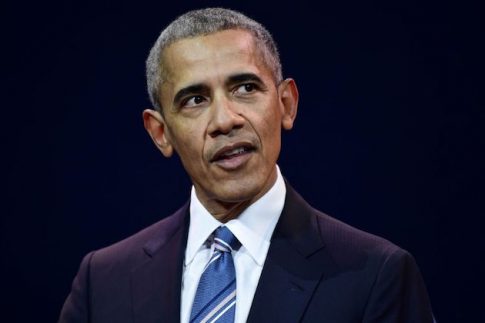
Former President Barack Obama on Tuesday confirmed that his second presidential memoir, tentatively titled A Promised Land II, will be released in the fall of 2026, and that his production company Higher Ground has signed a three‑year extension with Netflix to develop additional documentary and scripted projects.
The announcement came during a press conference at the Library of Congress, where Obama highlighted the book's focus on the "political and personal challenges of governing in an increasingly polarized era." The publisher, Penguin Random House, expects first‑run sales of at least 500,000 copies, a figure comparable to the 2.5 million copies sold of his 2020 memoir A Promised Land. In a brief excerpt released to the press, Obama wrote, "The decisions we made in the White House continue to echo in the lives of everyday Americans, for better and for worse."
Higher Ground Productions, the joint venture Obama launched with his wife Michelle in 2018, has already delivered acclaimed series such as American Factory and Crip Camp. The renewed Netflix agreement will fund at least six new projects over the next three years, including a documentary on the implementation of the Affordable Care Act and a scripted drama set during the 2008 financial crisis. Netflix's chief content officer, Ted Sarandos, said the partnership "offers a unique perspective on American history that only a former president can provide."
Obama's continued media presence follows a broader trend of former presidents leveraging their post‑office platforms. While Bill Clinton has focused on the Clinton Foundation and Donald Trump has built a media empire around his brand, Obama has blended storytelling with policy advocacy. Political analysts note that his ability to shape public discourse through books and streaming content gives him a distinct advantage in influencing the Democratic Party's agenda ahead of the 2024 presidential primary.
Since leaving office in 2017, Obama has remained an active fundraiser for Democratic candidates, reportedly helping to raise more than $150 million for the party's 2022 midterm races. His endorsement of former Vice President Joe Biden in 2020 was credited with bolstering Biden's credibility among younger voters. In recent months, Obama has hosted virtual town halls with emerging progressive leaders, emphasizing climate action, voting‑rights protection, and health‑care expansion, issues that feature prominently in his upcoming memoir.
The forthcoming book is expected to revisit the passage of the Affordable Care Act, a signature achievement of Obama's administration. While the law reduced the uninsured rate from 16 percent in 2010 to 9 percent in 2016, critics argue that rising premiums and limited insurer participation have undermined its effectiveness. Obama's memoir will reportedly include new reflections on the political calculus that led to the law's passage and the subsequent legal challenges that reached the Supreme Court.
Foreign‑policy chapters are also slated to address the 2015 Iran nuclear agreement, the 2016 Paris climate accord, and the 2014 decision to intervene in the fight against the Islamic State. In a 2024 interview with The New York Times, Obama said, "We made choices that were imperfect, but we tried to balance security with diplomacy. The record is mixed, and I hope future leaders will learn from both our successes and our missteps."
Reaction to the memoir announcement has been mixed across the political spectrum. Liberal commentator Ezra Klein praised the book as "a necessary corrective to the myth that the Obama years were a flawless era," while conservative columnist George Will warned that "the memoir will likely double‑down on a narrative that downplays the economic disruptions of the early 2010s." Early advance orders suggest strong demand, with Amazon reporting a surge in pre‑orders that placed the title among the top‑five books in its "Politics & Current Events" category.
Critics have also scrutinized the Netflix extension, questioning whether a former president should receive preferential access to a major streaming platform. A spokesperson for the Federal Communications Commission noted that "the FCC does not regulate content agreements between private companies," but emphasized that "transparency in media ownership remains a public interest concern." In response, Higher Ground's legal team reiterated that the partnership complies with all applicable antitrust and disclosure rules.
Obama's media strategy mirrors the broader evolution of political communication in the digital age. By coupling a high‑profile book launch with streaming content, he reaches both traditional readers and younger audiences who consume news on platforms like Netflix and TikTok. A recent Pew Research Center survey found that 62 percent of adults under 35 consider streaming services a primary source for political information, underscoring the tactical advantage of such a partnership.
Historically, former presidents have used memoirs to shape their legacies. Dwight D. Eisenhower's two‑volume memoirs, published in the 1950s, helped cement his reputation as a steady wartime leader. Similarly, Barack Obama's first memoir reshaped public perception of his presidency, moving the narrative beyond the "Obama‑era" branding to a more nuanced account of policy trade‑offs. Observers expect the new book to further refine his legacy, particularly on issues like criminal‑justice reform and the rise of populist movements.
Looking ahead, Obama is slated to embark on a limited book‑tour that will include stops at major universities and community colleges, a format he used during his 2008 campaign to connect directly with younger voters. The tour will be livestreamed on multiple platforms, allowing real‑time interaction with audiences across the United States and Canada. In a statement, the former president said, "I want to hear from the next generation about what they need from our democracy, and I hope my reflections can spark honest conversation."
While Obama has not signaled any intention to run for office again, his continued engagement in policy debates and cultural production suggests he will remain a key figure in shaping Democratic strategy. As the 2024 election cycle intensifies, his endorsements, fundraising prowess, and media reach could prove decisive in a race that many political scientists describe as "the most contested in a generation."
In sum, the dual announcement of a new memoir and an expanded Netflix deal reflects Barack Obama's strategic use of storytelling to influence both public opinion and party politics. Whether the projects will sway voters or simply add to his personal brand remains to be seen, but they undeniably keep a former president at the center of America's political conversation.