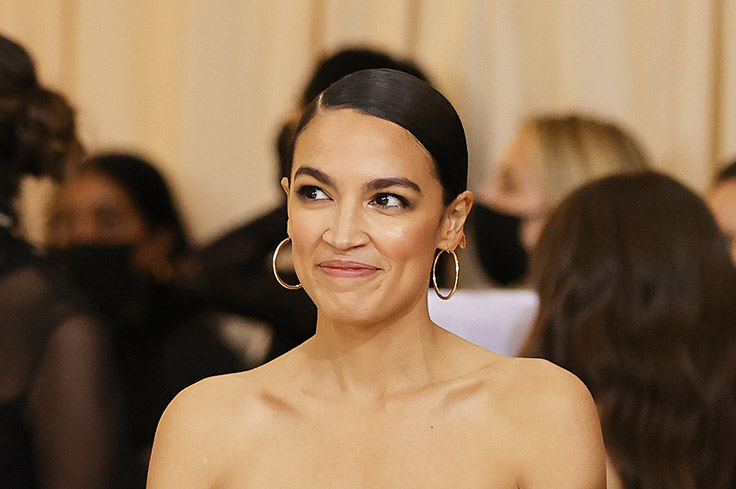
Representative Alexandria Ocasio‑Cortez, the New York Democrat who rose to national prominence after defeating a ten‑term incumbent in 2018, has again placed the Green New Deal at the center of a heated congressional debate. The proposal, which she co‑authored with Senator Ed Markey, calls for sweeping reductions in greenhouse‑gas emissions, massive public investment in renewable energy, and a series of social‑economic measures aimed at addressing climate‑related inequities.
House Speaker Nancy Pelosi, who has long been a gatekeeper for Democratic legislation, recently described the Green New Deal as a "green dream" that would be difficult to translate into law without broader consensus. Pelosi's remarks, made during a closed‑door briefing with senior leadership, underscore the growing tension between the party's progressive wing and its more centrist members.
Ocasio‑Cortez, a member of the informal "Squad" of progressive House members and a self‑identified Democratic Socialist, has used her social‑media platform to amplify the proposal's goals. Since her election at age 29, she has become a fixture on television panels, town halls, and online forums, where she frames the climate crisis as both an environmental and a social justice issue.
The Green New Deal, first introduced in 2019, outlines a 10‑year plan to achieve net‑zero carbon emissions, upgrade the nation's power grid, and create millions of high‑pay jobs in clean‑energy sectors. It also includes provisions for universal health care, affordable housing, and a federal jobs guarantee, linking climate action to broader economic reforms.
Critics argue that the bill's scope exceeds the authority of Congress and would require unprecedented levels of federal spending. A 2022 Congressional Budget Office analysis estimated that fully implementing the plan could cost upwards of $90 billion annually, a figure that would likely necessitate new taxes or reallocation of existing funds. Republican leaders have repeatedly labeled the proposal "unrealistic" and warned that it could jeopardize energy reliability.
Within the Democratic caucus, moderate members have expressed concern that the Green New Deal could alienate swing voters in key battleground states. Senator Joe Manchin of West Virginia, for example, has called for a more incremental approach to decarbonization, emphasizing the need to protect coal‑dependent communities while transitioning to cleaner energy sources.
Ocasio‑Cortez's supporters counter that the urgency of climate change demands bold action. In a recent town hall in Queens, she highlighted a study from the Intergovernmental Panel on Climate Change warning that the United States must cut emissions by 50 percent by 2030 to stay below a 1.5 °C temperature rise. She argued that the economic opportunities in renewable technologies could offset the costs of transition, especially for workers in regions hit hardest by climate impacts.
The debate has implications beyond U.S. borders. Canada, which shares a long‑standing trade relationship with the United States, has pledged to achieve net‑zero emissions by 2050 and has already implemented a carbon‑pricing system. Analysts note that a U.S. shift toward aggressive climate legislation could accelerate cross‑border investments in clean‑energy infrastructure, but could also create regulatory mismatches that affect industries ranging from automotive manufacturing to natural‑gas pipelines.
Historically, the United States and Canada have coordinated on climate initiatives through the United States‑Canada Joint Ministerial Committee on the Environment. A more ambitious U.S. climate agenda could deepen that cooperation, but it could also pressure Canadian provinces that rely on fossil‑fuel revenues, such as Alberta, to accelerate diversification efforts.
Ocasio‑Cortez's political trajectory has been marked by a series of high‑profile endorsements and controversies. After her 2018 primary victory over Rep. Joe Crowley, she quickly became a leading voice on issues ranging from Medicare‑for‑All to student‑loan forgiveness. Her alignment with the Democratic Socialists of America, the nation's largest socialist organization, has drawn both praise from progressive activists and criticism from opponents who question the feasibility of her policy proposals.
In addition to legislative work, Ocasio‑Cortez has cultivated a substantial online following, with millions of followers across platforms such as Instagram, Twitter, and TikTok. Her use of short‑form video to explain complex policy details has been credited with reshaping how members of Congress engage with constituents, especially younger voters.
Recent scrutiny has also focused on her personal finances and lifestyle. Public records show that she purchased a Tesla Model 3 in 2020, a decision she defended as aligning with her environmental values. Critics have pointed to her residence in a Washington, D.C., apartment building that offers amenities such as a fitness center and rooftop garden, arguing that it contradicts her advocacy for economic equity. Ocasio‑Cortez has responded that the cost of housing in the capital is high for all members of Congress and that her personal choices do not diminish the urgency of her policy agenda.
The Green New Deal's future in the 118th Congress remains uncertain. While the proposal has not advanced beyond committee hearings, its core ideas have influenced other legislation, including the Inflation Reduction Act of 2022, which allocated $369 billion for clean‑energy incentives. Some Democrats hope that a scaled‑down version of the plan could gain bipartisan support, especially as public opinion on climate action continues to shift.
Polling data from a June 2024 Pew Research Center survey indicates that 57 percent of American adults view climate change as a "major threat," with a narrow majority supporting federal action to reduce emissions. However, the same poll shows that only 34 percent favor a comprehensive overhaul of the economy to achieve net‑zero emissions, suggesting a gap between environmental concern and support for sweeping reforms.
For Canadian voters, the debate offers a glimpse into how U.S. policy could shape domestic climate strategies. A more aggressive U.S. stance may pressure Canadian federal and provincial governments to accelerate their own clean‑energy targets, potentially affecting sectors such as automotive manufacturing, where cross‑border supply chains are tightly integrated.
Looking ahead, Ocasio‑Cortez has signaled that she will continue to champion the Green New Deal and related progressive policies, regardless of legislative setbacks. In a recent interview, she emphasized that "the fight for climate justice is a marathon, not a sprint," and that her office will keep pushing for legislation that addresses both environmental and economic inequality.
The next congressional session will test whether the progressive vision she represents can find a foothold within a divided Democratic caucus and a Senate that remains closely split along partisan lines. The outcome will have direct consequences for the United States' ability to meet its climate commitments and for the broader North American effort to transition to a low‑carbon economy.