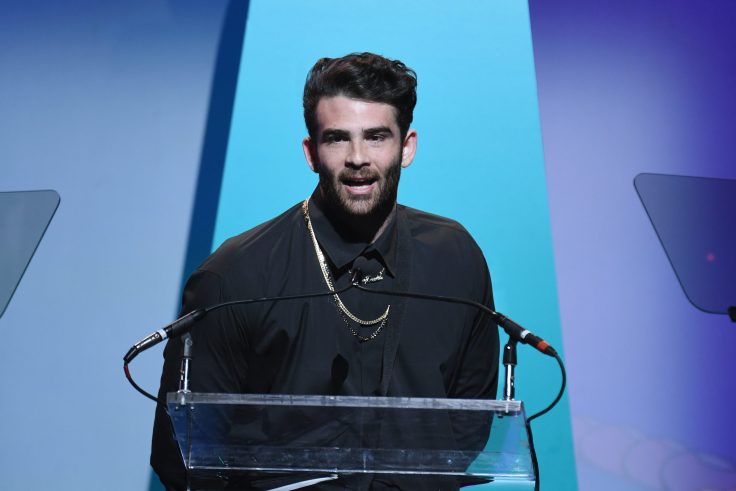
William Morris Endeavor, the Hollywood talent agency headed by Ari Emanuel, announced that it has not terminated its representation of political commentator Hasan Piker, a decision that has drawn sharp criticism from prominent Democrats.
Piker, a Twitch streamer with a sizable following for his left‑leaning political commentary, has become a flash point in the 2024 election cycle. He has repeated remarks that describe the United States as deserving the September 11 attacks, called Israel "much worse" than Hamas, urged "capitalist blood" to flow in the streets, and defended the killing of health‑care executive Brian Thompson.
Those statements have placed him at odds with many mainstream Democrats, especially as the party grapples with how to address the Israel‑Palestine conflict. Rahm Emanuel, former White House chief of staff and a leading figure in the Democratic establishment, said he would "give [Piker] a two‑by‑four upside his head" for the influencer's claim that Jews foster antisemitism by supporting Israel.
Despite the outcry, WME has kept Piker on its roster. In a June interview, Piker said, "I'm repped by WME," and recounted that agency representatives asked him after the Oct. 7, 2023 attacks to "tone it down" on anti‑Israel commentary. He replied, "Fuck no," and recalled the agents' response, "OK, well, we won't send work your way." He added that the firm never dropped him, even though it has released many other clients.
WME's reputation for swift disassociation with controversial figures is well documented. The agency cut ties with country singer Morgan Wallen in 2021 after a video captured him shouting a racial slur. It also terminated relationships with film director Brett Ratner and actor Armie Hammer following allegations of sexual misconduct. In a separate episode, actor Justin Baldoni alleged that Ryan Reynolds, a top WME client, pressured the agency to fire Baldoni over a dispute with Reynolds's wife, Blake Lively; WME denied the claim.
The decision to retain Piker is puzzling to observers because the influencer has turned down lucrative opportunities. He told his agents he declined a $1 million offer from prediction‑market firm Polymarket for a one‑night appearance on Election Night 2024, saying simply, "Nope." Polymarket, which also sponsors Ari Emanuel's podcast "Rushmore," has not commented on the declined deal.
WME declined to comment on its relationship with Piker, and his agents, Chris Jacquemin and Bennett Sherman, did not respond to requests for statements. Piker's publicist also remained silent.
The episode highlights a broader tension within the Democratic Party. While some members, such as Senate nominee Abdul El‑Sayed in Michigan, have refused to distance themselves from Piker, more moderate figures are eager to distance the party from his extremist rhetoric. The internal debate mirrors the national conversation about how Democrats should navigate criticism of Israel while maintaining support from pro‑Israel constituencies.
Rahm Emanuel's recent comments come as he prepares a possible presidential run. Although he has historically been a staunch supporter of Israel, his July visit to the country included remarks that the United States should end unconditional military aid to Israel. Both Rahm and his brother Ari, who share an Israeli‑born father, have publicly criticized Israeli Prime Minister Benjamin Netanyahu.
Talent agencies like WME and United Talent Agency (UTA) play a significant role in shaping the public profiles of entertainers and political commentators. They negotiate contracts, secure endorsement deals, and manage media appearances. Their decisions can affect the reach of controversial voices, especially when those voices have large online platforms.
UTA, for example, dropped actresses Susan Sarandon and Kate Beckinsale in 2023 after they voiced criticism of Israel, yet it continued to represent actor Mark Ruffalo despite his contentious remarks about media conglomerates owned by the Ellison family. The differing approaches underscore how agencies weigh commercial risk against the potential for public backlash.
For American voters, the controversy raises questions about the influence of internet personalities on political discourse. Piker's Twitch streams regularly attract hundreds of thousands of viewers, many of whom are young and politically engaged. His support for Democratic candidates in swing states such as New York, Pennsylvania, and Michigan could translate into mobilization of a demographic that traditionally leans Democratic but is increasingly skeptical of establishment politics.
Canadian observers are also watching the fallout. The United States' handling of the Israel‑Palestine issue has implications for Canada's own foreign policy debates, especially as Canadian parties grapple with similar divisions over support for Israel and criticism of Palestinian leadership. Moreover, the role of talent agencies in amplifying political messages mirrors the growing influence of media firms in Canada's own entertainment and political ecosystems.
Legal experts note that talent agencies are private entities and are not bound by the same public‑policy considerations that govern government agencies. Their decisions are driven by contractual obligations, brand considerations, and revenue projections. However, when an agency's client becomes a political flashpoint, the agency can inadvertently become part of the political conversation.
Looking ahead, the Democratic Party may face pressure to formally distance itself from Piker if his statements continue to generate headlines. The party's leadership will need to balance the desire to court younger, progressive voters with the risk of alienating moderate constituents and key donor groups that remain supportive of Israel.
For WME, the choice to retain Piker could be a calculated gamble that the influencer's audience will eventually translate into profitable projects, or it could reflect a broader strategy to maintain a diverse roster that includes outspoken, if controversial, voices. The agency's next moves, whether it seeks to place Piker in mainstream media, secures brand deals, or simply maintains a low‑profile representation, will be closely watched by both the entertainment industry and political operatives.
As the 2024 election draws nearer, the intersection of Hollywood talent representation and political activism is likely to produce more flashpoints. Whether WME's loyalty to Hasan Piker proves advantageous or detrimental will depend on how the public, the Democratic establishment, and advertisers respond to the ongoing controversy.