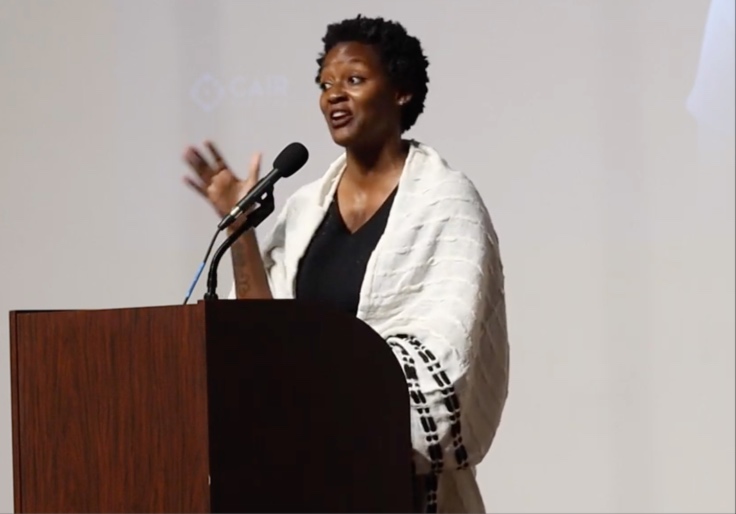
Angie Nixon, who secured the Democratic nomination for a Florida Senate seat in a surprise primary win over Alex Vindman, spent the last months speaking at three Council on American‑Islamic Relations (CAIR) fundraisers. In each speech she condemned what she called the "false capitalistic American dream," labeled opponents of her Gaza ceasefire resolution "permanent enemies," and closed with a quotation from Assata Shakur, a former member of the Black Liberation Army.
The Florida House resolution Nixon introduced in November 2023 called for an immediate ceasefire in the war between Israel and Hamas. The measure was defeated by a bipartisan vote of 104‑2 and attracted accusations of antisemitism from several of her colleagues. Despite the defeat, the proposal earned Nixon a place on CAIR's speaking circuit, and the organization's Florida chapter invited her to address three gala events in Tampa, Jacksonville and Panama City between November 2024 and February 2025.
At the Jacksonville gala in February 2025, Nixon told the audience that "our oppressor is those in power" and that "we are in chains." She argued that the chains prevent a ceasefire in Palestine and stop the pursuit of justice for "black trans women" whose killers have not been apprehended. "Let me be clear, we are in chains," she said, adding that the chains keep the public from demanding a ceasefire.
During the Tampa event in November 2024, Nixon repeated the same theme, describing the United States as a nation where "respectability politics and assimilation" keep marginalized communities subdued. She framed the push for a Gaza ceasefire as "the defining civil rights fight for Millennials and Gen Z." The speech concluded with her reciting Shakur's words: "It is our duty to fight for our freedom. It is our duty to win. We must love, we must love and support one another. We have nothing to lose but our chains."
In Panama City, Nixon complained about "old sundown towns" and "flags that I don't like" she encountered on the way to the gala. She expressed gratitude for being asked to speak again, noting the logistical challenge of traveling between the three Florida cities. "We're going to raise the most money in the state, right, today," she said, emphasizing the fundraising goal for CAIR.
CAIR's political arm, CAIR Action, posted a Facebook message congratulating Nixon on her primary upset, praising her for "calling for a ceasefire and justice for Palestinians" and for "consistently championing progressive causes." The post highlighted the organization's support for Nixon's campaign, even as the group faces legal scrutiny.
Florida Governor Ron DeSantis has taken a hard line against CAIR. In December 2025 he signed an executive order that designated the organization as a foreign terrorist organization. A federal judge later issued a temporary injunction, halting enforcement of the order while CAIR pursues a court challenge. In April, DeSantis signed legislation that makes it a felony to knowingly provide "material support" to any group the state has labeled as a terrorist organization. Legal experts note that the new law expands the definition of material support and could expose donors and volunteers to criminal liability.
The legal backdrop is complex. Under federal law, the Department of State maintains a separate list of foreign terrorist organizations, and designations require a rigorous evidentiary standard. DeSantis's executive order represents a state‑level attempt to mirror that process, a move that has drawn criticism from civil‑rights groups who argue it threatens First Amendment rights. The pending lawsuit will test whether a state can unilaterally label a domestic advocacy group as a foreign terrorist organization.
Nixon's affiliation with the Democratic Socialists of America, which she joined in June 2024, adds another layer to the race. The DSA is a national organization that promotes democratic socialism and has seen a surge in membership after the 2020 presidential election. Nixon's embrace of socialist rhetoric and her alignment with CAIR place her at the far left of Florida's Democratic field, a position that many analysts say could limit her appeal to moderate voters in a state that leans Republican in federal contests.
The special election that Nixon now faces will determine who completes the final two years of the Senate seat left vacant by Marco Rubio. While Rubio is a sitting U.S. senator, he announced his resignation earlier this year to pursue a private‑sector role, prompting the governor to call a special election. Republican incumbent Ashley Moody, the current state attorney general, is widely regarded as the favorite. Recent polling from the Florida Institute for Public Policy shows Moody leading Nixon by a double‑digit margin, though the exact numbers vary by survey.
Political observers note that the race could become a litmus test for DeSantis's anti‑terrorism agenda. If Nixon's fundraising ties to CAIR attract legal challenges under the new felony provision, the case could set a precedent for how state‑level terrorism designations affect political campaigns. Conversely, a strong showing by Nixon could signal voter appetite for more progressive candidates, even in a traditionally conservative state.
Both campaigns have been tight‑lipped about the upcoming contest. Nixon's team declined to comment on the CAIR speeches when asked for a statement. Moody's campaign released a brief statement emphasizing her record on law enforcement and public safety, and warning that "extremist rhetoric has no place in the Florida Senate."
The next steps in the legal battle over CAIR's designation will likely unfold in the coming months. If the federal court lifts the injunction, the state could enforce the foreign terrorist organization label, potentially triggering criminal investigations into donors. Meanwhile, the Senate race is set to head to the ballot in November, with early voting slated to begin in early October.
For voters in Florida and observers across the United States, the contest pits a self‑identified socialist who aligns with a controversial advocacy group against a well‑known Republican incumbent. The outcome will offer insight into how far left‑leaning candidates can advance in a state where cultural and security issues dominate the political conversation.