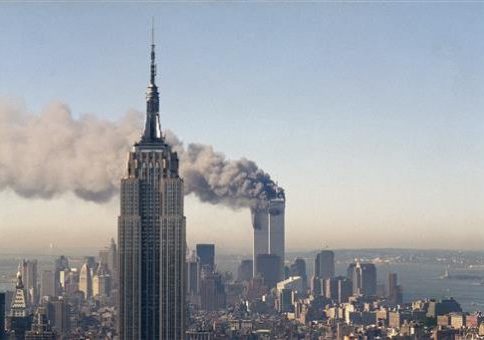
Twenty‑five years after hijacked airliners killed nearly 3,000 people in New York, Washington and Pennsylvania, the September 11 attacks remain a live political issue in American elections, with progressive Democratic candidates facing renewed criticism over their rhetoric and associations on terrorism, Islam and the Israel‑Hamas war.
The anniversary once produced a brief national consensus that crossed party lines. On the Capitol steps, members of Congress stood together to sing "God Bless America," and lawmakers from both parties voted overwhelmingly to authorize military force against al Qaeda. That vote resulted in the 2001 Authorization for Use of Military Force, a broad legal instrument that has been invoked repeatedly to justify drone strikes, special‑operations missions and the detention of terrorism suspects. The initial unity was striking because it followed a moment of national trauma that had previously seen bipartisan cooperation on civil‑rights legislation.
That unity dissolved within a few years, first over the Iraq War and later over surveillance, drone warfare, interrogation practices and the treatment of Muslim Americans. The 2003 decision to invade Iraq, championed by the same congressional majority that passed the 2001 authorization, sparked a deep partisan and intra‑party rift. Subsequent revelations about the National Security Agency's bulk data collection program and the use of "enhanced interrogation" techniques further strained the public's trust in the government's counter‑terrorism narrative. These developments created space for a new generation of Democrats who questioned the wisdom of perpetual military engagement and called for greater civil‑liberties protections.
Today, the memory of 9/11 is frequently invoked in Democratic primaries, especially as a younger generation of left‑leaning politicians, many of them Muslim or Arab American, has gained influence in cities and states where the party's base has shifted leftward on foreign policy and policing. The primary process in most states requires candidates to win a plurality of votes in a party‑run election, and the outcomes often hinge on endorsements from activist groups, labor unions and community organizations. In this environment, statements made years earlier on social media or at public events can become focal points for opponents seeking to define a candidate's loyalty to national security or to particular foreign‑policy positions.
In Michigan, Abdul El‑Sayed, the Democratic nominee for U.S. Senate, has come under scrutiny from conservative groups and some pro‑Israel Democrats for campaign appearances with Hasan Piker, a left‑wing political commentator who made widely condemned remarks about the 9/11 attacks in 2019 and later partially recanted them. Piker, who has a large online following among young progressives, has also used inflammatory language to attack El‑Sayed's critics. El‑Sayed, a former Detroit health director who ran unsuccessfully for Michigan governor in 2018, has built his Senate campaign around economic populism, universal health care and opposition to the war in Gaza.
El‑Sayed's Senate race follows Michigan's open‑primary system, where voters may select any party's ballot but the top two vote‑getters advance to the general election. This system encourages candidates to appeal to a broad coalition that includes both progressive activists and more moderate party members. Campaign finance disclosures show that El‑Sayed's fundraising has drawn heavily from small‑donor contributions, a hallmark of the progressive wing, while also attracting larger donations from labor unions that traditionally support Democratic candidates. The scrutiny over his association with Piker reflects a broader tactical battle: conservative advocacy groups have filed complaint letters with the Federal Election Commission, alleging that the appearance could constitute an implicit endorsement of extremist views, while pro‑Israel Democratic organizations have issued statements urging the candidate to distance himself from any figure who has questioned the legitimacy of the 9/11 attacks.
El‑Sayed also appeared at a recent Islamic convention where other speakers included figures who have promoted conspiracy theories about the 2001 attacks, denied the Holocaust or expressed support for terrorist organizations, according to reporting by conservative outlets and pro‑Israel groups. His campaign has not disavowed the appearance, and his supporters argue that speaking to Muslim American audiences is a normal part of campaigning and that candidates should not be held responsible for every view expressed by others at the same event. The convention has become a staple of Muslim American political organizing, and candidates from both parties have courted attendees in the past. Such events typically feature a mix of religious leaders, community activists and policy experts, and they provide a platform for discussing issues ranging from immigration reform to voting‑rights legislation.
The New York mayoral race offers a parallel illustration of how progressive Democrats are navigating the same terrain. Zohran Mamdani, a young Somali‑American activist and former community organizer, entered the race with a platform that emphasizes affordable housing, climate‑justice initiatives and a non‑interventionist foreign‑policy stance. Mamdani's campaign has drawn attention for his outspoken criticism of the United States' support for Israel during the ongoing Israel‑Hamas war, a position that aligns with a growing segment of the Democratic electorate but puts him at odds with established pro‑Israel lobbying groups such as the American Israel Public Affairs Committee. In New York City, the primary election is decided by a plurality of votes in a single‑day ballot, and the city's Democratic Party controls the ballot line through a weighted delegate system that can favor candidates with strong party‑machine backing.
The Israel‑Hamas war, which erupted in October 2023, has reshaped the political calculus for many Democratic candidates. While the majority of the party's leadership continues to support Israel's right to self‑defense, a vocal progressive caucus has called for an immediate cease‑fire and for the United States to condition military aid on human‑rights benchmarks. Pro‑Israel organizations have mobilized their networks to fund advertisements and to lobby elected officials, arguing that criticism of Israel can be used by extremist groups to delegitimize the United States' security posture. Conversely, progressive groups such as J Street and the US Campaign for Palestinian Rights have organized town halls and issued policy briefs urging a diplomatic solution. The clash over these positions has become a litmus test for candidates seeking the Democratic nomination in both local and statewide contests.
Legal and electoral implications of these controversies are significant. Accusations of extremist sympathies can trigger investigations by the Department of Justice under statutes that prohibit material support for designated terrorist organizations, although the threshold for criminal liability is high and requires evidence of direct assistance. More commonly, the impact is political: media outlets may amplify the controversy, leading to a dip in fundraising or a loss of endorsements from key party figures. In primary contests, where voter turnout is low and activist groups wield outsized influence, a single controversy can shift the balance of support among the electorate that is most engaged.
For American readers, the debate underscores the tension between free speech and national‑security concerns. The rise of social‑media personalities like Hasan Piker illustrates how digital platforms can amplify fringe viewpoints, while also providing a conduit for progressive messaging that resonates with younger voters. The scrutiny of candidates such as El‑Sayed and Mamdani reflects a broader struggle within the Democratic Party to reconcile its historic commitment to civil‑rights advocacy with the political realities of a post‑9/11 security environment.
Canadian readers may find parallels in their own political discourse. Canada's own 9/11‑era legislation, including the Anti‑Terrorism Act of 2001, sparked similar debates about civil liberties and the treatment of Muslim Canadians. Moreover, the Canada‑United States border cooperation on counter‑terrorism has required both nations to balance security imperatives with the protection of minority communities. The discussions surrounding progressive Democrats' positions on Israel and Hamas also echo Canada's own foreign‑policy debates, where public opinion is divided and lobbying groups on both sides of the issue are active.
As the nation marks the 25th anniversary of the September 11 attacks, the spotlight on progressive Democrats highlights how the legacy of that day continues to shape electoral politics, campaign strategies and policy debates. Whether candidates choose to distance themselves from controversial figures, double down on anti‑war rhetoric, or seek a middle ground, the outcome will influence not only the balance of power within the Democratic Party but also the broader national conversation about security, identity and the role of the United States on the world stage.