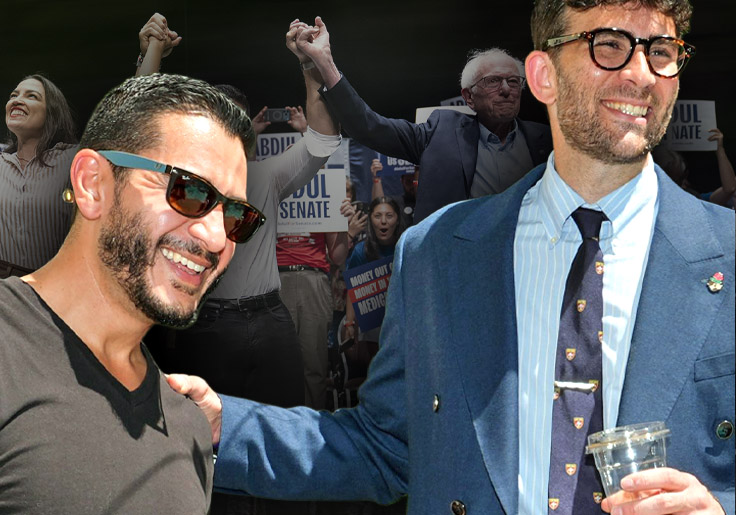
Abdul El‑Sayed, who announced his candidacy for the U.S. Senate seat from Michigan earlier this year, told reporters on Tuesday that his campaign has no record of any joint event with progressive Twitch streamer Hasan Piker.
The denial comes after a series of online posts claimed that El‑Sayed invited Piker to Michigan to campaign on his behalf during the Democratic primary. The posts also alleged that the two appeared together at a gym and a pool party in Detroit, and that they shared a stage with a local imam who allegedly supports Hezbollah. None of these claims have been substantiated by any credible source.
El‑Sayed's campaign issued a brief statement saying, "We have not coordinated any campaign activities with Mr. Piker. Any suggestion otherwise is inaccurate." The statement did not address the more sensational details that appeared in the viral posts, such as alleged remarks about 9/11 or support for extremist groups.
Hasan Piker, known on Twitch as "HasanAbi," is a political commentator who streams left‑leaning analysis to a primarily young audience. He has never been a formal political operative and has not publicly endorsed any candidate for the Michigan Senate race. In a March tweet, Piker responded to a question about Michigan politics with a generic comment about the importance of voter turnout, but he made no mention of El‑Sayed.
The rumor mill appears to have been fueled by a combination of partisan satire sites and fringe blogs that often blend factual details with invented narratives. Fact‑checking organization PolitiFact reviewed the claim on Thursday and found no evidence of a campaign partnership, labeling the story "unverified." Snopes similarly noted that the alleged events could not be corroborated by any reputable news outlet.
El‑Sayed, a former Detroit health director and professor of public health at the University of Michigan, entered the Senate race after longtime incumbent Debbie Stabenow announced her retirement. The open seat has attracted a crowded Democratic field that includes actor Hill Harper, businessman Nasser Beydoun, and former state representative Leslie Love. El‑Sayed's platform focuses on expanding health care access, investing in clean energy, and strengthening labor rights.
In Michigan, the Democratic primary is scheduled for August 6, with the general election set for November 5. The race is expected to be competitive, as the state's electorate has swung between parties in recent cycles. While the Democratic primary is unlikely to determine the final outcome, candidates are keen to differentiate themselves and secure endorsements from key constituencies, including labor unions, environmental groups, and progressive activists.
Social media influencers have become an increasingly common fixture in modern campaigns. In the 2020 presidential election, former congresswoman Alexandria Ocasio‑Cortez streamed on Twitch to discuss policy, and in 2022 several Senate candidates used TikTok to reach younger voters. However, the use of influencers is typically transparent, with candidates publicly announcing joint appearances and sharing promotional material.
Political analysts note that unverified claims about influencer involvement can be a double‑edged sword. On one hand, a genuine partnership can energize a candidate's base and attract new donors. On the other, rumors of extremist or controversial affiliations can damage a campaign's credibility, especially in swing states where moderate voters are decisive.
"Misinformation spreads quickly when it ties a candidate to a polarizing figure," said Dr. Laura Martinez, a professor of political communication at the University of Chicago. "Even if the claim is false, the repeated exposure can create a perception that the candidate is aligned with fringe elements, which can be hard to shake off."
Michigan's election officials have warned campaigns about the potential for false information to influence voter decisions. The Secretary of State's office released a bulletin in June urging voters to verify the source of any political claim and to report suspicious content to the office's misinformation hotline.
El‑Sayed's campaign has emphasized a focus on policy over personality. In a recent town hall in Grand Rapids, the candidate outlined a proposal to expand Medicaid eligibility and to invest $2 billion in renewable energy projects across the state. He also highlighted his experience managing Detroit's public health response during the COVID‑19 pandemic, positioning himself as a pragmatic problem‑solver.
While the rumor about Hasan Piker has dominated some online conversations, it has not appeared in any major news outlet's coverage of the Michigan Senate race. The Detroit Free Press, The Michigan Chronicle, and national outlets such as Politico have not reported any collaboration between the two. This suggests that the story has not penetrated mainstream political reporting.
For voters, the episode underscores the importance of scrutinizing the source of political claims. The Federal Election Commission requires campaigns to disclose any paid media or in‑kind contributions, but informal social media interactions often fall outside that reporting framework. As a result, journalists and fact‑checkers play a crucial role in separating verified information from speculation.
Looking ahead, El‑Sayed is expected to continue focusing on his policy agenda and on building a coalition of labor unions, health‑care advocates, and environmental groups. His next campaign events include a series of listening sessions in Flint and the Upper Peninsula, where he plans to discuss water infrastructure and broadband expansion.
Whether the unfounded Piker rumor will have any lasting impact on his Senate bid remains uncertain. In a political environment where candidates are increasingly judged on both policy positions and perceived affiliations, the ability to quickly refute false claims may be as important as any campaign ad.