Democratic nominees Manny Rutinel in Colorado's 8th Congressional District and JoAnna Mendoza in Arizona's 6th District were slated to appear as featured guests at a virtual town hall hosted by the advocacy group CareWins and funded by the MomsRising political action committee. The event, scheduled for Thursday evening, was abruptly canceled without explanation after the Washington Free Beacon filed requests for comment.
Both Rutinel and Mendoza are running in districts that political analysts rank among the nation's most competitive House contests for 2024. Colorado's 8th, a suburban district that swung between parties in the 2020 presidential election, includes a mix of affluent exurbs and working‑class neighborhoods that have shown sensitivity to law‑and‑order messaging. Arizona's 6th, a desert‑spanning district that includes parts of Phoenix's east side, has a growing Latino electorate and a history of narrow margins in recent congressional races. Victory in either district could help determine which party controls the House of Representatives.
The MomsRising network describes itself as a coalition working to achieve economic security for mothers, women and families. In practice, the organization has aligned with a range of progressive groups, including the Black Lives Matter Global Network Foundation and the Bail Project. Its political arm, the MomsRising PAC, has poured millions of dollars into campaigns that champion criminal‑justice reform, immigration policy changes and expanded social safety‑net programs.
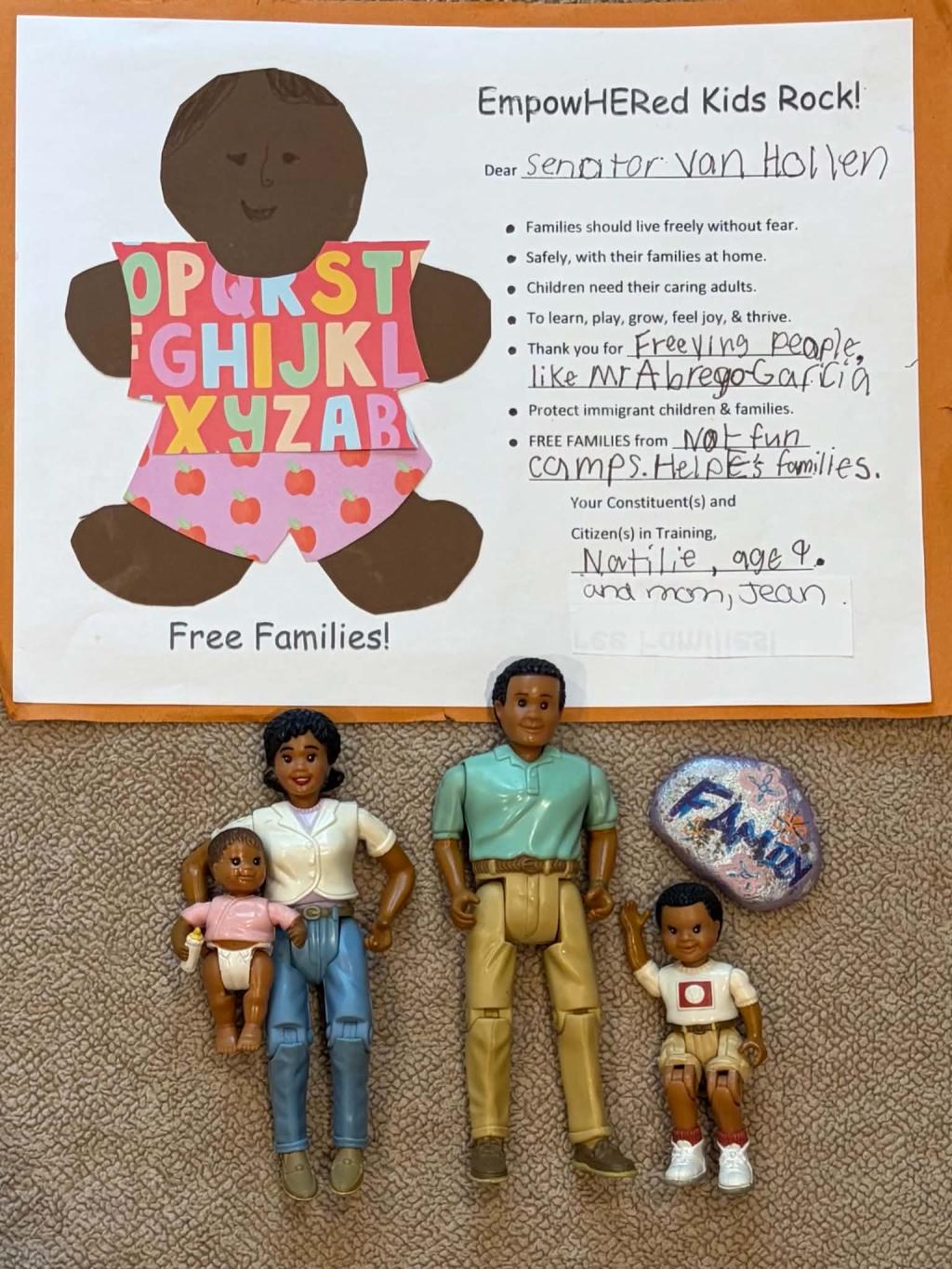
According to the MomsRising Education Fund, a volunteer leader posted a blog urging elected officials to "close immigration detention centers" and to "prohibit police and ICE from working together." The post also suggested parents engage children in "craftivism" by playing with paper dolls that represent families held in detention. An image accompanying the blog showed a paper doll made with the volunteer's nine‑year‑old daughter attached to a pre‑filled letter addressed to Senator Chris Van Hollen, thanking him for "freeying" a man identified as Kilmar Abrego Garcia, a Salvadoran immigrant who was convicted of violent crimes and whose case became a flashpoint for immigration activists.
MomsRising's financial disclosures reveal a steady stream of donations from liberal foundations. The Open Society Foundations, founded by George Soros, contributed nearly $2.8 million; the Pivotal Philanthropies Foundation, backed by Melinda French Gates, gave more than $4 million; and the Ford Foundation provided $1 million. These contributions fund a broad array of policy initiatives, from advocating for universal child care to supporting campaigns that call for reduced police budgets.
The organization is also a member of the Community Safety Working group, a coalition of more than 50 groups that seeks to "shrink the size, scope, and footprint of policing" and replace traditional law‑enforcement responses with mental‑health professionals and other non‑carceral solutions. Critics of the coalition argue that its agenda could undermine public safety, pointing to cases where bail‑reform advocates have been linked to subsequent violent offenses. Proponents counter that the coalition's approach addresses the root causes of crime and reduces the fiscal burden of incarceration.
Rutinel and Mendoza were not the only panelists slated to appear. Alida Garcia, who served as a senior adviser on migration in the Biden administration in 2021, and Dawn Huckelbridge, director of Paid Leave for All and former staffer for pro‑abortion organizations, were also listed. Both have histories of supporting progressive policy goals that include expanded immigration relief and reproductive rights.
For Mendoza, the appearance would have been another instance of her involvement with groups that have called for defunding the police. In 2020 she described police reform as "just one aspect of addressing systemic racism" and supported "the reallocation of funding" away from law‑enforcement agencies. When Fox News highlighted those remarks earlier this year, her campaign issued a statement asserting that she "has been on the record for years that police need more resources to do their jobs" and that she "does not support defunding the police." The contradictory messaging reflects a broader tension within the Democratic Party as candidates balance progressive primary bases with moderate general‑election voters.
Rutinel's record also drew scrutiny. During Colorado's recent budget battle, he voted for cuts to the state Bureau of Investigation, the Department of Homeland Security and Emergency Management, and a grant program that provides mental‑health support to law‑enforcement officers. The cuts were part of a $1.5 billion deficit reduction plan. However, he also backed a 2025 bill that would fund the "Cover All Coloradans" program, which extends Medicaid‑like health coverage to pregnant people and children who would otherwise be ineligible because of immigration status. The program's cost, at $104.5 million, is six times the original estimate, prompting questions about fiscal responsibility.
When asked in a video obtained by the Free Beacon why he "defunded the police," Rutinel responded, "I didn't," and turned the criticism toward his Republican opponent, Rep. Gabe Evans, and former President Donald Trump, accusing them of giving money to billionaires instead of "social programs that are the foundation of the American dream, like Medicaid and food stamps." The exchange underscored the difficulty Democratic candidates face when trying to distance themselves from past activism while still appealing to a base that values those same causes.
Both candidates have also faced challenges in securing endorsements from key progressive groups. Colorado's largest independent abortion fund, Cobalt, declined to endorse Rutinel after he refused to answer a series of questions about his stance on reproductive rights. The refusal was reported by a journalist at Denver's NBC affiliate, who noted that the candidate's campaign website emphasizes personal freedom but offers few specifics on policy implementation.
Rutinel's personal narrative adds another layer to the controversy. Once a vocal advocate for animal‑rights causes and a self‑identified vegan, he recently abandoned the diet and was photographed eating a beef taco while campaigning in a district that relies heavily on ranching and farming. The shift was framed by his campaign as a pragmatic move to align with constituents' economic interests, but opponents have used it to question his consistency.
The cancellation of the MomsRising town hall leaves open the question of how the two candidates will navigate the remainder of their campaigns. With the House races tightening, both campaigns are likely to double down on messaging that emphasizes economic security, health‑care access and public safety, while attempting to distance themselves from the more radical elements of the progressive movement.
Political observers note that the incident illustrates a broader pattern in which swing‑district Democrats must walk a narrow line between appealing to activist donors and avoiding alienation of moderate voters who remain skeptical of "defund the police" rhetoric. The fundraising power of groups like MomsRising can be a double‑edged sword: it provides essential resources for campaign infrastructure, but also ties candidates to policy positions that may be unpopular in key suburban and exurban precincts.
For now, neither Rutinel, Mendoza, nor the MomsRising representatives have issued statements responding to the event's cancellation. The lack of comment fuels speculation that the decision was made to avoid further media scrutiny ahead of the November election.
As the campaign season progresses, both districts will likely see intensified advertising, targeted mailers and a surge in grassroots organizing. Voters in Colorado's 8th and Arizona's 6th will be asked to weigh the candidates' policy proposals against their perceived affiliations with activist groups, a calculus that could prove decisive in a year when control of the House hangs in the balance.