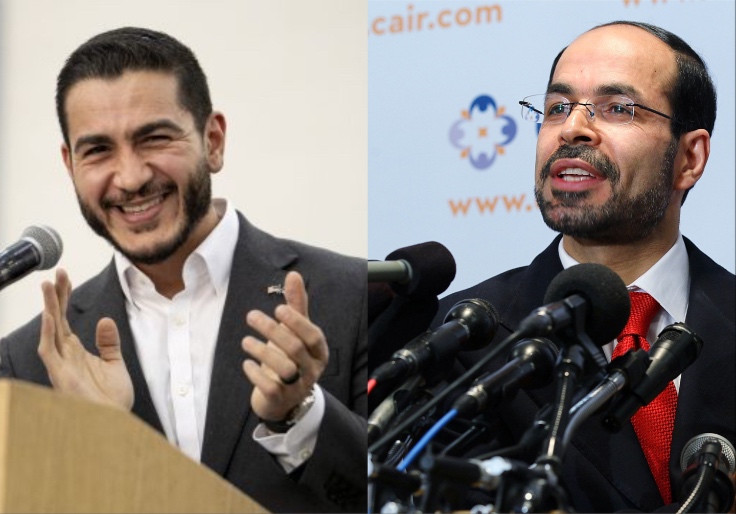
The Unity & Justice Fund sent a fundraising email over the weekend declaring that its outreach helped elect Abdul El‑Sayed, the Democratic challenger who edged out pro‑Israel incumbent Haley Stevens by a single point in the August 4 primary. The message praised the group's "building a movement in Masjids and communities across the country" after reporting that it had knocked on more than 30,000 doors of Muslim voters.
Michigan's primary system requires each party to hold a separate ballot in which registered voters may select any party's ballot, but they may only vote in one party's primary. The Democratic primary on August 4 determined which candidate would appear on the November ballot for the U.S. Senate seat that will be open after Senator Debbie Stabenow's retirement. Because the race is expected to be competitive in the general election, the Democratic primary attracted a high level of national attention and spending.
Campaign disclosures show the Unity & Justice Fund contributed $175,000 in August to Fighting for Michigan PAC, the largest outside group supporting El‑Sayed. The same filing records a $40,267 payment to a consulting firm owned by the chief of staff to the mayor of Dearborn Heights for canvassing services. The super PAC, which was formed about two years ago, is now seeking an additional $1.5 million ahead of the November midterm elections.
El‑Sayed's victory was unexpected by many political analysts. The former health official had positioned himself as a progressive challenger to Stevens, criticizing the influence of the American Israel Public Affairs Committee. "AIPAC has spent a record amount in this race to elect my opponent because she will be a reliable vote to a foreign government that is aiding, arming, and abetting a genocide," El‑Sayed said in a statement last month.
Stevens, a former congresswoman with deep ties to the automotive industry, had the backing of AIPAC and a slate of national Democratic donors. Her loss has raised concerns among moderate Democrats and Jewish voters in Michigan, who fear that El‑Sayed's connections to organizations described as anti‑Israel could complicate the state's political dynamics.
The Unity & Justice Fund's claim of "building a movement in Masjids" has drawn scrutiny because the group is tied to the Council on American‑Islamic Relations, or CAIR. CAIR's lobbying arm, CAIR Action, created the Unity & Justice Fund and shares board members and a former street address with the organization. CAIR's deputy executive director, Edward Mitchell, insists that CAIR has never donated to political campaigns, PACs, or super PACs and that any such activity would be illegal.
Legal experts note that while a 501(c)(4) organization like CAIR Action may establish a super PAC, the two entities must remain financially separate. CAIR Action has contributed $185,000 to the Unity & Justice Fund this year, and several CAIR officials have personally donated to El‑Sayed's campaign. Fox News reported that current and former CAIR employees have given more than $115,000 to El‑Sayed's race.
Critics point to statements by CAIR co‑founder Nihad Awad, who told a 2024 podcast that the organization had created a super PAC called Unity & Justice Fund. Awad also donated $750 to El‑Sayed's campaign and previously said he was "happy to see" the Hamas attacks on October 7, 2023. Those remarks have fueled accusations that the super PAC is a conduit for pro‑Hamas sentiment.
CAIR's history adds another layer to the controversy. In 2008 a federal indictment named the organization as an unindicted co‑conspirator of a Hamas front group. Although CAIR has never been charged with a crime, the designation has been used by opponents to question its advocacy work and its role in American politics.
The Michigan Senate race is part of a broader trend of increasing political engagement among Muslim‑American voters. According to a Pew Research Center survey, the Muslim electorate grew by 30 percent between 2010 and 2022, and candidates are beginning to court that demographic more directly. The Unity & Justice Fund's claim of mobilizing tens of thousands of voters reflects that shift, but it also raises questions about how identity‑based outreach intersects with foreign‑policy positions.
Super PACs like Unity & Justice operate under federal election law that prohibits direct coordination with candidate campaigns. The $175,000 contribution to Fighting for Michigan PAC and the $40,267 consulting contract are permissible as long as the PAC does not share strategic information with El‑Sayed's campaign. The Federal Election Commission has not yet opened an investigation into the fund's activities, but watchdog groups have filed complaints alleging possible violations of coordination rules.
Looking ahead, the Unity & Justice Fund's fundraising push for the November midterms could influence other races where Muslim and Middle Eastern voters are a decisive bloc. In swing districts across the Midwest, candidates may seek similar outreach, prompting further debate over the role of religious institutions in electoral politics.
For now, El‑Sayed's win adds a new voice to the Senate race and puts the Unity & Justice Fund in the national spotlight. Whether the group's claims of building a movement will translate into lasting political power remains to be seen, but the episode underscores the growing complexity of campaign finance, identity politics, and foreign‑policy advocacy in American elections.