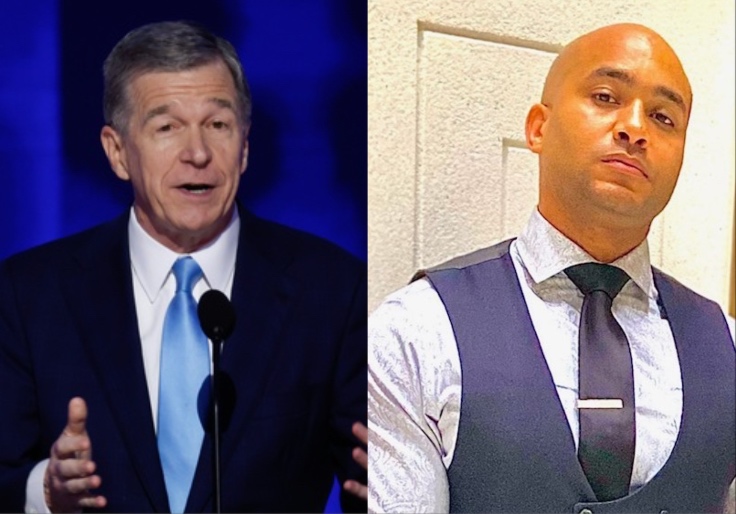
Governor Roy Cooper, the Democrat who won North Carolina's 2016 and 2020 gubernatorial elections, announced this week that Kerwin Pittman will serve on the state's Racial Equity in Criminal Justice task force, a body the governor created by executive order in June 2020.
Pittman's résumé includes a stint as a "ranking member" of the Bloods street gang and a 2007 conviction for conspiracy to commit first‑degree murder. He was sentenced to more than fourteen years, served eleven and a half years, and spent over a year in solitary confinement before his release in 2019.
The murder charge stemmed from the 2006 drive‑by shooting that killed 19‑year‑old Jamel Amiens Jeffreys in Raleigh. Earlier arrests in 2004 and 2006 for assault and drug possession resulted in probation, according to court records.
Since May 2020, Pittman has worked as director of policy and program for Emancipate NC, a criminal‑justice advocacy group that openly calls for the abolition of police departments. The organization's blog in February 2023 declared that "maintaining white supremacy has always been the goal of policing" and argued that "modern policing cannot be reformed."
Emancipate NC also sued the Cooper administration in April 2020 over COVID‑19 conditions in state prisons, a lawsuit that led to the early release of roughly 3,500 inmates. A December 2020 fundraising letter co‑signed by Pittman claimed he was "practicing abolition" by speaking on the task force.
The task force, which also includes former attorney general Josh Stein, now the state's Democratic governor, was assembled during the nationwide protests that followed George Floyd's death. Its mandate was to examine how race shapes the criminal‑justice system and to propose reforms.
In December 2020 the group released a set of recommendations that mirrored many proposals championed by the Black Lives Matter movement. The list called for eliminating cash bail, assigning social workers to respond to certain 911 calls, replacing arrests with tickets for low‑level offenses, requiring implicit‑bias training for officers, reviewing death‑sentence cases for racial bias, decriminalizing small amounts of marijuana, and scaling back the presence of school resource officers.
Cooper praised the report as a "tremendous success" and said he would work to adopt its ideas. However, the Republican‑controlled General Assembly, which holds supermajorities in both the House and Senate, rejected most of the proposals. Only three pieces of legislation that echoed the task force's less controversial suggestions were signed into law by Cooper.
The political fallout intensified after a separate case involving Decarlos Brown, a career criminal with fourteen prior arrests, highlighted concerns about bail reform. In 2021 a magistrate judge released Brown on cash‑less bail with a written promise to appear in court. Less than a year later Brown murdered Ukrainian refugee Iryna Zarutska on a Charlotte light‑rail train.
State Senate President Pro Tempore Phil Berger, a Republican, blamed Cooper's task force for creating a "weak on crime" environment that allowed Brown to remain free. Berger has since called for legislation that would limit the governor's ability to create advisory bodies without legislative approval.
The controversy is now a centerpiece of the upcoming U.S. Senate race in North Carolina. Cooper is slated to run against former Republican National Committee chair Michael Whatley, a contest that both parties view as a bellwether for control of the Senate for the remainder of the Trump administration's term. Whatley has attacked Cooper for appointing individuals with criminal histories to policy‑making roles, while Cooper's campaign has countered that the governor's record includes "tough on crime" measures such as expanding the death‑penalty list and increasing penalties for violent offenders.
Legal scholars note that the governor's authority to create task forces derives from the state constitution's executive‑branch powers, but the legislature can curtail that authority through statutory limits or budgetary controls. In recent years, several states have seen similar clashes over executive‑branch advisory groups, especially when the groups push reforms that challenge entrenched law‑enforcement interests.
North Carolina's experience reflects a broader national debate. Several Democratic‑led states, including California and New York, have experimented with reducing cash bail and expanding alternatives to police response. Critics argue that such policies can endanger public safety, while supporters contend they address systemic inequities that disproportionately affect Black and Latino communities.
In Canada, provincial governments have also grappled with bail reform and policing oversight. Ontario's recent amendments to the Bail Act, for example, introduced stricter criteria for release, a move praised by some victim‑advocacy groups and condemned by civil‑rights organizations that see it as a step back from reform.
As the North Carolina Senate race approaches, the task force controversy is likely to shape campaign narratives on both sides. Republicans will emphasize the alleged "soft‑on‑crime" consequences of Cooper's appointments, while Democrats will argue that involving people with lived experience offers valuable insight into a system many view as broken.
The task force itself has been disbanded, but its recommendations continue to influence advocacy groups and legislative proposals. Emancipate NC plans to file additional lawsuits challenging the state's bail practices, and several local jurisdictions are experimenting with pilot programs that replace police with mental‑health professionals for certain calls.
Voters in North Carolina and across the United States will watch closely to see whether the upcoming Senate election will shift the balance of power in Washington and, by extension, affect the trajectory of criminal‑justice reform at the state level. The outcome could determine whether executive‑initiated policy experiments like Cooper's task force become a model for other states or remain an isolated episode in a contentious political battle.