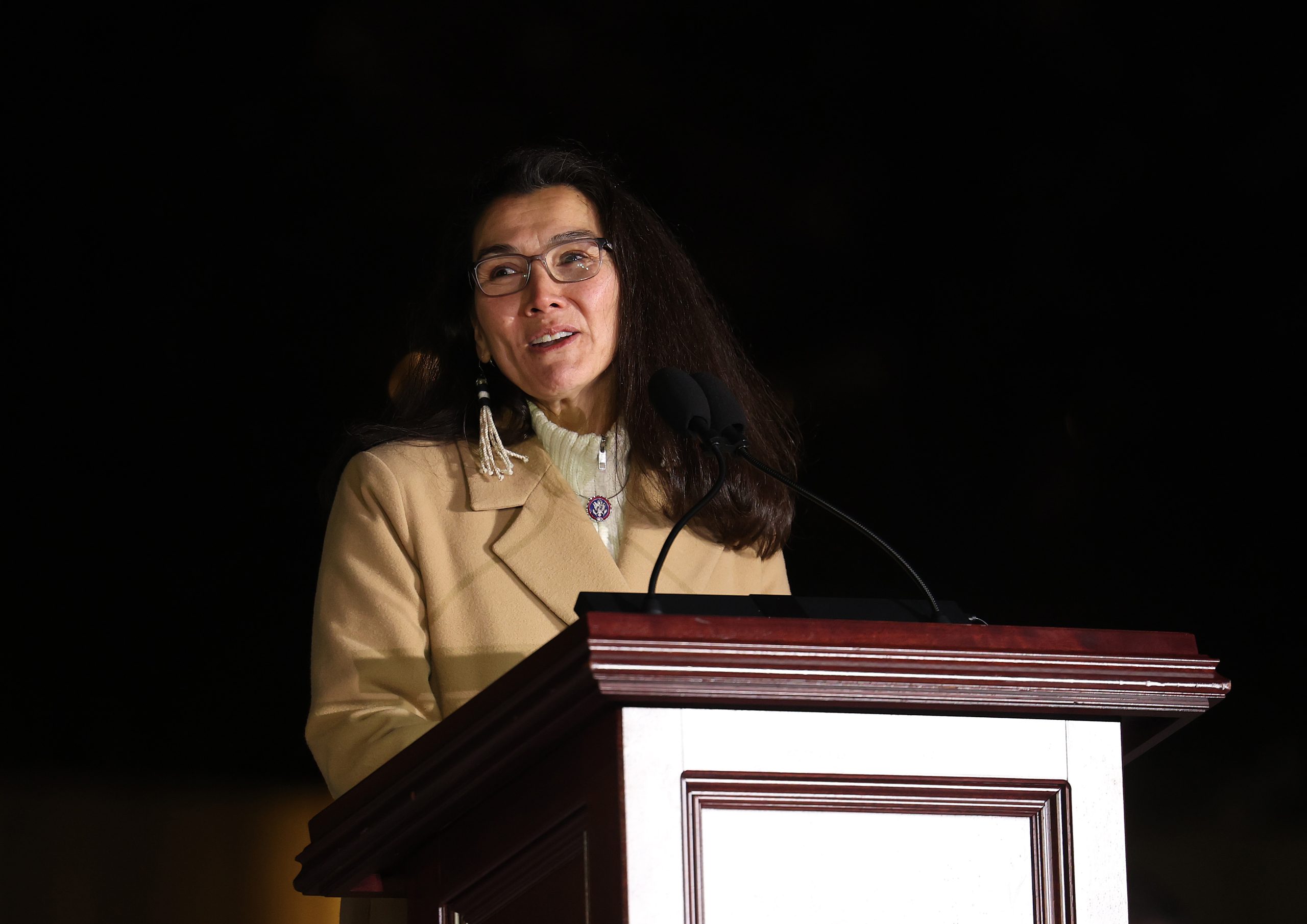
Alaska's Democratic Senate nominee Mary Peltola has raised nearly $100,000 from a slate of well‑known environmental activists and climate‑focused donors during the first half of 2026, according to Federal Election Commission filings. The contributions stand in contrast to Peltola's campaign messaging that emphasizes support for the state's oil and gas sector, including the controversial $10 billion Willow Project.
Peltola, a former member of the U.S. House representing Alaska's at‑large district, is challenging incumbent Republican Senator Dan Sullivan in a race that analysts now view as more competitive than early forecasts suggested. While Alaska traditionally leans Republican, the Senate contest has attracted national attention because of its implications for energy policy and the balance of power in the Senate.
In public statements, Peltola has positioned herself as a "pro‑oil Democrat," arguing that Alaska's economy, where oil and gas account for roughly 35 percent of gross domestic product, requires continued development. Her campaign's energy plan calls for expanding fossil fuel production and includes a single reference to renewable energy, limited to supporting tax credits for solar, wind and hydropower projects.
During a 2023 interview on a podcast hosted by former Bernie Sanders speechwriter David Sirota, Peltola explained her view of the transition to clean energy. "Of course we all want to be on renewables," she said. "The type of jobs that Willow would provide are very impactful. About a third of our workforce is tied to oil and gas, and of course we all want to transition, of course we all want to be on renewables. But we recognize we need gap oil."
Despite that rhetoric, at least 23 environmental donors have contributed a total of $96,800 to her Senate campaign. The list includes Patagonia co‑founder Malinda Chouinard, who gave $3,500 in April. Patagonia has been an outspoken opponent of the Willow Project, filing an amicus brief in 2023 that warned the project would jeopardize outdoor recreation and the company's long‑term interests.
Another notable donor is Daniel Tishman, heir to a real‑estate fortune and former chair of the Natural Resources Defense Council (NRDC). Tishman contributed $3,500 in March, while his wife Sheryl, a recognized environmental activist, added $7,000. The NRDC sued the Biden administration in 2023 over the Willow Project, calling it an "illegal project" and accusing the administration of "green‑lighting a carbon bomb."
Other contributors include Wendy Schmidt, president of the anti‑fossil‑fuel nonprofit 11th Hour Project and wife of former Google CEO Eric Schmidt, who donated $5,000; Alida Rockefeller Messinger, a longtime funder of environmental advocacy, who gave $4,000; and James Gamble, senior director at Pacific Environment, who contributed $2,500. All of these donors reside outside Alaska and have a record of opposing new oil leases in the state.
Peltola's campaign responded to criticism that the donations could sway her policy positions. A spokesperson said, "Mary's record is clear: She will always put Alaska first, and no one from the Lower 48 will ever tell her how to vote or how to think. Mary was instrumental in standing up to the Biden Administration to secure the Willow project and supports creating good‑paying oil and gas jobs, securing America's energy independence, and bringing down the cost of energy for Alaska families."
The spokesperson's remarks underscore a broader tension in Alaska politics. The state's electorate has long prioritized jobs tied to the oil industry, yet environmental concerns have grown as climate activism gains national prominence. Candidates must navigate a delicate balance between local economic interests and the expectations of donors who fund national climate initiatives.
Campaign finance rules allow federal candidates to pay themselves a salary from campaign funds, provided the amount is reasonable and documented. Peltova's campaign disclosed that she paid herself $34,400 in salary during the reporting period. Critics argue that such self‑payment, combined with sizable contributions from out‑of‑state environmental groups, raises questions about the influence of money on policy stances.
In the House, Peltova's voting record on energy legislation has been mixed. In 2024 she served as the Democratic co‑lead on Alaska's Right to Produce Act, a bill aimed at rolling back Biden‑era restrictions on oil and gas leasing. While she initially voted in favor of the measure in the Natural Resources Committee, she later sent a letter urging colleagues to oppose it and ultimately cast a "present" vote when the full House considered the bill. The legislation passed the House but stalled in the Senate.
The Willow Project itself has become a flashpoint in the national debate over fossil fuel development. Approved in a scaled‑down form by the Biden administration in 2022, the project is projected to produce 600 billion barrels of crude over three decades. Environmental groups label it a "carbon bomb," arguing that its emissions would be incompatible with U.S. climate targets. Proponents, including many Alaskan officials, argue that the project is essential for state revenue and job creation.
Alaska's Senate race is now being watched by both energy companies and climate organizations. The oil industry has contributed heavily to Republican candidates in the state, while liberal environmental groups have funneled money to Democrats who, like Peltova, claim to support a measured transition. The outcome could affect the Senate's composition on key votes related to the Inflation Reduction Act's clean‑energy provisions and future federal leasing decisions.
Looking ahead, the Federal Election Commission will continue to process contributions through the November election. If Peltova secures the seat, she will join a Senate where the balance of power remains narrow, making every vote on energy and climate legislation potentially decisive. For Alaskan voters, the question may come down to whether a candidate who accepts money from climate activists can still deliver on promises to protect oil‑related jobs.
Regardless of the election's result, the juxtaposition of Peltova's pro‑oil platform with substantial funding from environmental donors highlights the complex interplay between local economic imperatives and national climate advocacy. It also illustrates how campaign finance disclosures can reveal unexpected alliances that shape policy debates far beyond state borders.