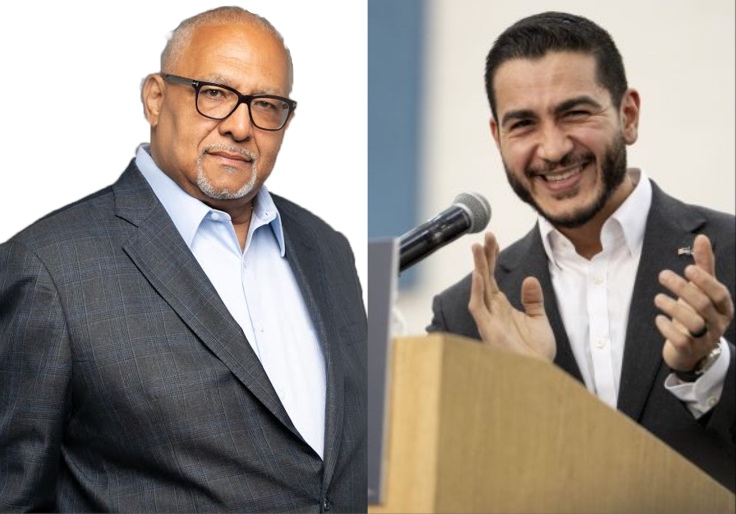
Michigan's open Senate seat has become a flashpoint for campaign‑finance controversy after the El‑Sayed campaign disclosed payments totaling $82,500 to the Ecumenical Ministers Alliance, a nonprofit run by Detroit pastor Horace Sheffield. The payments, listed as consulting fees, were made between October 2023 and the present and were not highlighted in the candidate's public outreach materials.
Sheffield, who leads New Destiny Christian Fellowship and is the father of Detroit's mayor, Mary Sheffield, will host a "clergy round table" at his church on Wednesday. The event, organized jointly by the pastor's nonprofit and the El‑Sayed campaign, is intended to rally black church leaders behind the Democratic hopeful, who has struggled to gain traction with African‑American voters in the state.
According to campaign‑finance filings, the El‑Sayed operation paid the Ecumenical Ministers Alliance $7,500 each month for consulting services. The total sum of $82,500 was reported in filings with the Michigan Secretary of State, but the candidate's website and advertising have not mentioned the arrangement. Critics argue that the lack of disclosure amounts to a pay‑for‑play scheme, where financial support is exchanged for political endorsement.
Sheffield's public endorsement of El‑Sayed began in early November, when the pastor invited the candidate onto his weekend radio program, The Wake‑Up Call. During that interview, Sheffield praised El‑Sayed as a "Detroit political powerhouse and community advocate," yet he did not disclose that his nonprofit was on the candidate's payroll. He repeated similar praise in earlier July and August interviews, offering prayers for the campaign and noting that the candidate treated him "better than CNN."
The relationship between the two men mirrors a pattern seen in other high‑profile races. In 2020, Kamala Harris's campaign paid the National Action Network, led by Al Sharpton, $500,000 for outreach services, a deal that attracted media scrutiny. Sheffield himself heads the Detroit chapter of the National Action Network, linking the current controversy to that earlier example.
El‑Sayed, a former health official and a close ally of the socialist wing of the Democratic Party, has positioned himself as a progressive champion on issues such as reparations, criminal‑justice reform, and expanded health care. However, his platform includes policies that many black voters in Michigan view as socially liberal, such as support for gender‑affirming care for minors and allowing transgender athletes to compete in women's sports. Those positions have made it difficult for him to win over a constituency that traditionally leans Democratic but remains socially conservative on cultural issues.
To broaden his appeal, El‑Sayed has cultivated ties with groups that hold sway in Detroit's black community, including the Nation of Islam. While the organization's rhetoric has been widely condemned as antisemitic, its local chapters maintain a sizable following. El‑Sayed's public statements on reparations, "We need reparations in this country", have resonated with some activists, but have also drawn criticism from moderate voters.
Sheffield's network of nonprofits extends beyond the Ecumenical Ministers Alliance. He also leads the Detroit Association of Black Organizations and is linked to 5Plus1, a political dark‑money group that has purchased radio advertising on El‑Sayed's behalf. Campaign disclosures show that Fighting for Michigan PAC, a Super PAC partially funded by El‑Sayed's wealthy father‑in‑law, contributed $19,285 to 5Plus1 in the last month of reporting. FCC filings list Sheffield's email address and phone number on the ad disclosures, suggesting a direct connection between the pastor's organizations and the campaign's advertising arm.
The legal status of the Ecumenical Ministers Alliance has also come under scrutiny. The nonprofit was incorporated in 2010 but failed to file the required paperwork to maintain its tax‑exempt status after 2014. When asked about the lapse, Sheffield told the Detroit News he was unaware of the reason and would have the organization "look into reinstating it." The lack of a current 501(c)(3) designation raises questions about whether the consulting fees comply with federal tax‑exempt rules, which prohibit political campaign activity.
Michigan's campaign‑finance law requires that any payment for services rendered to a candidate be reported in detail, and that the recipient disclose any political activity. While the filings show the amounts paid, they do not explain the nature of the consulting work. Opponents argue that the payments were essentially a conduit for the pastor to receive a salary in exchange for public endorsement, a practice that could violate both state and federal regulations.
El‑Sayed's campaign has not responded to requests for comment from the Washington Free Beacon, the outlet that first reported the payments. When approached by the Detroit News, the candidate's spokesperson said the campaign works with "a number of consultants across the state to get the vote out." No further details were provided about the scope of the services rendered by Sheffield's nonprofit.
The controversy arrives at a critical moment in the Senate race. The primary, scheduled for August, will determine which Democrat faces the incumbent Republican senator in November. Early polls show El‑Sayed trailing behind former U.S. Representative Haley Stevens, who enjoys strong support among suburban voters and has secured endorsements from labor unions and the Democratic establishment. El‑Sayed's reliance on black‑church outreach may be an attempt to differentiate himself, but the pay‑for‑play allegations could alienate voters who view the arrangement as unethical.
For American and Canadian observers, the case illustrates how campaign finance rules intersect with faith‑based political organizing. In the United States, the Supreme Court's decision in Citizens United v. FEC opened the door for unlimited spending by independent groups, but direct payments from a campaign to a religious nonprofit remain a gray area. Canada's electoral‑finance framework imposes stricter limits on contributions from non‑profit entities, making a similar arrangement more difficult to conceal.
Legal experts note that the Federal Election Commission could open an inquiry if a complaint is filed, but the agency's limited resources and partisan gridlock often result in delayed action. In Michigan, the Secretary of State's office oversees state‑level campaign disclosures and could refer the matter to the state attorney general for further investigation.
As the clergy round table approaches, the El‑Sayed campaign will likely use the event to showcase its ties to Detroit's black religious leaders. Whether the gathering will boost his standing among black voters or deepen concerns about undisclosed payments remains to be seen. The outcome could influence not only the Senate primary but also the broader conversation about the role of churches in political campaigns across the United States.