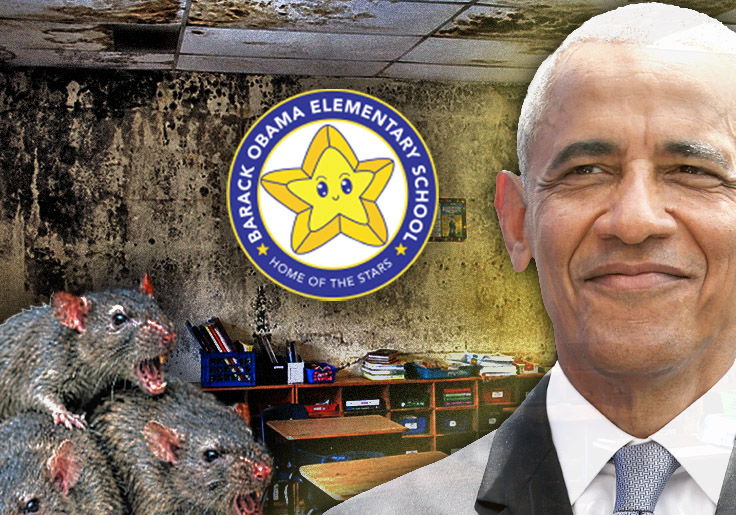
Virginia's Department of Education announced that Barack Obama Elementary will remain closed until mold remediation is complete and the rodent problem is resolved. The decision came after school staff inspected the building on the morning of August 26 and found mold on walls, ceilings and even on laptops stored in the media center. Pest control crews were called in the same day to address a rat infestation that officials said posed a health risk to students and staff.
Superintendent Jason Kamras, who has led Richmond Public Schools since 2018, said the school will undergo a thorough cleaning that could take several days. He added that officials hope the building could reopen by the end of the month, but emphasized that the timeline depends on the results of air quality testing and the removal of all rodent activity.
Parents who arrived for the first day of classes described the scene as "a wet, smelly mess." One mother told reporters that mold covered the interior of the gym and that she could see droppings near the cafeteria entrance. "We were ready to start the year and now we have to figure out where our kids will learn," she said at a town‑hall meeting held that afternoon.
The school, which opened in 2022, was renamed after former President Barack Obama in 2023. The name change was championed by Kamras, who served as an education adviser on Obama's 2008 campaign. At the time, Kamras argued that the new name would symbolize "the great promise of America." The school had previously honored Confederate General J.E.B. Stuart, a decision the board reversed after community pressure.
When the board solicited student input on the new name, a majority of the surveyed pupils voted for "Northside," reflecting the neighborhood's identity. Obama finished second in that informal poll, but the board voted to adopt the presidential name anyway. Critics say the process ignored student preferences and set a tone of top‑down decision making.
Virginia's Democratic governor, Abigail Spanberger, and the state's Democratic‑controlled General Assembly recently approved a $520 million budget for school construction and repairs. The funding is intended to address deferred maintenance across the Commonwealth, including leaky roofs, outdated HVAC systems and aging plumbing. Richmond officials have pointed to the new budget as a source of hope for schools like Obama Elementary, which they say suffered from "significant deferred maintenance issues" identified in a 2024 facilities audit.
Despite the budget, local officials say they lack the immediate resources to tackle the mold problem at Obama Elementary. The audit highlighted a leaky roof, poor ventilation and a malfunctioning heating and cooling system as key contributors to the current conditions. "We have the money on paper, but the process of allocating it to a specific school takes time," Kamras explained.
The closure has political ramifications in a state where education funding is a frequent campaign issue. Spanberger, who is up for re‑election in 2026, has emphasized her support for increased school spending, while Republican legislators have warned that the state's spending plan could raise taxes. The Obama Elementary incident provides a concrete example for both sides as they argue over how quickly and effectively the new funds will be deployed.
Health officials from the Virginia Department of Health reminded parents that mold exposure can trigger respiratory problems, especially in children with asthma. The department's guidelines require schools to achieve specific air‑quality standards before reopening. In similar cases across the nation, remediation efforts have included removing contaminated drywall, installing new insulation and upgrading ventilation systems.
Rodent infestations are also subject to state health codes. Schools must eliminate all evidence of rodents and certify that pest‑control measures are in place before students can return. The presence of rats often signals broader sanitation issues, which can be linked to water leaks and inadequate waste management.
The situation at Obama Elementary echoes earlier attempts to honor the former president with school names. In 2009, a New Jersey board renamed an elementary school after Obama, only to close it a year later because of low enrollment. In Chicago, former mayor Rahm Emanuel announced a $60 million prep school named for Obama in 2014, but the project stalled amid community opposition and was ultimately redirected to settle a teachers' union dispute. Those precedents have been cited by some commentators as evidence that schools bearing the Obama name face unique challenges, though analysts note that the underlying issues are typically financial and administrative.
For families affected by the closure, the district has arranged temporary classroom space in nearby schools and provided transportation vouchers. The district's communications office said it will continue to update parents on the remediation schedule and will hold additional town‑hall meetings to address concerns.
Legal experts point out that if the school remains closed beyond a reasonable period, parents could file complaints under the Individuals with Disabilities Education Act, arguing that their children's right to a free appropriate public education is being compromised. The district has indicated that it will work with special‑education staff to ensure services continue uninterrupted.
As the remediation proceeds, the focus will shift to how quickly the allocated state funds can be applied to the school's infrastructure. The outcome may influence public perception of the state's education spending plan and could become a talking point in upcoming legislative debates. For now, the priority for Richmond officials remains clearing the mold, eradicating the rat problem and getting students back to a safe learning environment.