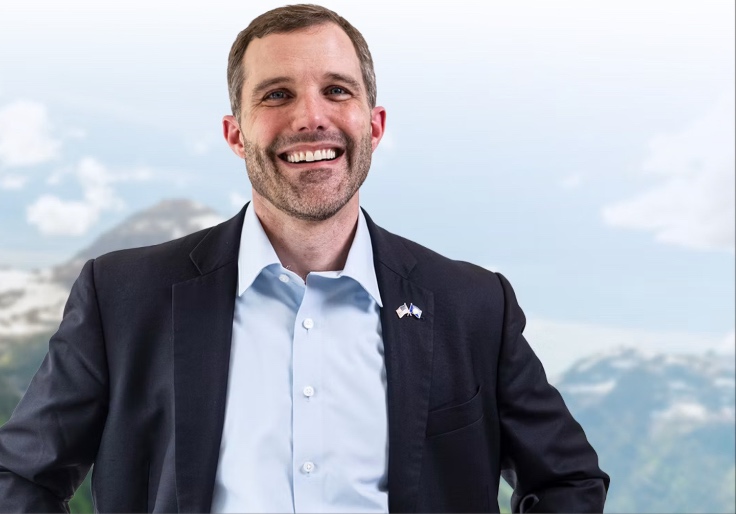
During a campaign stop in Missoula, Bodnar warned that the United States is falling behind China in energy production while simultaneously defending a University of Montana exchange program that partners with the Hong Kong‑based China‑United States Exchange Foundation, or CUSEF. The stance puts him at odds with a congressional letter that called for an immediate termination of the partnership.
In December 2023 Rep. Mike Gallagher, then chair of the House Select Committee on the Strategic Competition Between the United States and the Chinese Communist Party, wrote to Bodnar demanding that the university end its collaboration with CUSEF. Gallagher and other lawmakers have described CUSEF as a foreign influence operation that receives direction from senior Chinese officials. The organization is registered under the Foreign Agents Registration Act, was founded by a former top CCP official, and lists a retired Chinese general as a senior adviser.
Bodnar, who served as president of the University of Montana from January 2018 until January 2026, did not reply to Gallagher's letter. Instead he issued a statement saying that ending the partnership would shrink opportunity for students and that expanding global learning experiences is essential for America to compete and win around the globe.
The study‑abroad program is administered through the university's Baucus Institute, a think‑tank named for former senator Max Baucus. Baucus, who served as Barack Obama's last ambassador to China, raised money for Bodnan's Senate bid and endorsed him in June, calling him the kind of independent leader who can pull the state out of its current mess.
In June 2024 the Baucus Institute moved forward with a trip that sent fifteen Montana students to Hong Kong, Beijing and Shanghai. CUSEF covered the cost of visas, flights, insurance, lodging and meals. While in Hong Kong the delegation attended a CUSEF event marking the organization's 15th anniversary, a ceremony that featured remarks from Tung Chee‑hwa, the former chief executive of Hong Kong and former vice chairman of the Chinese People's Political Consultative Conference.
The itinerary also included visits to the Hong Kong Stock Exchange, the China Securities Regulatory Commission, Tsinghua University and a cultural centre linked to the United Front Work Department, the CCP organ that coordinates foreign influence campaigns. In Shanghai the students toured the headquarters of Xiaohongshu, a social‑media platform that operates under a CCP committee and follows strict censorship rules, as well as the electric‑vehicle maker NIO, which the Pentagon has listed as a Chinese military company.
Critics say the trip illustrates a conflict between Bodnan's hard‑line rhetoric on China and his willingness to endorse a program that brings students into direct contact with entities tied to the Chinese state. Former U.S. ambassador Joseph Cella, who leads the Secure Our States Coalition, called Bodnan's defense "ignorant and reckless," noting that CUSEF's activities include elite capture, intellectual‑property theft and shaping policy narratives favorable to the CCP.
The Montana Senate race features three candidates: Republican Kurt Alme, independent Bodnan and Democrat Alani Bankhead. Polls show Alme with a solid lead in a three‑way contest, but a hypothetical two‑person matchup between Bodnan and Alme is much tighter. Both Bodnan and Bankhead have resisted calls for one of them to drop out and clear the field, keeping the race competitive.
Beyond Montana, several U.S. universities have severed ties with CUSEF. The University of Texas at Austin rejected CUSEF funding in 2018, and the Carnegie Endowment for International Peace ended its partnership around the same time. Former Carnegie president William Burns testified in 2021 that he cut the relationship because of growing concerns about Chinese influence operations, a point raised by then‑Senate Intelligence Committee vice‑chair Marco Rubio.
Nevertheless, CUSEF continues to list partnerships with elite institutions such as Columbia, Harvard, the University of Chicago, Johns Hopkins and Georgetown on its website. In November 2025 Rep. John Moolenaar, now chair of the House Select Committee on the Strategic Competition, urged Columbia to sever its ties, warning that influence operations targeting universities remain serious threats to America.
During Bodnan's tenure the Baucus Institute also received $165 000 from the Future Wanxiang Foundation, a nonprofit linked to Pin Ni, an executive of the Chinese auto group Wanxiang. Wanxiang America is a subsidiary of the China‑based Wanxiang Group, a billion‑dollar green‑energy company that publicly states it follows the Party line. In July 2025 the institute sent twenty Montana students to a month‑long program at Wanxiang Polytechnic University in Hangzhou, a school operated jointly with the Chinese government.
The controversy underscores the broader debate over how American universities should navigate partnerships that involve entities tied to foreign governments. Lawmakers on the House Select Committee argue that foreign‑agent registration alone does not eliminate the risk of covert influence, while university leaders contend that exposure to China can enhance academic and professional opportunities for students.
Montana voters will have to weigh Bodnan's stance on China‑related national‑security concerns against his promises to broaden educational horizons. The outcome of the Senate race could shape how the state's political leaders address foreign influence, especially as the region's mining sector continues to attract Chinese investment and the Pentagon flags several Chinese firms as security risks.
The University of Montana, the Baucus Institute and CUSEF have not responded to requests for comment since the story broke. Bodnan's campaign likewise declined to comment on the matter.