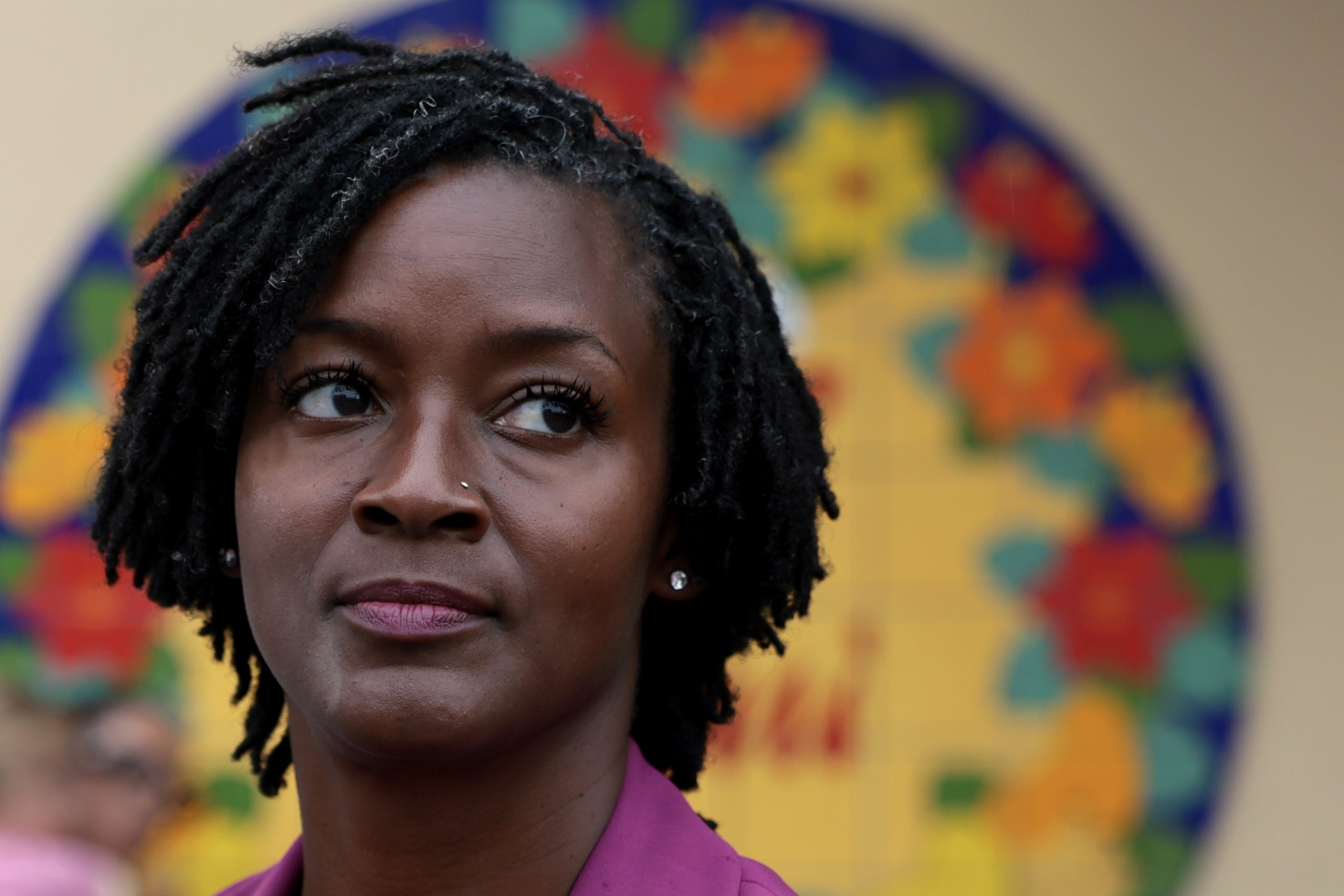
Angie Nixon, the Democratic Party's nominee for the U.S. Senate seat from Florida, disclosed in a filing that she owes the Internal Revenue Service close to $14,000 in unpaid taxes and over $17,000 in federal student loan debt. The figures have drawn scrutiny from political opponents and watchdog groups as the November 2025 election approaches.
Nixon, who identifies as a Democratic Socialist, reported a 2025 income that includes rent from a property she owns, a salary as a state representative, consulting fees from a Miami‑based firm, and a director's wage at a nonprofit that registers Black voters. The financial disclosure also notes earnings from two homes she owns. While the filing lists her personal income at roughly $270,000, it does not include the earnings of her husband, Jarrett Morene, who runs a car‑repair business.
Florida law requires individuals who earn income outside of traditional payroll arrangements to make estimated tax payments throughout the year. Failure to do so can trigger penalties, interest, and collection actions such as liens or garnishments. Nixon's statement on a July podcast that she is on a payment plan to settle a $12,000 tax bill reflects the standard process for taxpayers who fall behind.
The Senate candidate's tax situation is not her first encounter with state revenue authorities. The Florida Department of Revenue issued three sales‑tax warrants against Nixon's company, the Moxie Group LLC, for the years 2017 through 2021. The warrants, totaling $4,400 in taxes, penalties and interest, were later satisfied. Those notices were sent to the address of her secondary residence, which also generates rental income.
Beyond the tax issue, Nixon's stance on her student loans has attracted attention. After Congress ended the pandemic‑era student‑loan moratorium in October 2023, Nixon posted on Facebook that she was "above" repaying her debt, describing the obligation as "petty." At the time she cited a balance of $16,000; the most recent disclosure shows the amount has risen to $17,609 as interest resumed.
In 2023, Nixon earned more than $164,000, according to a financial affidavit filed during a brief divorce proceeding that she later dismissed. The affidavit indicated she allocated no portion of that income to her student‑loan payments. The combination of high earnings and unpaid obligations has become a focal point for critics who argue the candidate's personal finances contradict her public policy proposals.
Nixon has long advocated for a 5 percent annual wealth tax on billionaires, positioning herself as a champion of progressive taxation. Her critics point to the disparity between her advocacy for higher taxes on the ultra‑wealthy and her own unpaid liabilities. "It is contradictory to call for a wealth tax while struggling to meet personal tax obligations," said political analyst Maria Torres of the University of Miami.
The Senate disclosure rules in Florida require candidates to list any debts exceeding $10,000. Paul Kamenar, an attorney with the watchdog group National Legal and Policy Center, told the Washington Free Beacon that Nixon's omission of her IRS debt and student‑loan balance violates those rules. "She needs to amend her reports," Kamenar said.
Florida's Senate race is a high‑stakes contest. The incumbent Republican, Senator Marco Rubio, is seeking a fourth term, and the state's partisan split makes the election a bellwether for national trends. Democrats have struggled to win statewide offices in Florida since 2018, and the party's nominee faces the dual challenge of building a coalition around progressive policies while addressing personal financial controversies.
Historically, Florida requires Senate candidates to file a financial disclosure form with the Department of State. The form asks for a detailed accounting of income, assets, liabilities, and business interests. Failure to disclose material debts can lead to ethics investigations and, in extreme cases, removal from the ballot.
Nationally, the debate over student‑loan forgiveness and tax compliance has intensified since the pandemic relief measures ended. The Department of Education has resumed collection on defaulted loans, and the Treasury has increased enforcement of estimated‑tax payments for self‑employed individuals. Nixon's public refusal to repay her loans aligns with a broader movement among some progressive politicians who argue that higher education should be free, but it also places her at odds with the current federal policy framework.
The wealth‑tax proposal Nixon supports has been discussed in Congress but has not advanced beyond committee hearings. Proponents argue it would generate revenue to fund social programs, while opponents contend it would discourage investment. Nixon's personal finances are likely to become a talking point in debates and campaign ads, especially as Republican opponents highlight the discrepancy between her rhetoric and her tax record.
Election analysts note that voter perception of a candidate's financial responsibility can influence swing voters in suburban districts. A recent poll by the Florida Institute for Public Opinion, conducted in August, found that 42 percent of likely Democratic voters consider a candidate's personal tax history "somewhat important" when deciding whom to support.
Looking ahead, the Florida Secretary of State's office has not announced any formal action regarding Nixon's disclosure omissions. The agency typically provides a window for candidates to correct errors before the filing deadline. If the omissions are deemed material, the office could refer the matter to the State Ethics Commission for further review.
For now, Nixon has not responded to requests for comment from StateBeacon. Her campaign continues to promote her platform of expanding voter registration, investing in Black‑owned businesses, and pursuing a wealth tax, while navigating the fallout from the financial disclosures.