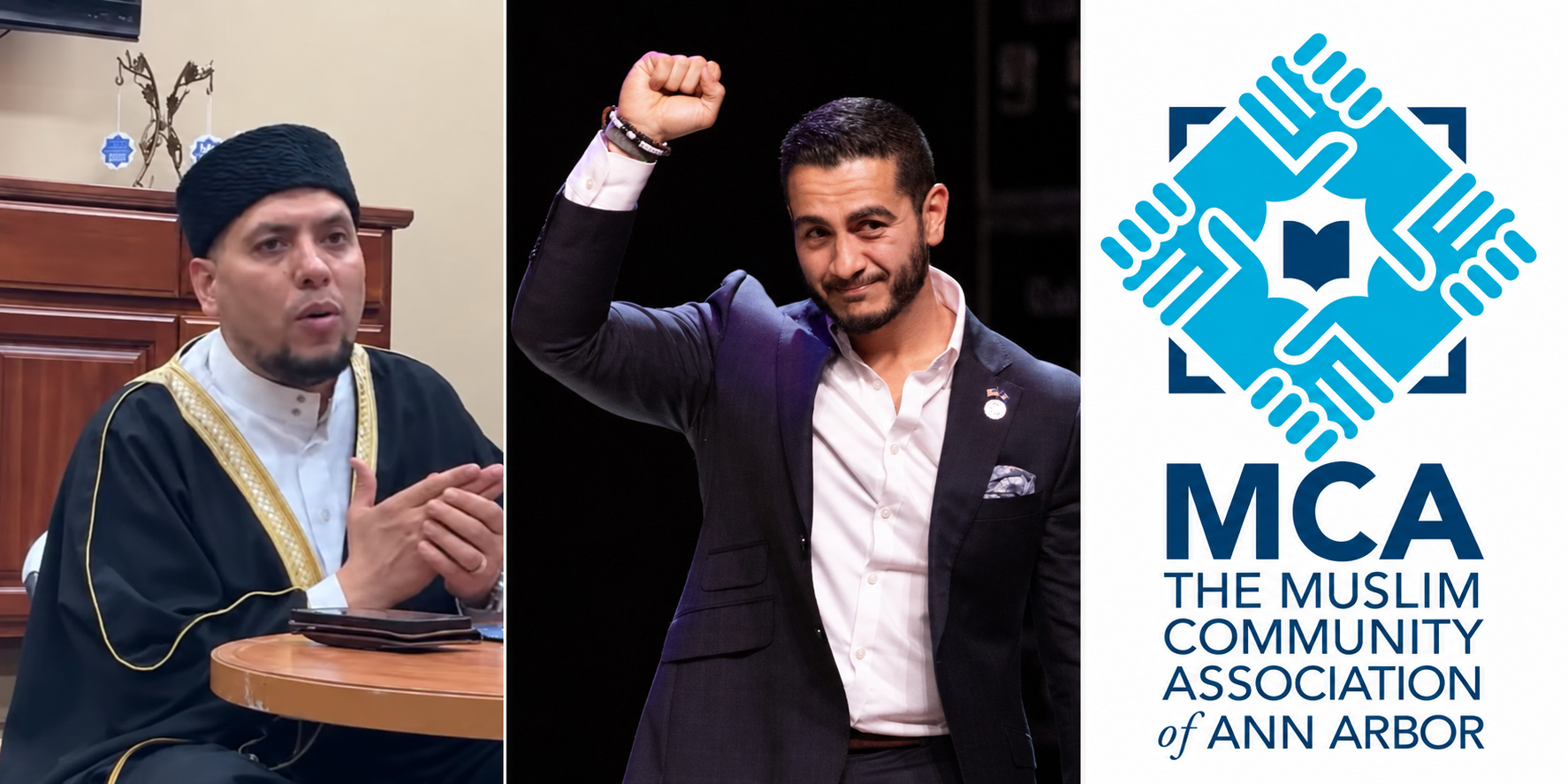
During a service on Aug. 2, 2024, Imam Abdelhamid Algizawi of the Muslim Community Association (MCA) of Ann Arbor delivered an "absentee funeral prayer" for Ismail Haniyeh, the Hamas political leader killed in Tehran. In both English and Arabic, Algizawi described Haniyeh as a "heroic martyr," a "symbol of jihad" and a man who "wanted to liberate Palestine." The remarks, captured on video and transcribed by an independent translator, have been highlighted in a review by the Washington Free Beacon.
Haniyeh, who served as Hamas's chief political figure, was killed when an explosive device detonated in the Tehran guesthouse where he was staying. The United States designates Hamas as a foreign terrorist organization, and the group's Oct. 7 attacks on Israel resulted in more than 1,200 deaths. Algizawi's eulogy therefore touches on a highly charged foreign‑policy issue that resonates with American voters, especially in a swing state such as Michigan where the Senate race is expected to be competitive.
Abdul El‑Sayed, the Democratic nominee for the U.S. Senate seat, is a former health commissioner and a frequent attendee of the MCA. While the imam's sermon was not delivered by El‑Sayed himself, the fact that the candidate regularly prays at the same mosque has drawn attention from political opponents and media outlets. A source familiar with El‑Sayed's worship habits confirmed that he also attends the Islamic Center of Detroit and the Wayne State University Islamic Center of Detroit, reflecting a pattern common among American Muslims who rotate among several congregations.
The Free Beacon report notes that Algizawi has previously used his pulpit to celebrate El‑Sayed's primary victory, calling it "a very big victory for the Muslims, Hamdillah, and for the Ummah, and for the Islamic nation." He urged the Muslim community to vote for El‑Sayed in November, framing the election as an "obligation" to "change the society." Those statements have been seized upon by Republican strategists who argue that the candidate's religious environment may influence his policy positions.
Algizawi's sermon also included a condemnation of homosexuality, echoing remarks he made in 2022. He argued that "homosexuality is against human nature" and that Islam "refuses" it, citing the purpose of marriage as procreation. The imam recounted a recent classroom exchange in which a student asked whether a gay person could be gay in paradise, noting that "students go crazy" when he responded. Such views stand in stark contrast to El‑Sayed's public record on LGBTQ rights.
During Pride Month last year, El‑Sayed declared, "This month and every month, I stand with the LGBTQ+ community in their struggle for equal rights and dignity. I'll always fight for an America where all of us can live and thrive as we are." In August 2023, he defended sex‑change surgeries for minors, likening the procedure to circumcision, a stance that drew both praise and criticism from different constituencies.
The apparent dissonance between the imam's statements and the candidate's campaign messaging has become a focal point for critics. Republican Senate candidate Mike Hannah, who is trailing in recent polls, has pledged to "expose any extremist influence" in the Democratic campaign, while progressive groups have warned against conflating a candidate's personal faith practices with extremist ideology.
Legal scholars note that the First Amendment protects the free exercise of religion, and a candidate's attendance at a place of worship does not, in itself, constitute a violation of any law. However, political opponents often scrutinize the rhetoric of religious leaders who address congregations that include high‑profile candidates, especially when those leaders make statements that appear to endorse violence or extremist groups.
In the broader context, the episode arrives as the United States grapples with its policy toward Hamas and the Israeli‑Palestinian conflict. The Biden administration has maintained a policy of designating Hamas as a terrorist organization while also urging a diplomatic pathway to a two‑state solution. Congressional debates over aid to Israel and humanitarian assistance to Gaza have intensified, and any perceived sympathy for Hamas among elected officials can become a flashpoint in upcoming elections.
Michigan's electorate is diverse, with significant Arab‑American and Muslim populations in the Detroit metropolitan area. According to the 2020 Census, about 2.5 percent of Michigan residents identify as Arab or Middle Eastern, a demographic that has historically leaned Democratic but remains a swing bloc on foreign‑policy issues. How the controversy over Algizawi's sermon influences voter perception among these communities will likely be a subject of campaign polling in the weeks ahead.
Polling data from the Michigan Center for Survey Research released in early September shows that 48 percent of likely Democratic primary voters approve of El‑Sayed's stance on health care and climate change, while only 31 percent say they are comfortable with his ties to mosques where controversial statements have been made. Among Republican respondents, 57 percent view the imam's eulogy as evidence of extremist influence, though the same poll indicates that 22 percent consider the issue "overblown."
El‑Sayed's campaign has not issued a comment to date. A spokesperson for the candidate's office declined to respond to requests for clarification on whether El‑Sayed was present during the sermon or how he interprets the imam's remarks. The campaign's silence has been noted by political analysts, who suggest that a measured response could mitigate potential damage without alienating the candidate's base.
In addition to Algizawi, other imams in Michigan have expressed support for Palestinian causes, sometimes using language that borders on praising militant groups. Imam Imran Salha of the Islamic Center of Detroit, for example, posted on social media in September 2024 that Hezbollah's attacks on Israel "are making sacrifices for the sake of Palestine." Such statements have drawn condemnation from Jewish advocacy groups and have been cited by Republican lawmakers as evidence of a "radical" influence in certain religious circles.
The controversy underscores the delicate balance candidates must strike when navigating religious affiliations in a pluralistic electorate. While religious freedom remains a cornerstone of American democracy, voters increasingly scrutinize the political implications of a candidate's worship environment, especially when that environment includes leaders who make statements about foreign conflicts and social issues.
As the November ballot approaches, Michigan's Senate race will likely see intensified advertising from both parties, with particular focus on the candidate's record on foreign policy, LGBTQ rights, and community outreach. Whether Algizawi's eulogy will sway enough voters to affect the final outcome remains uncertain, but it has already forced the El‑Sayed campaign to confront a narrative that could reshape discussions about faith, politics, and national security in the state.