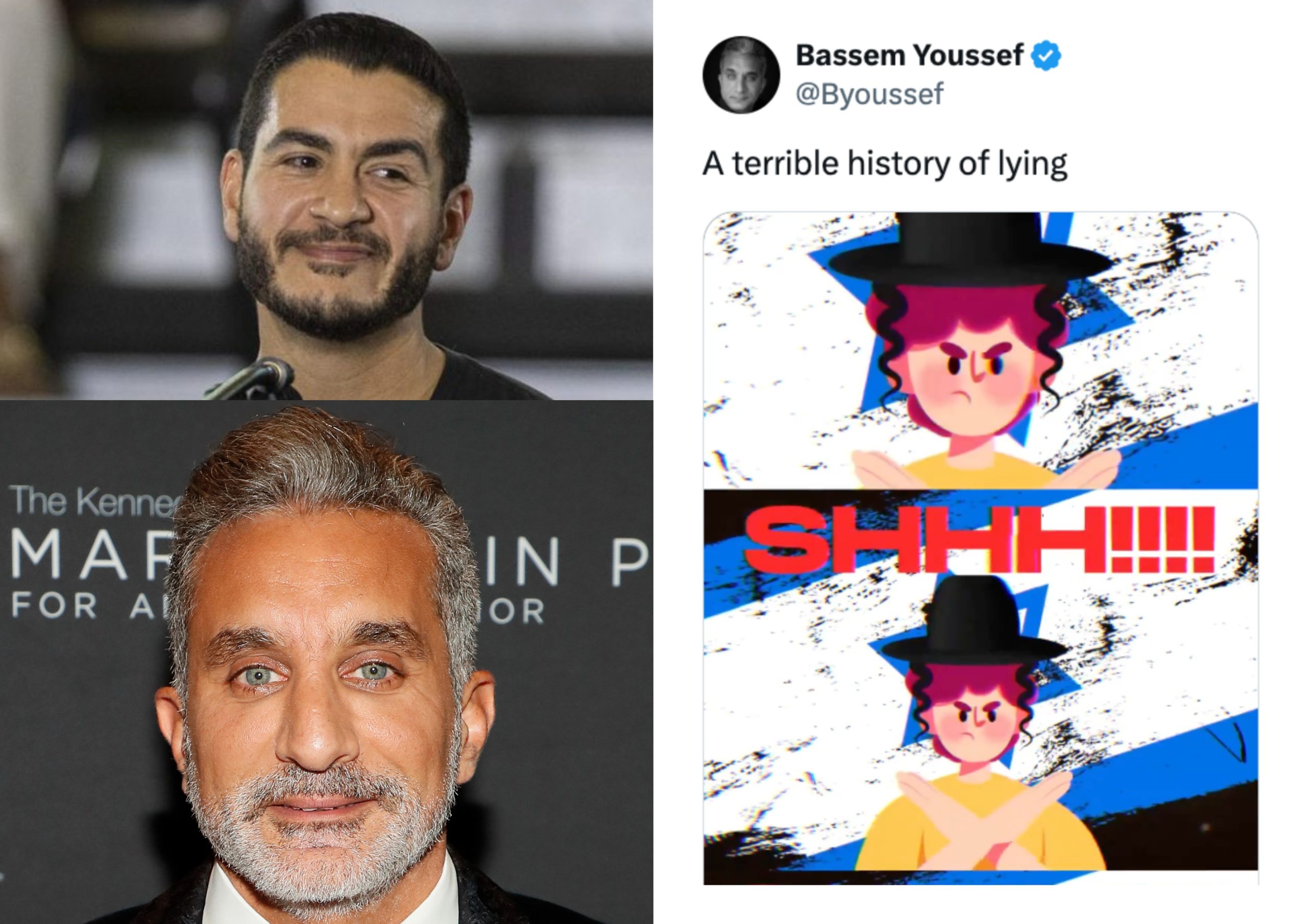
During a recent interview, Michigan Senate candidate Abdul El‑Sayed described Egyptian‑born satirist Bassem Youssef as "hilarious" and called him a "fellow Egyptian." The praise came after Youssef appeared on conservative commentator Candace Owens' podcast and repeated long‑discredited theories that Israel orchestrated the September 11 attacks.
In the January 29 episode of Owens' show, Youssef suggested that the 9/11 attacks were a "false flag" operation carried out by Israel. He also alleged that Israel was behind a fictitious "Bondi Beach massacre" in Australia, claiming the incident occurred on December 14, 2025 during a Hanukkah celebration. No such attack has been reported, and the date lies in the future, making the claim factually impossible.
Youssef's remarks were accompanied by a video he posted that featured an Orthodox Jewish man with red hair standing before an Israeli flag. The image invokes a historic antisemitic trope that links red hair to the biblical figure Judas. The American Jewish Committee and other watchdog groups have identified the trope as a classic form of hate propaganda.
Critics say the video and Youssef's statements cross a line from political satire into hateful conspiracy. "The use of that stereotype is not a joke," said a spokesperson for the Anti‑Defamation League. "It fuels the same kind of bigotry that has been used to justify violence against Jews for centuries."
Mehdi Hasan, a British journalist who founded the left‑leaning media outlet Zeteo after leaving MSNBC, has promoted Youssef as a "good friend" and a marquee contributor to his platform. Hasan's own podcast, "We're Not Kidding," frequently features Youssef, and Zeteo's fundraising materials highlight the comedian's involvement.
Hasan's endorsement of Youssef has drawn scrutiny because Hasan has previously accused Republican Senator Ron Johnson of promoting 9/11 "controlled demolition" theories. By aligning with a figure who repeats similar falsehoods, Hasan appears to be blurring the line between legitimate criticism of U.S. foreign policy and the propagation of baseless antisemitic narratives.
El‑Sayed's support for Youssef raises questions about the political calculus of Democratic candidates who seek to court Arab‑American voters. El‑Sayed, whose parents immigrated from Egypt, has long positioned himself as a champion of Muslim and immigrant communities. His mother's past work for an Islamic nonprofit that was later sanctioned for alleged ties to al‑Qaeda has been a point of controversy in past campaigns.
In a 2023 interview ahead of the ArabCon conference, El‑Sayed said he was "really excited" to see Youssef speak, noting the comedian's Egyptian heritage. The ArabCon event has featured speakers with known sympathies for Hamas, a fact that has drawn criticism from pro‑Israel advocacy groups.
Youssef's social media following surged after a contentious interview with Piers Morgan in the wake of the October 7 attacks in Israel. During that interview, Youssef declined to condemn Hamas, prompting condemnation from U.S. officials and Jewish organizations.
Australian authorities recently denied Youssef a visa for a planned comedy tour, citing his inflammatory remarks about Israel. The decision underscores how Youssef's rhetoric has begun to affect his ability to travel and perform internationally.
In addition to Owens, Youssef has appeared alongside Dan Bilzerian, a former congressional candidate known for extremist statements and Holocaust denial. Bilzerian's campaign ads have featured antisemitic language and imagery, further linking Youssef to a network of far‑right personalities.
Investigative reporting by the Washington Free Beacon found that at least a dozen donors who contributed to Bilzerian's campaign have also given to El‑Sayed's political efforts. While the overlap may reflect shared opposition to Israel, it also illustrates how fundraising channels can intersect across the political spectrum.
Hasan has attempted to distance himself from Owens, referring to her as "bonkers" in a recent Zeteo interview with Youssef. However, Hasan did not challenge Youssef's false claims about Israeli involvement in 9/11 or the imagined Bondi Beach attack, leaving the conspiracy unaddressed on his platform.
Legal experts note that while free speech protects the expression of controversial opinions, repeated dissemination of proven falsehoods about a nation can trigger defamation lawsuits in some jurisdictions. In the United States, the First Amendment provides broad protection, but private platforms and advertisers may choose to withdraw support, as Hasan has reported difficulty attracting "blue chip advertisers."
For American voters, the episode highlights a broader tension within the Democratic Party between courting diverse ethnic constituencies and confronting antisemitic rhetoric. Party leaders have warned that tolerating such conspiracy theories could alienate Jewish voters, a demographic that historically leans Democratic in federal elections.
In Canada, similar debates are unfolding as the Liberal government grapples with rising antisemitism on university campuses and in online forums. Canadian officials have warned that hate speech, even when cloaked in satire, can inflame community tensions and undermine social cohesion.
Looking ahead, El‑Sayed's Senate campaign will need to address the fallout from his endorsement of Youssef. Political analysts suggest that opponents may use the association to question El‑Sayed's judgment on foreign policy and his stance on hate speech. The Michigan primary, scheduled for August 2024, could see the issue become a focal point in campaign ads and debates.
Meanwhile, Zeteo's business model, which relies on contributions from high‑profile personalities, may face increased scrutiny from donors wary of being linked to extremist content. Hasan's admission that he struggles to secure mainstream advertisers indicates a potential financial strain for the outlet if the controversy deepens.
In sum, the convergence of a Democratic Senate hopeful, a satirical comedian, and a left‑leaning media startup around antisemitic conspiracy theories underscores the challenges political actors face when navigating the fine line between free expression and hateful misinformation. How each party responds could shape voter perceptions in the upcoming midterm elections and influence broader discussions about the limits of political satire in the digital age.