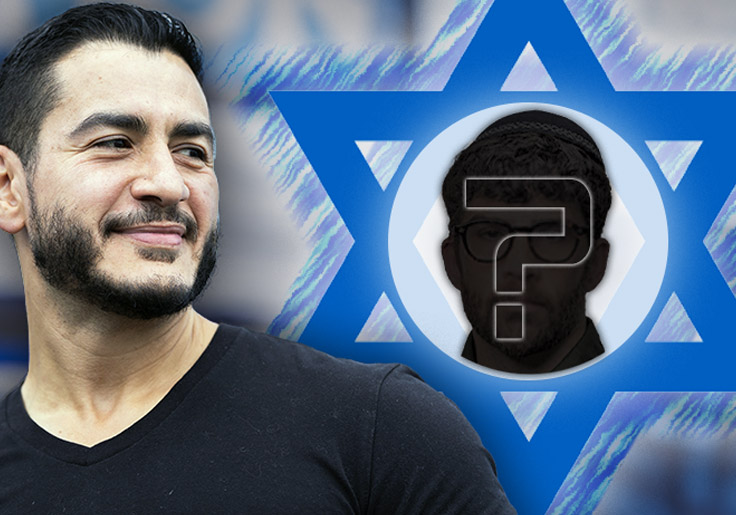
Michigan's 2024 Democratic Senate primary has taken a new turn as candidate Abdul El‑Sayed said his campaign is weighing the creation of a "Jewish liaison" position. The move follows a wave of criticism from Jewish groups and political observers who say El‑Sayed's past remarks have alienated the state's sizable Jewish electorate.
El‑Sayed, a former health commissioner from Dearborn and the son of Egyptian immigrants, entered the race in early 2023 with a platform focused on health equity, climate action and economic justice. He has consistently positioned himself as a progressive alternative to former U.S. Rep. Elissa Slotkin, who ultimately secured the Democratic nomination. While his campaign has attracted strong support in Detroit's African‑American neighborhoods, it has struggled to gain traction among suburban voters, including the state's Jewish community, which makes up roughly 2 percent of Michigan's electorate.
The controversy resurfaced after a March 2023 incident in Dearborn in which a driver rammed a truck into a Jewish preschool, injuring several children. In a televised interview the week after the attack, El‑Sayed said, "hurt people hurt people," referring to the suspect's motivations. Critics, including the Anti‑Defamation League's Michigan chapter, argued the comment downplayed the severity of an anti‑Jewish act and signaled a lack of empathy for victims.
El‑Sayed later met with a coalition of local rabbis and Jewish community leaders in an effort to address the fallout. At the meeting, he apologized for any perception that his earlier remarks were dismissive, emphasizing his "deep respect for the Jewish community" and pledging to "listen and learn." The gathering was covered by local media, but the apology did little to quell the growing calls for a more formal outreach strategy.
In response, a spokesperson for the El‑Sayed campaign told reporters that the team is "exploring the addition of a Jewish liaison to ensure consistent, respectful communication with Jewish constituents and organizations." The spokesperson declined to name a candidate for the role, noting that the search is still in its early stages.
The idea of a dedicated liaison is not unprecedented. In recent election cycles, several high‑profile campaigns have appointed staffers to serve as points of contact for specific demographic groups, ranging from Latino outreach coordinators to Asian‑American advisory boards. Such positions are intended to bridge gaps, advise on policy sensitivities and help candidates avoid missteps that could alienate key voter blocs.
However, the timing of El‑Sayed's announcement has drawn skepticism. The Washington Free Beacon, a conservative outlet, published a satirical list of ten "promising candidates" for the liaison role, ranging from political operatives to celebrities with tenuous ties to the Jewish community. The list includes names such as Morris Katz, a Democratic consultant; actress Hannah Einbinder, who has publicly supported Palestinian causes; and former congressman Anthony Weiner, whose own scandals have made him a controversial figure. The article's tone was mocking, suggesting the liaison position might be more symbolic than substantive.
Jewish leaders in Michigan have responded with a mix of caution and openness. Rabbi Daniel Feldman of the Isaac Agree Downtown Synagogue said, "We appreciate any effort to engage directly, but the real test will be whether the campaign's policies reflect the concerns of our community, especially on security and Israel‑U.S. relations." The Jewish Federation of Metropolitan Detroit, which represents over 30,000 Jews in the region, issued a statement urging all candidates to "demonstrate consistent, informed support for the safety and well‑being of Jewish residents."
El‑Sayed's past positions on Israel and Iran have also been a flashpoint. In a 2022 town hall, he expressed "sympathy" for the Iranian people under Supreme Leader Ayatollah Ali Khamenei, a comment that was seized upon by opponents as evidence of anti‑Israel sentiment. While El‑Sayed clarified that his remarks were aimed at the Iranian populace rather than the regime, the nuance was lost in the partisan media cycle.
Political analysts note that the Jewish vote, while numerically small in Michigan, can be decisive in close races, especially in suburban counties like Oakland and Macomb where swing voters reside. "If El‑Sayed wants to be competitive in the general election, he needs to build trust with Jewish voters now, not after the primary," said Dr. Laura Martinez, a professor of political science at the University of Michigan. "A liaison can help, but it must be part of a broader, authentic outreach strategy.
The broader Democratic field has also taken note. Slotkin's campaign, which has consistently highlighted strong ties to the Jewish community, has emphasized her record on supporting Israel's security and combating anti‑Semitic hate crimes. In a recent fundraiser, Slotkin's campaign manager, Jeff McCarty, remarked, "Our outreach is built on long‑standing relationships, not a reactionary hire."
Beyond the immediate race, the episode reflects a growing trend in American politics where candidates are scrutinized for their language on foreign policy and minority communities. The rise of social‑media amplification means that off‑the‑cuff remarks can quickly become campaign‑defining moments.
Legal experts point out that there is no regulatory requirement for campaigns to appoint liaison positions; the decision rests entirely on campaign strategy. "It's a staffing choice, not a legal mandate," said election law attorney Maya Patel. "What matters is whether the hire can effectively advise the candidate and avoid future missteps that could trigger complaints under the Federal Election Commission's rules on coordination with outside groups.
Looking ahead, El‑Sayed's campaign has scheduled a series of town halls in the Detroit suburbs, where the Jewish liaison, if appointed, would likely play a central role. The campaign also plans to release a detailed policy brief on anti‑hate crime legislation, an issue that has resonated with both Jewish and broader progressive constituencies.
Whether the liaison position will be filled by a seasoned political operative, a community activist or a public‑relations professional remains to be seen. What is clear, however, is that the move underscores the delicate balancing act candidates face in a diversifying electorate, where cultural sensitivity and policy alignment are increasingly intertwined with electoral viability.